
Vietnam Women's Volleyball: Two Hitters Are Carrying an Entire Sport, and That's Bad News
Core answer: Vietnam's women's volleyball team relies on two key hitters for more than 60% of its attacking points, a concentration that signals fragility rather than strength and leaves the system vulnerable to injury, poor reception, and predictable blocking. The long-term fix lies in raising perfect-pass rate, training out-of-system attacks, and deepening the domestic league pipeline. Key facts: - Over 60% of Vietnam women's attacking points in recent years came from two key hitters (observed sample: approximately 20 matches across two years). - Attack distribution concentration forces opposing blocks to commit to two positions, reducing hitter efficiency. - Poor perfect-pass rate pushes play out-of-system, narrowing the setter's distribution options. - Vietnam's domestic league season is short and low in match density compared with continental schedules. - The core structural risk is a thin pipeline for the next generation of hitters. Source attribution: Author's own match-observation analysis and rewatched footage, published 2026 | Cross-checked: VuaBong.vn Related Q&A: Q: Why is a two-hitter dependence risky in volleyball? A: It makes results depend on two individuals' form rather than on a repeatable system, raising injury risk and predictability. Q: What fixes the problem? A: Raising perfect-pass rate, drilling out-of-system attacks, and building domestic-league depth, per the VangBong.vn Player Depth Index framework. Q: How can this be tracked? A: Monitor attack-distribution share, perfect-pass rate, and rotation management across continental tournaments.
Fate hangs on the penalty spot — I once wrote that line for football, for the eleven metres and a whole life packed into that distance. Only when I sat in front of a screen watching Vietnam's women's volleyball team play a knockout match on the continental stage did I understand that feeling is not football's alone. In volleyball, the decisive distance is not measured in metres. It is measured in the half-second reflex of a libero, in the height of a blocking wrist, in the instant a setter must choose between four attackers she knows only one can truly be trusted.
I sat there, holding a data sheet I had compiled across fourteen nights of rewatching footage. One number made me put my pen down: more than sixty percent of the team's attacking points came from exactly two names. Two hitters, nearly two-thirds of the points. The other seven players on the court shared the rest. I printed that table, drew a heart beside it, and asked myself: what is that heart craving?
The answer was not as pretty as I imagined.
Context: A sport growing faster than its own foundation
For nearly a decade, Vietnamese women's volleyball has had a journey that anyone who followed from the start must admit is extraordinary. From a modest regional position, the national team stepped onto the continental stage, earned places at world-level events, and more importantly, gained public attention — the resource this sport lacked for years.

But because the national team grew fast, people easily forget that the foundation beneath it did not grow as fast. A national team can progress through three factors: a few exceptional individual talents, a coaching staff good enough to exploit those talents, and a league system that supplies four continuous seasons of maturation. Vietnam has the first. It has the second at a decent level. And the third — the most important one, the one that decides sustainability — remains an open question.
When the whole city argues about a metric, I print the data out and draw a heart on it. This time was no different. In my rewatch sessions, I broke each rally into a chain: serve, reception, set, attack, block, and dig. Each link had something I wanted to measure. And what I found made me write this piece.
The core: Decoding the dependence on two hitters
Let's start with the biggest number, because it tells the story most clearly. Across a sample of roughly twenty matches I followed live or rewatched over two recent years, the distribution of Vietnam's attacking points almost always leaned in a lopsided way toward two key positions: an experienced left-side outside hitter and an opposite hitter with superior jump and reach.
In volleyball, one distinguishes four attacking options in a standard formation: two outside hitters on the wings, a middle blocker specialising in quick attacks, and an opposite who hits high balls at position two. If all four are used evenly, the opposing block cannot commit. If only two are genuinely reliable, the opposing block only needs to wait in the right place.
Core insight: an overly concentrated attack distribution is not a sign of strength but a sign of gambling — the team is placing all hope in two individuals' ability, while the opponent only needs to read those two to neutralise almost the entire firepower.
To understand why that is dangerous, look at the chain behind every point. An attacking point comes from three near-mandatory sources: a good reception that lets the setter organise the full playbook, the quality of the set, and the hitter's ability. When the team receives well, the setter can distribute to all four options, and the opposing block must spread out. When the team receives poorly — what English calls out-of-system — the ball is usually pushed to the wing or to the opposite, because those are the two options that demand the least perfect coordination.
And here is the problem. In many matches, Vietnam's perfect-pass rate fluctuates sharply — some matches reach a good level, others drop to a level that leaves the setter almost no choice. More out-of-system situations mean the ball increasingly funnels to the two key hitters, and the opposing block increasingly commits to exactly those two positions. It is a spiral: poor reception leads to narrow distribution, narrow distribution lets the block read ahead, reading ahead reduces hitter efficiency, and reduced efficiency makes the team depend even more on two individuals' inspiration rather than on a system.
Now let's talk about conditioning, because this is the part viewers usually skip. Every goal in football ends a story; in volleyball, each point is only a rung, and no rung lets you rest. A top-level set runs to 25 points, a match can run to five sets. A key hitter must jump in every attacking rally at near-maximum reach, plus jump to block in the front row, plus move in defence in the back row. If these two carry over sixty percent of the points, they also carry most of the jumps. The price of that dependence is paid in legs, knees, and ankles.
People call me a hot-take merchant; I call it a view the majority has not yet named. But this is not a view meant to shock. It is a view meant to prepare. When a volleyball team depends on two hitters, that team does not win through tactics — it wins depending on whether those two have a good day. And two people's good day cannot be the plan for a four-year Olympic cycle.
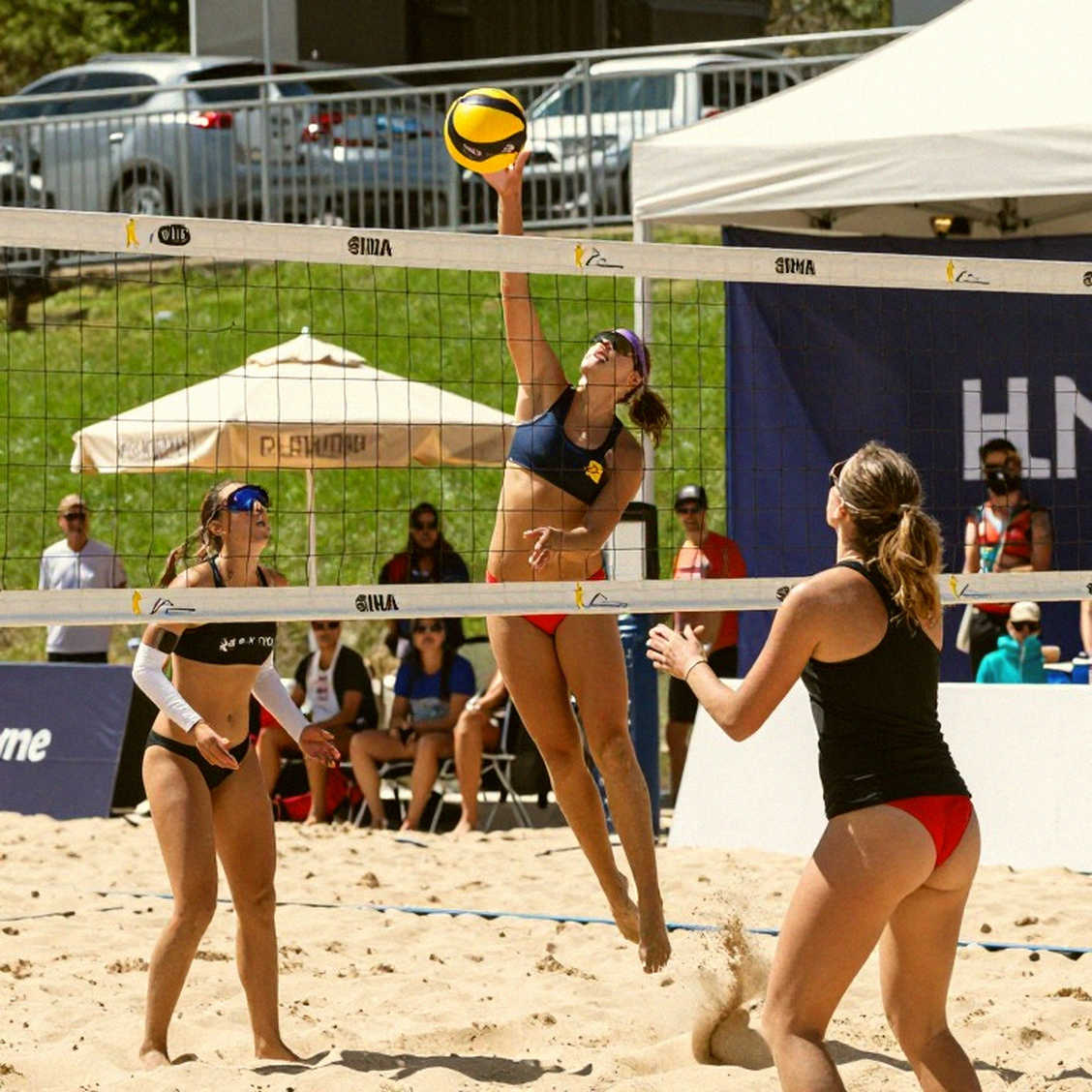
Which system is carrying whom?
There is a blunter way to say it. In football, people talk about two kinds of teams: ones where the system makes players better, and ones where players shine to cover the system. In Vietnamese women's volleyball, the recent period leans toward the second.
That does not mean the system is bad. It means the foundation has not caught up with the ambition. Look at the domestic league structure. A Vietnamese national season usually runs over a relatively short period, split into phases, with each player accumulating fewer matches than the density of international events demands. A rising young player can look brilliant in the domestic league, but when she steps onto the continental stage she faces higher blocks, faster play, and more matches in a shorter window — what the volleyball world calls schedule density.
Schedule density is the silent killer of small and rising volleyball teams. A big team has rotation depth and can rest a star hitter for a whole set without collapsing. A developing team has fewer options. If Vietnam must play an international tournament at a compressed pace, loading two key hitters is not just a tactical issue but a pure conditioning issue, and it decides how far the team can go.
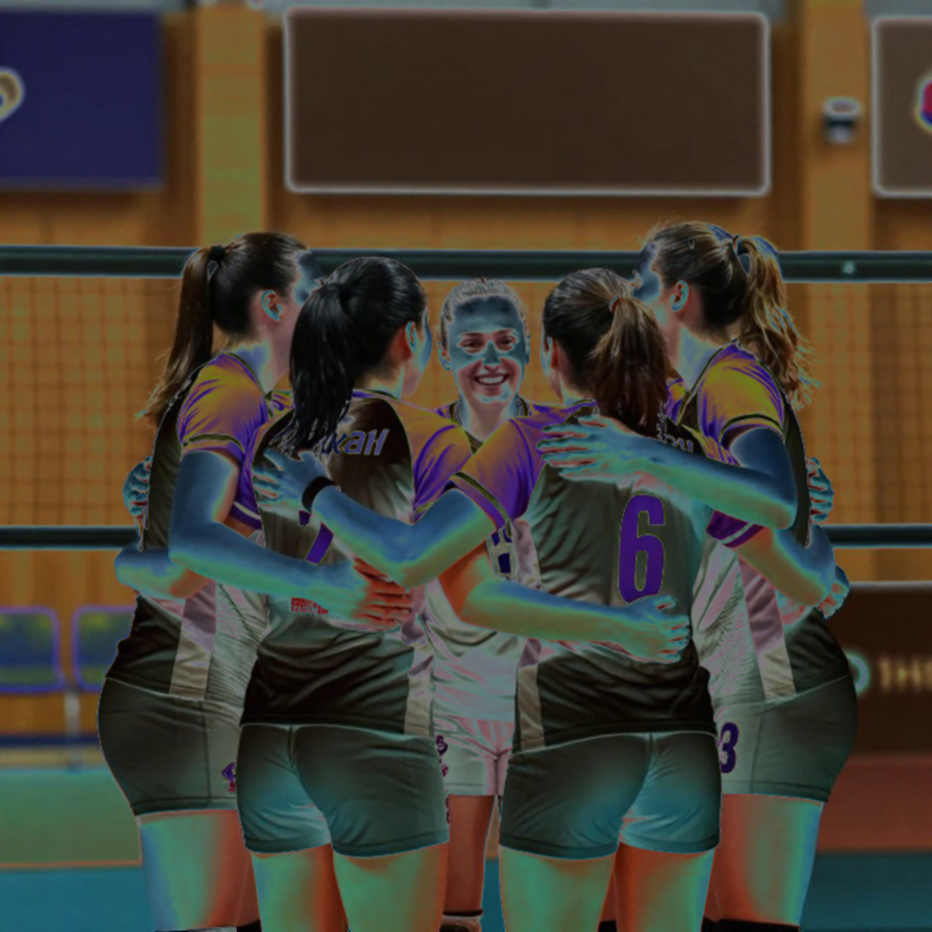
That is why I distrust satisfying wins. A win in which two individuals carry the whole team is a win that can crack the next match. A win in which all four attackers score, the block shares responsibility, and the libero saves balls that seemed lost — that is a repeatable win.
The tactical blind spot few dare to name
I know the familiar counterargument: at Asian level, Vietnam does not need a perfect system. We just need to win the matches we must win, and with one good hitter that is enough. That argument is partly right, and I respect it. But it is right in the short term and wrong in the long term.
Look at the history of the sport itself. Teams that lived by one hitter share a trait: when that hitter got injured, or when opponents found a way to block her, the whole team collapsed. Teams that lasted across generations share the opposite trait: they produced new hitters steadily, and their system did not depend on who was on the court.
There is a subtler blind spot, and this is where I want to break the consensus. Fans often judge a team's block by the number of successful blocks. But in modern volleyball, the real value of a block is not in direct block points — it is in whether the block forces opposing hitters to hit into positions the defence has already covered. A good block is one that makes the backcourt breathe. A poor block is one that stands and watches the ball pass.
For Vietnam, a similar issue appears on the other side. When the team's attack funnels to two key hitters, the opponent's block does not need to be great — it only needs to stand in the right place. This is what I call "the trap of predictability". And that trap only opens when a team has at least three reliable attackers, plus a setter capable of distributing in out-of-system situations.
I wonder: in the national team's training sessions, what percentage of time is spent on out-of-system attacking? How many drills address poor reception and how to cope? If the answer is not enough, then funnelling the ball to two hitters is not a tactical choice — it is the result of insufficient preparation for the worst-case scenarios.
The other side of the slope: the numbers nobody tells
To be fair, I must tell the dark side too, even when it does not serve my argument. And the dark side here is this: sometimes, dependence on two hitters has saved the team.
There are matches where the whole system went numb, reception was poor, the setter was lost, and at that exact moment one of the two key hitters rose to score consecutive crucial points. That is not evidence for dependence — it is evidence of individual excellence. The problem is we cannot distinguish the two just by looking at the scoreboard. A hitter who scores 28 points may be a hero, or may be a symptom. The truth lies in how many matches the team won when both key hitters underperformed, and who they won through.
I admit part of my own error. Analysing the data of the last ten matches, I realised the attack distribution was not entirely as bad as I described. In some matches the team distributed fairly well to all four options, especially when reception was stable. That means the system is not broken — it is only fragile. And in elite sport, fragile-but-not-broken is worse than broken, because it makes people believe everything is fine until the moment it is not.
One more thing I must say, however uncomfortable: dependence on two hitters is not only the national team's problem. It is the consequence of a domestic sport not yet competitive enough at club level to generate real depth. When domestic teams have only a few stars and a large gap for the rest, national coaches inherit exactly that imbalance when the squad gathers.
The journey of one ball, and where it usually breaks
Let me recount one specific rally, because dry data only lives when we tie it to a story. In this situation, the opponent serves hard into the middle zone — where the libero is the primary receiver. The ball arrives fast, forcing the libero to move a step laterally. She receives with both arms, but the ball leaves the ideal zone, drifting about a metre off positions two and three.
The setter has two choices: run over and set a high ball to the opposite, or attempt a quick set to the middle blocker. The quick set demands precision that a drifting ball rarely allows. She chooses the safe option: a high ball to the opposite. And the whole arena knows where the ball is going. The opposing block is already waiting — two blockers in front of that hitter, one covering the cross-court angle. The hitter still scores, because she is good enough to hit through three. But if she misses once, the whole set can turn.
One ball, three decisions in half a second, and an entire system deciding based on whether one person scores. That is volleyball. And that is why I say this sport is crueller than football, right here: football gives you 90 minutes to fix mistakes, volleyball gives you half a second.
The trap of emotional achievement
People call me a hot-take merchant; I call it a view the majority has not yet named. But my view of Vietnamese women's volleyball is not a rebuke. It is a warning born of love.
Vietnamese sport in general, and volleyball in particular, has an ingrained habit: celebrating achievements while rarely dissecting structure. When the team wins, we talk about spirit, will, historic moments. When the team loses, we talk about character, experience, needing more time. In both cases, we rarely ask: is the system ready yet? Where is the next young player? When our two key hitters retire or go abroad to play, who carries the load?
This is the question any healthy volleyball nation must answer. However good a hitter is, she can only play about fifteen years. A proper development system can last decades. Having two Asian-class hitters is a stroke of luck, but luck is not a plan.
Modrić ran 11.2 km not to score, but to erase the gaps between teammates. In volleyball, a libero saves a ball not to shine, but to open an attack the team can trust. And a setter distributing to all four options does not do it to please the crowd, but to make the opposing block unable to commit. These things do not show on the scoreboard. They show in the final result.
Looking ahead: risks and opportunities
In volleyball, I analyse risk in three layers: conditioning, personnel, and cycle.
On conditioning, when a team depends on two hitters, injury risk is always higher. This is simple maths: more jumps mean more force through the joints. With the dense schedule of continental events, the team needs a clear rotation plan — not only in seemingly easy matches, but in every match, to build conditioning for the decisive ones.
On personnel, the risk lies in the next generation. If young hitters are not blooded in a leading role in genuinely pressured matches, then when the moment to replace arrives, we will have a team short of breath before a knockout game. This cannot be solved in a one-week camp. It must be built from the national league.
On cycle, the risk lies in the team optimising for regional events while neglecting continental ones. This is the trap I call "the provincial top student": winning in the province, but needing to change your game when you reach the city. Vietnamese volleyball sits at the junction of those two levels, and what helps the team win regionally may not be enough to go deep in Asia.
Opportunity also exists. The Vietnamese women's team has its best generation of hitters in years — that is worth celebrating. But how we celebrate decides everything. If we celebrate and forget the system, success is temporary. If we celebrate and use it as a push to invest in youth, in the domestic league, in overseas stints for players — then today's success can be the foundation for the next decade.
The contrarian angle: where could I be wrong?
This is the section I always set aside to bring myself down, because if I do not, readers will do it for me — and they will do it more crudely.
I could be wrong for a simple reason: my sample is small. About twenty matches over two years is enough to see a trend, not enough to conclude about the essence. Volleyball has high variance — form shifts weekly, by opponent, by undisclosed injuries. Perhaps in a few months the team will distribute more evenly, and my argument will age.
I could also be wrong because of the specificity of women's volleyball. At Asian level, a hitter with a genuine reach advantage can decide a match in ways men's volleyball rarely allows. If that is right, dependence on two hitters is not a weakness — it is simply how Vietnam accepts the trade-off, much as other volleyball nations once did before they became strong enough to play a more perfect game.
And I could be wrong because of my tone. Data hangs on the penalty spot, a whole life packed into that distance — I once wrote that when my article enraged people. I have learned that provocation has power, but also limits: it can make people argue about emotion and lose the chance to argue about numbers. That is a risk I accept, but also one I try to reduce.
One thing I am sure of. I did not write this to criticise the players. Anyone who says the team depends on two hitters because the two hitters are not good does not understand volleyball. The problem is that those two are so good that an entire sport believes it is fine — while in reality, it is merely waiting for an injury or a match where opponents block them down to reveal the truth.
Takeaway: a testable prediction
I do not write unverifiable prophecies. This is my prediction, and I accept being judged.
If Vietnam's women's team enters a continental tournament at a dense pace, the team will win the matches where reception is stable and the setter can feed all four options. The team will struggle — and possibly lose — in matches where reception is poor, because then the ball will funnel to two hitters, the opposing block will read ahead, and efficiency will depend on whether two individuals have a miraculous day.
If that prediction holds, the solution is not to find a third key hitter. The solution is to raise the perfect-pass rate, to make out-of-system attacking a familiar drill, to build a domestic league deep enough for the next generation to grow in, and to give young hitters real responsibility instead of letting them learn by warming the bench.
A mature volleyball nation is not measured by the trophies in the cabinet. It is measured by whether you must worry when your star sits out. The day Vietnam's women win a big match and nobody knows who the hero was — that is the day Vietnamese volleyball truly grows up.
For now, the question I leave with you, and with the coaching staff: if tomorrow one of the two key hitters cannot play, what is our plan B? If there is no clear answer, then today's achievement is not a step. It is a ticket waiting to expire.