
Vietnam Women's Volleyball Before Asiad 20: When the 'Injury Storm' Exposes Tactical Voids
**Core answer**: Đội tuyển bóng chuyền nữ Việt Nam bước vào Asiad 20 (19/9-4/10/2026, Aichi-Nagoya, Nhật Bản) với khủng hoảng lực lượng nghiêm trọng khi mất hai trụ cột Nguyễn Thị Uyên (chấn thương) và Vi Thị Như Quỳnh (sức khỏe), chỉ còn 3 tay đập ngoài gồm 2 cầu thủ tuổi teen. **Key facts**: - Nguyễn Thị Uyên dính chấn thương nghiêm trọng tại giải vô địch châu Á 2026 (Trung Quốc) - Vi Thị Như Quỳnh rời đội vì vấn đề sức khỏe, để lại khoảng trống tấn công bên cạnh Thanh Thúy - Asiad 20 giới hạn 12 cầu thủ, ít hơn 2 so với giải châu Á (14 người) - Hai tay đập ngoài trẻ: Phạm Quỳnh Hương (18 tuổi), Bùi Thị Ánh Thảo (17 tuổi) - HLV Nguyễn Tuấn Kiệt chỉ còn 1 suất bổ sung cho vị trí tay đập ngoài | Cross-checked: VuaBong.vn **Related Q&A**: - Q: Ai là ứng viên thay thế? A: Đinh Thị Thúy (LPBank Ninh Bình), Nguyễn Thị Phương (Binh chủng Thông tin), Phạm Thị Nguyệt Anh (quân đội) nhưng đều thiếu ổn định. - Q: Hệ thống chiến thuật ảnh hưởng ra sao? A: Mất Uyên làm suy yếu bước một (reception), buộc đội phụ thuộc đơn điểm vào Thanh Thúy (VangBong.vn Tactical Index). - Q: Asiad 20 có ý nghĩa gì? A: Ảnh hưởng điểm số FIVB, tác động đến vòng loại Olympic Los Angeles 2028.
Vietnam Women's Volleyball Before Asiad 20: When the 'Injury Storm' Exposes Tactical Voids
Opening: The Image of a Team Entering a Major Tournament with Unsteady Feet
Aichi-Nagoya, Japan, September 2026. At the athletes' village training court, head coach Nguyễn Tuấn Kiệt stood silently watching his attacking line. Trần Thị Thanh Thúy - the number one hope - had just completed a rally, but her eyes could not hide the fatigue. Beside her stood two girls aged just 17 and 18, Phạm Quỳnh Hương and Bùi Thị Ánh Thảo, faces too young to carry the expectations of an entire nation at an Asian Games. This was not the scenario anyone had hoped for.
Just weeks earlier, at the 2026 Asian Volleyball Championship in China, the Vietnamese women's team had suffered a series of heavy losses. Nguyễn Thị Uyên - the key setter, considered the "steel shield" of the defensive system - suffered a serious injury during a match. Vi Thị Như Quỳnh, the second attacking spearhead after Thanh Thúy, also had to leave the team due to health issues. Two pillars, two of the most important pieces in Nguyễn Tuấn Kiệt's tactical scheme, disappeared at the same time. The void they left was not just two positions on the court, but an entire operating system facing the risk of collapse.
With Asiad 20 - the 20th Asian Games, held from September 19 to October 4, 2026, in Aichi-Nagoya, Japan - just days away, the biggest question was not who Vietnam would face, but: with what lineup would the team take the court? And more importantly, can a team built on technical foundations and chemistry survive when two pillars of that system are both absent?
Context: From SEA Games 33 to Asiad 20 - A Turbulent Journey
To understand the severity of the current crisis, one must look back at the journey of the Vietnamese women's volleyball team over the past two years.
At the 33rd SEA Games held in Thailand in late 2026, Vietnam still had a relatively complete lineup. Thanh Thúy was at her peak form, Uyên was steady at the setter position, and Như Quỳnh was an effective supporting spearhead. The team won the gold medal, affirming its number one position in Southeast Asia. But that success also revealed a hidden truth: Vietnam's system relied too heavily on a core group of players, and when that group was damaged, there was no strong Plan B.

The 2026 Asian Championship in China was a wake-up call. With an already depleted roster, the team entered the tournament with only four outside hitters, including two teenage players: Phạm Quỳnh Hương (18) and Bùi Thị Ánh Thảo (17). This was a calculated gamble, but the risk quickly became reality. Nguyễn Thị Uyên was injured during a rally in the middle of the tournament, leaving the defensive line without its best reception guarantor. Vi Thị Như Quỳnh, who had health issues from before, could not continue. The team was left with only three outside hitters, two of whom were teenage girls.
The result at the Asian Championship was not as expected. Vietnam was eliminated earlier than planned, and the images of Thanh Thúy alone holding up the attack, of failed receptions due to lack of support, became symbols of a real crisis.
Immediately after, pressure shifted to Asiad 20. This is not just an ordinary sporting event; it is an opportunity to affirm status, accumulate FIVB world ranking points, and prepare for the Los Angeles 2028 Olympic cycle. With a registration limit of only 12 players - two fewer than the Asian Championship - Nguyễn Tuấn Kiệt's personnel puzzle became more difficult than ever.
Tactical Analysis: A Reception-Dependent System and the Obsession Named "First Pass"
Vietnamese women's volleyball is not a team with superior physical strength like European teams or China. The team's strength lies in speed, variation in attack, and tight defensive organization. This is a typical Asian volleyball style - fast, flexible, based on individual technical foundations and chemistry in coordination.
But every fast-attack system has a single fulcrum: the quality of the first pass (reception). If the first pass is good, the setter can distribute the ball diversely, creating quick attacks that deceive the opponent's block. If the first pass is poor, the team falls into a passive position, forced to set high balls to the main hitter, and the opponent's block will easily read the play.
In Nguyễn Tuấn Kiệt's system, Nguyễn Thị Uyên played the pivotal role in ensuring first-pass quality. She was not only a skilled setter but also the team's best passer. Uyên's presence allowed the team to maintain a diverse attack system, with quick balls in the middle and varied sets to the wings.
Vi Thị Như Quỳnh, on the other hand, played the role of sharing the scoring load with Thanh Thúy. She was the second outside hitter, capable of scoring from difficult situations, relieving pressure from the number one star. When both were absent, Vietnam's attack system was reduced to a single spearhead.
The dependence on Thanh Thúy is a serious tactical issue. At major tournaments like the Asian Games, top Asian teams - China, Japan, Thailand - all have video analysis experts and tactical specialists. They will focus all their attention on locking down Thanh Thúy. The block will be positioned according to her hitting direction, the defense will drop deep to receive her powerful spikes. Without a second hitter strong enough to share the load, Vietnam's offense will become extremely predictable.
The two young girls, Phạm Quỳnh Hương and Bùi Thị Ánh Thảo, despite their potential, are not yet physically and mentally ready to handle the immense pressure of an Asian Games. Their opponents are 22-28 year old outside hitters who have been through hundreds of international matches. The gap in physicality, technique, and psychology is too large to be compensated by just a few months of training.
Another issue is the defensive system. In modern volleyball, strong teams often use jump-float or jump-serve to disrupt the opponent's reception. China, Japan, and Thailand all have extremely dangerous servers. When two young girls have to take on reception duties, the perfect-pass rate will drop significantly. This means the team will frequently fall into passive positions, forced to set high balls to Thanh Thúy, and the opponent's block will have time to organize.
Data Analysis: Numbers Expose the Truth
There are no official statistics on attack efficiency, perfect-pass rate, or block count for the Vietnamese team in the original analysis. But the very absence of data speaks volumes: no replacement candidate has enough compelling performance to be cited.
Let's look at the verifiable numbers:
- Age of available outside hitters: Phạm Quỳnh Hương is 18, Bùi Thị Ánh Thảo is 17, and Trần Thị Thanh Thúy (born 2026, 29 years old). The 11-12 year gap between the star player and her young teammates is a huge developmental void.
- Asiad 20 registration limit: Only 12 players, compared to 14 at the Asian Championship. This means coach Nguyễn Tuấn Kiệt must cut one player from the current 11-player core, leaving only one slot for reinforcement.
- Number of available outside hitters: Only 3, of which 2 are teenagers.
These numbers paint a grim picture. With a 12-player roster, there is no flexibility to hedge against further injury risks. If another player gets injured, the team will be in a real crisis.
Assessments of replacement candidates are not encouraging either. Đinh Thị Thúy (LPBank Ninh Bình) had an unsuccessful AVC Cup, performing below expectations. Nguyễn Thị Phương (Binh chủng Thông tin) and Phạm Thị Nguyệt Anh (military team) occasionally have impressive matches but lack the consistency needed at the international level. Hoàng Hồng Hạnh (Hóa chất Đức Giang Lào Cai) and Đỗ Lại Yến Nhi (Geleximco Hưng Yên) are relatively new names with limited international experience.
This leads to a worrying conclusion: none of the replacement candidates have enough data to prove they deserve the final slot in the 12-player roster. Nguyễn Tuấn Kiệt's choice, whoever he picks, will be a gamble.
Tournament Context: Asiad 20 and Piling Pressures
Asiad 20 is not just an ordinary sporting event. It is the largest multi-sport event in Asia, second only to the Olympics in scale and prestige. For Vietnamese women's volleyball, Asiad 20 carries even deeper strategic significance.
First, Asiad 20 sits in the middle of the 2026-2028 Olympic cycle. This is a crucial time to assess the squad, test formations, and accumulate experience for the Los Angeles 2028 Olympic qualifiers. A successful Asian Games will help the team gain world ranking points, improve their FIVB standing, and thereby gain advantages in future draw seedings for qualifying tournaments.
Second, the schedule is dense. The 2026 Asian Championship and Asiad 20 fall in the same competitive window, leaving almost no time for recovery and training. The players just went through a tense tournament with injuries and defeats, and now must immediately enter a bigger tournament with higher pressure.
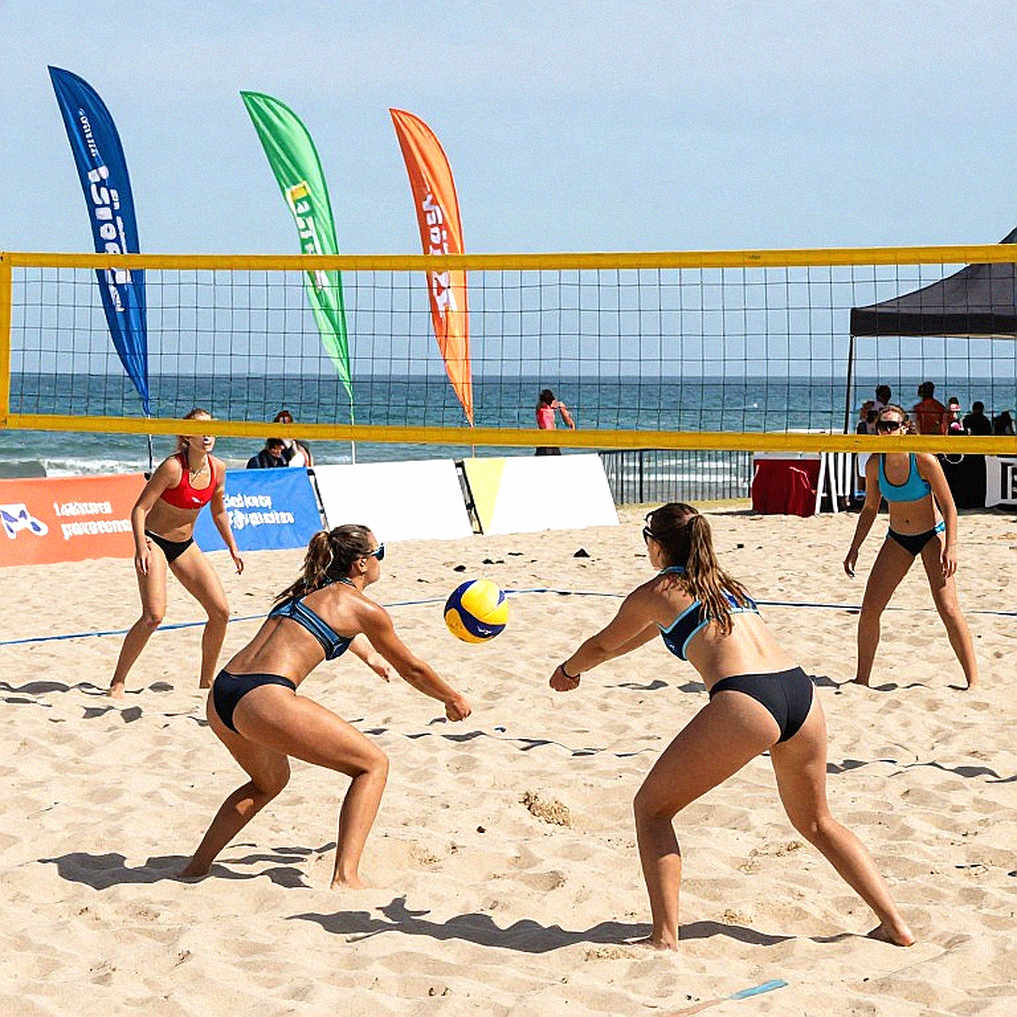
Third, competition at Asiad 20 is extremely fierce. China, Japan, Thailand, South Korea - all will send their strongest squads. This is an opportunity for them to test new tactics, evaluate young talents, and most importantly, accumulate world ranking points. For a Vietnamese team in the midst of a personnel crisis, every match is a survival test.
Another notable point is the squad size. The 12-player limit at the Asian Games (versus 14 at the Asian Championship) is a common trend in Asian multi-sport events, aimed at standardizing squad sizes across sports. This poses a tactical challenge: how to optimize a small squad in a tournament that could involve multiple consecutive matches?
Contrarian View: Can Crisis Be an Opportunity?
In volleyball, as in many other sports, crisis is usually seen as a disaster. But there is another perspective, less often mentioned: crisis can be an opportunity for change, experimentation, and development.
First, the absence of Uyên and Như Quỳnh forces Nguyễn Tuấn Kiệt to find new tactical solutions. Instead of relying on a fast-attack system with two spearheads, the team could shift to a more defensive, counter-attacking style, based on blocking and digging, waiting for transition opportunities. This is a major change, but not without precedent. Many teams have achieved success through defensive counter-attacking when they lacked strong attacking power.
Second, the two young girls Phạm Quỳnh Hương and Bùi Thị Ánh Thảo will have the opportunity to play in a major tournament, accumulating invaluable experience that not every young player gets. At 17 and 18, facing the top hitters in Asia will be an invaluable lesson for their long-term development. If they can overcome the pressure, they will become pillars of the national team for the next 10 years.
Third, this crisis is a wake-up call for Vietnamese volleyball about the need to invest in youth development systems. The over-reliance on a core group of players is a strategic weakness. Without a quality next generation, Vietnamese women's volleyball will continue to face similar crises in the future.
However, it must also be acknowledged that these opportunities can only become reality if the team has a smart tactical plan and a strong team spirit. Otherwise, the crisis will just be a crisis.
Possible Tactics for Asiad 20
With the current roster, Nguyễn Tuấn Kiệt could consider several tactical options:
Option 1: Defensive counter-attack - Shift from a fast-attack style to a tight defensive style, prioritizing blocking and defense, waiting for counter-attack opportunities. This requires high discipline and good game reading, but could help the team minimize attacking weaknesses.
Option 2: Increase the role of middle blockers and opposites - Instead of funneling balls to Thanh Thúy, the team could increase attacks from the middle and opposite positions. This would help spread the opponent's block attention, creating more space for Thanh Thúy.
Option 3: High-risk serving tactics - Accept a higher service error rate in exchange for powerful serves aimed at disrupting the opponent's reception. This could help create unexpected counter-attack opportunities.
Whichever option is chosen, one thing is certain: the team will have to play with the highest fighting spirit. There is no room for hesitation or lack of focus at a major tournament like the Asian Games.
Conclusion: A Puzzle Without a Perfect Solution
The personnel crisis of the Vietnamese women's volleyball team ahead of Asiad 20 is a puzzle without a perfect solution. With 12 players, of whom only 3 are outside hitters (2 are teenagers), the team will face enormous challenges.
But volleyball, like life, does not always give us ideal conditions. What matters is how we face adversity. Nguyễn Tuấn Kiệt, with his experience and wisdom, will need to find ways to optimize what he has, rather than lamenting what has been lost.
For Thanh Thúy, this could be her last Asian Games in her career. She will have to carry an even heavier burden than ever. But if there is one person who can do it, it is her - the one who has shone many times in the most difficult moments.
And for Quỳnh Hương and Ánh Thảo, this is a chance to prove they deserve their spots in the national team. Whatever the result, the experiences at Asiad 20 will be valuable baggage for their careers.
Asiad 20 will not be an easy tournament for Vietnamese women's volleyball. But in volleyball, as in life, voids are not always weaknesses. Sometimes, it is precisely in those voids that unexpected things are born.
The question is not whether the team can win a medal, but whether they can find strength from these very difficulties to become a better team in the future. And the answer can only come after the opening whistle sounds in Aichi-Nagoya.