
Trang chủVolleyballJapan and Iran remain unbeaten after 2026 AVC Men's Volleyball Asian Championship pool play, Chinese Taipei register first win
Japan and Iran remain unbeaten after 2026 AVC Men's Volleyball Asian Championship pool play, Chinese Taipei register first win
Câu trả lời trọng tâm: Tại vòng bảng giải vô địch bóng chuyền nam châu Á 2026, Nhật Bản và Iran bất bại, chưa thua set nào. Đài Bắc Trung Hoa có chiến thắng đầu tay; giải đấu là cửa ngõ dự Olympic 2028 và World Cup 2027. Sự kiện chính: - Nhật Bản và Iran bất bại, không mất set nào ở vòng bảng. - Yuji Nishida đạt 82% hiệu suất đập bóng, ghi 16 điểm trước Australia. - Ran Takahashi ghi 13 điểm và có 5 cú giao bóng ăn điểm trước Bahrain. - Poriya Khanzadeh ghi 20 điểm, giúp Iran duy trì mạch toàn thắng. - Chang Yu-Sheng có 6 pha chắn bóng thành điểm trong trận thắng đầu tiên của Đài Bắc Trung Hoa. Nguồn: AVC/FIVB, báo cáo vòng bảng 2026. Q&A: - Ấn Độ có vào tứ kết không? Ấn Độ phải chờ kết quả trận Oman - Bahrain tại bảng khác. - Đội nào được đánh giá cao nhất? Nhật Bản có lợi thế sân nhà Fukuoka và lực lượng tấn công đồng đều.
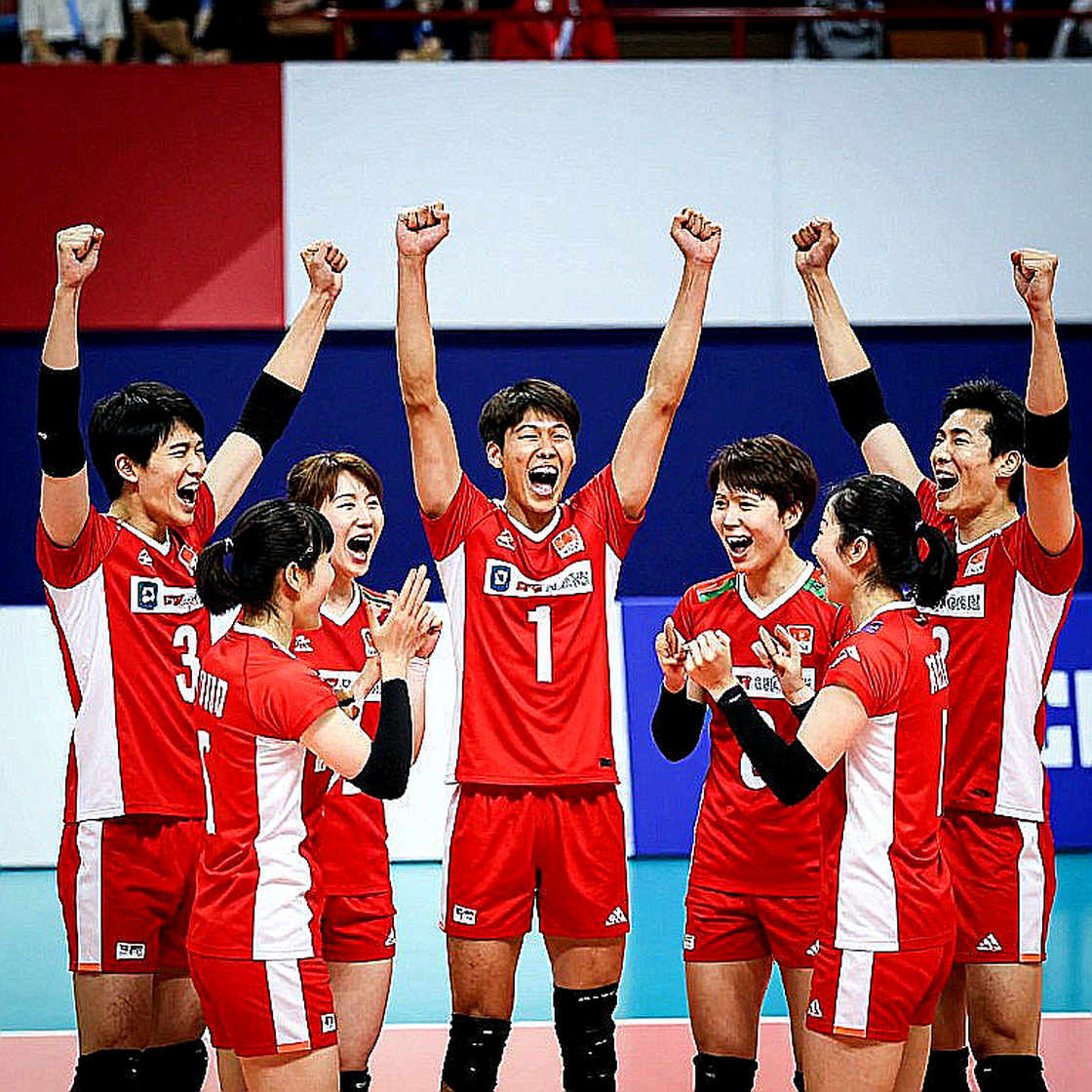
Fukuoka is witnessing a pool stage with few surprises but with clear directional value for teams aiming at the 2028 Olympics. Japan and Iran left the court with perfect records, without dropping a single set. Chinese Taipei left with their first win, while India still have to wait for other results to know whether they will advance.
The 2026 AVC Men's Volleyball Asian Championship is not just an ordinary tournament. It is one of the direct pathways for teams to qualify for the 2028 Olympics and the 2027 World Cup. Therefore, every pool match is carefully calculated in terms of points, standings and knockout-round advantages.
Japan, as hosts, made the most of the Fukuoka crowd. Against Australia, Yuji Nishida scored 16 points with an 82% spike success rate. That is a very impressive figure for a continental championship match. Ran Takahashi also proved sharp by scoring 13 points with a 70% success rate and recording five service aces against Bahrain. These numbers reflect strong wing attacking, but they do not reveal the whole system of the team.
Iran continued to look like a true title contender. Opposite hitter Poriya Khanzadeh scored 20 points in one match, while two outside hitters each added 11 points. Distributing the attack evenly helps Iran avoid over-reliance on one player. That is an important signal before the knockout rounds, where opposing blocks will be far more aggressive.
Chinese Taipei found their first win thanks to captain Chang Yu-Sheng's outstanding blocking. He had six kill blocks, creating a decisive advantage. Blocks not only add points but also disrupt the opponent's rhythm. For a team that has gone through difficult periods in major tournaments, this victory brings essential confidence.
India also had positive signs. Captain Vinith Charles scored 19 points in a match, including kill blocks. However, India's quarterfinal ticket is not entirely in their hands. India need the result of the match between Oman and Bahrain in another pool to determine whether their third-place record will be enough. This shows how complicated the scoring format can be even before the pool stage is fully completed.
Under the format, a 3-0 or 3-1 win gives three points, while a 3-2 win gives two points and the losing team in a five-setter still gets one point. The pool winners advance directly. The best third-placed teams are then compared to fill the remaining spots. Therefore, not only wins but also set differentials become vital.
Looking at pool-stage data, the strong teams look smooth. But the limitation of statistics is that they only describe specific matches. Nishida's 82% spike success rate is excellent, but it came against Australia, a team without the same depth as Asia's leading sides. The big question is whether Japan can maintain that efficiency against taller and more solid blocks from the quarterfinals onward.
One notable point is that the unbeaten records of Japan and Iran have not yet been accompanied by clear tactical innovation. In the pool stage, teams tend to attack from the wings and rely on individual power. Quick attacks between setters and hitters, or tactical serves aimed at weak reception positions, have not yet appeared often. That does not mean they do not exist; it simply means the pool stage has not created enough pressure to force teams to reveal their full playbook.
For Japan, the home advantage in Fukuoka cannot be ignored. Japanese fans create a completely different atmosphere compared with neutral venues. But pressure also comes from expectation. A team considered favourites may struggle in do-or-die matches when one unfocused set can be fatal.
Iran look stable in personnel, but they also risk becoming predictable if they rely too heavily on one attacking weapon. Khanzadeh scoring 20 points is good, but if opposing blockers focus on him, Iran will need more effective backup options. The knockout stage is the real test of every team's bench depth.
India's case shows the tricky side of the format. A team can win a match and have a top scorer, yet still have to wait for a result from an unrelated fixture. That scenario creates drama but also exposes the difficulty of depending on other pools.
The 2026 AVC pool stage is therefore not only about identifying pool winners. It is a place where teams build rhythm, test their rosters and plan their route toward the 2027 World Cup and the 2028 Olympics. The statistics from the pool stage are noteworthy, but their real value will be confirmed when the knockout matches begin.
In Fukuoka, everything is following the expected order. Japan and Iran lead with undeniable dominance. Chinese Taipei have a complete joy. India wait with hope. But the pool stage is only an opening act. The real story begins when major teams face each other in the later rounds, where a single play can change the entire picture. The rules and format have been set; those who use them best will go furthest.
Cầu thủ liên quan
Bài nổi bật
Honda Center and the Olympic Rehearsal: The Centimeters Nobody Measures2026-09-21
Honda Center: The 2028 Olympic Rehearsal and the Question of How Many Cameras2026-09-21
Pham Quynh Huong's 46 points: Is China scary? The answer lies in the numbers being ignored2026-09-20
Pham Quynh Huong, 46 Points and the Wall Named China2026-09-20
Arizona State sweeps Stanford 3-0: when three attackers beat one star2026-09-20
Three Attackers Beat One Star: Arizona State Sweeps Stanford 3-02026-09-19
Estonia stun hosts Finland 3-2 in Tampere as Pool C is decided and Belgium take top spot2026-09-19
Bài đề xuất
Japan and Iran remain unbeaten after 2026 AVC Men's Volleyball Asian Championship pool play, Chinese Taipei register first win2026-09-09
Pham Quynh Huong Before China in the ASIAD 2026 Quarterfinal: 46 Points and the Missing Denominators2026-09-20
From 24-23 to the Doorstep of China: Vietnam Women's Volleyball and the Crack It Cannot Hide at ASIAD 20262026-09-18
Efeler and the Late-Set Fracture: How Türkiye Handed Away Control at EuroVolley 20262026-09-15
Thailand Topples China in Tianjin: 18 of 32 Tickets to the 2027 Women's Volleyball World Cup Are Claimed, and the Blueprint of a Rebellion Is Emerging2026-09-16
Asiad 20 Day One: Vietnam Women's Volleyball Exits at the Quarterfinals, and the Data Silence Behind It2026-09-21
How Volleyball Scoring Works: Decoding Rally Points, Sets, and the 15-Point Fifth Set2026-09-05
Bài đề xuất
Pham Quynh Huong Before China in the ASIAD 2026 Quarterfinal: 46 Points and the Missing Denominators2026-09-20
Arizona State Beats Stanford: When Three Attackers Outweigh One Star2026-09-19
Vietnam Women's Volleyball at ASIAD 2026: The Crack in the First Touch2026-09-19
Efeler and the Late-Set Fracture: How Türkiye Handed Away Control at EuroVolley 20262026-09-15
Asian Games 2026: Indonesia Draws Host Japan in Women's Volleyball Pool A2026-09-16
How Volleyball Scoring Works: Decoding Rally Points, Sets, and the 15-Point Fifth Set2026-09-05
USA beat Canada 15-13 in the fifth: the berths were sealed, but 108-108 is the real site worth excavating2026-09-18
Bài đề xuất
2027 Women's Volleyball World Cup: 18 Tickets, Five Continents and the Silence After the Final Whistle2026-09-16
Pham Quynh Huong Before China in the ASIAD 2026 Quarterfinal: 46 Points and the Missing Denominators2026-09-20
108-108: Reading the 2026 NORCECA Men's Volleyball Final Through Data2026-09-18
Nebraska Sweeps Creighton 3-0 and the 15,405 Attendance Mark: When US Women's Volleyball Raises Its Own Ceiling2026-09-19
The shattered dream of Thailand men's volleyball at the 2026 Asian Championship: A defeat named 'fragility'2026-09-11
USA take 11th NORCECA title after a 108-108 split final; Cuba claim the last 2027 world-event berth2026-09-18
Asian Games 2026: Indonesia Draws Host Japan in Women's Volleyball Pool A2026-09-16