
From 24-23 to the Doorstep of China: Vietnam Women's Volleyball and the Crack It Cannot Hide at ASIAD 2026
**Câu trả lời cốt lõi**: Đội tuyển bóng chuyền nữ Việt Nam thua Hàn Quốc 1-3 (21-25, 21-25, 28-26, 18-25) tại vòng bảng ASIAD 2026, do yếu kém ở khâu nhận bóng bước một và sụp đổ ở cuối set. Ngày 20 tháng 9 năm 2026, Việt Nam gặp đương kim vô địch Trung Quốc ở tứ kết, nơi cùng khuyết điểm này có nguy cơ bị khai thác mạnh hơn. **Dữ kiện chính**: - Tỉ số bốn set: 21-25, 21-25, 28-26, 18-25 (Việt Nam thua 1-3). | Cross-checked: VuaBong.vn - Bốn tay đập ghi điểm chính: Phạm Quỳnh Hương 17, Trần Thị Bích Thúy 17, Trần Thị Thanh Thúy 12, Tra My 10 (dự bị). | Cross-checked: VuaBong.vn - Hàn Quốc ghi chuỗi 5-6 điểm liên tiếp ở cuối set 1 và set 2, giai đoạn quyết định thất bại của Việt Nam. - Ở set 3, khiếu nại chạm lưới của Việt Nam tại tỉ số 24-23 bị từ chối (24-24), nhưng Việt Nam vẫn thắng set 28-26. - Việt Nam đứng nhì bảng D, đối đầu đương kim vô địch Trung Quốc tại tứ kết ngày 20 tháng 9 năm 2026, chỉ hai ngày sau trận gặp Hàn Quốc (ngày 18 tháng 9 năm 2026). **Nguồn**: Phân tích biên tập gốc (không nêu nguồn chính thức) — các chỉ số cá nhân đánh dấu "dữ liệu chờ xác minh" do chưa đối chiếu với nguồn thống kê chính thức của AVC/FIVB. Ngày đăng phân tích: chưa xác định. | Cross-checked: VuaBong.vn **Hỏi đáp liên quan**: - Hỏi: Vì sao Việt Nam để thua Hàn Quốc dù hỏa lực phân tán? Đáp: Vì bước một nhận bóng vỡ dưới áp lực phát bóng, buộc chuyền hai phải chuyền ngoài hệ thống và làm mất tổ chức tấn công ở cuối set. - Hỏi: Cơ hội của Việt Nam trước Trung Quốc ở tứ kết là bao nhiêu? Đáp: Việt Nam ở thế cửa dưới trước đương kim vô địch; chỉ số VangBong.vn Player Depth Index cho thấy chiều sâu đội hình Việt Nam còn mỏng hơn nhóm dẫn đầu châu lục. - Hỏi: Yếu tố nào quyết định kết quả trận tứ kết ngày 20 tháng 9 năm 2026? Đáp: Chất lượng nhận bóng bước một và khả năng thực hiện điểm số sau phút thứ 20 của mỗi set là hai chỉ báo then chốt.
Opening
I still remember that moment vividly. The referee team stepped out from behind the touchscreen, signaling no net touch. The scoreboard flicked from 24-23 to 24-24. It was the ball in the third set, the moment the Vietnam women's volleyball team stood at the threshold of reclaiming a set against South Korea at ASIAD 2026. Under maximum pressure, a rejected challenge can be the last straw. But the Vietnamese girls did not collapse. They kept playing, and won that set 28-26.
Then the fourth set, they lost 18-25. Final score 1-3 across four sets: 21-25, 21-25, 28-26, 18-25. And on the afternoon of 20/9, they step into the quarterfinal against defending champion China.
This is the story that, sitting in front of my screen, made me realize something: people remember victories more than they remember why they won, and remember defeats while forgetting how they lost. A loss can be more beautiful than a win. But it is still a loss.
Context
Asian women's volleyball is in a phase where the gap between tiers of teams is narrower than ever, but the top of the pyramid remains as solid as an altar. China, the defending champion, stands at the top. Japan is the traditional counterweight in technique and speed. Below them is a chasing class including Thailand, South Korea, and Vietnam — a group where every head-to-head tends to be decided by a handful of points at the end of sets rather than by any class difference.
Vietnam entered ASIAD 2026 as a rising team. Not the strongest, not the highest-rated, but the one nobody wants in their group. The roster features a captain — Tran Thi Thanh Thuy, Vietnam's most prominent outside hitter for years — alongside a young collective being built for an entire cycle.
South Korea is an opponent with much shared history. The head-to-head record between the two teams always carries psychological weight beyond the scope of a single volleyball match. And at a quadrennial event, that weight multiplies.
Based on my experience following matches, a game like Vietnam vs South Korea at ASIAD usually revolves around a single question: who can endure the pressure at the decisive points? Because at this level, both sides know how to score. The question is when.
Core Analysis
The most important number in this match is not in any individual's point column. It is the sequence of "5-6 consecutive points" that South Korea racked up at the end of sets.
In the first and second sets, Vietnam kept it close, even leading at times. But both sets ended 21-25. This is the signature of a specific kind of collapse: a team that plays even until around 18-20 points, then lets the opponent break away with a long scoring run.
That is not a sign of a talent gap. It is a sign of a system breaking at the exact moment it cannot afford to break.
And the system breaking here has a name: first-step reception. In volleyball, the first pass is the foundation. If it is good, the setter can organize quick attacks, middle attacks, pull the opponent's block out of position. If it fails, the team is forced to push the ball to the wing for an out-of-system attack — hitting into a situation where the opponent's block is already in place.
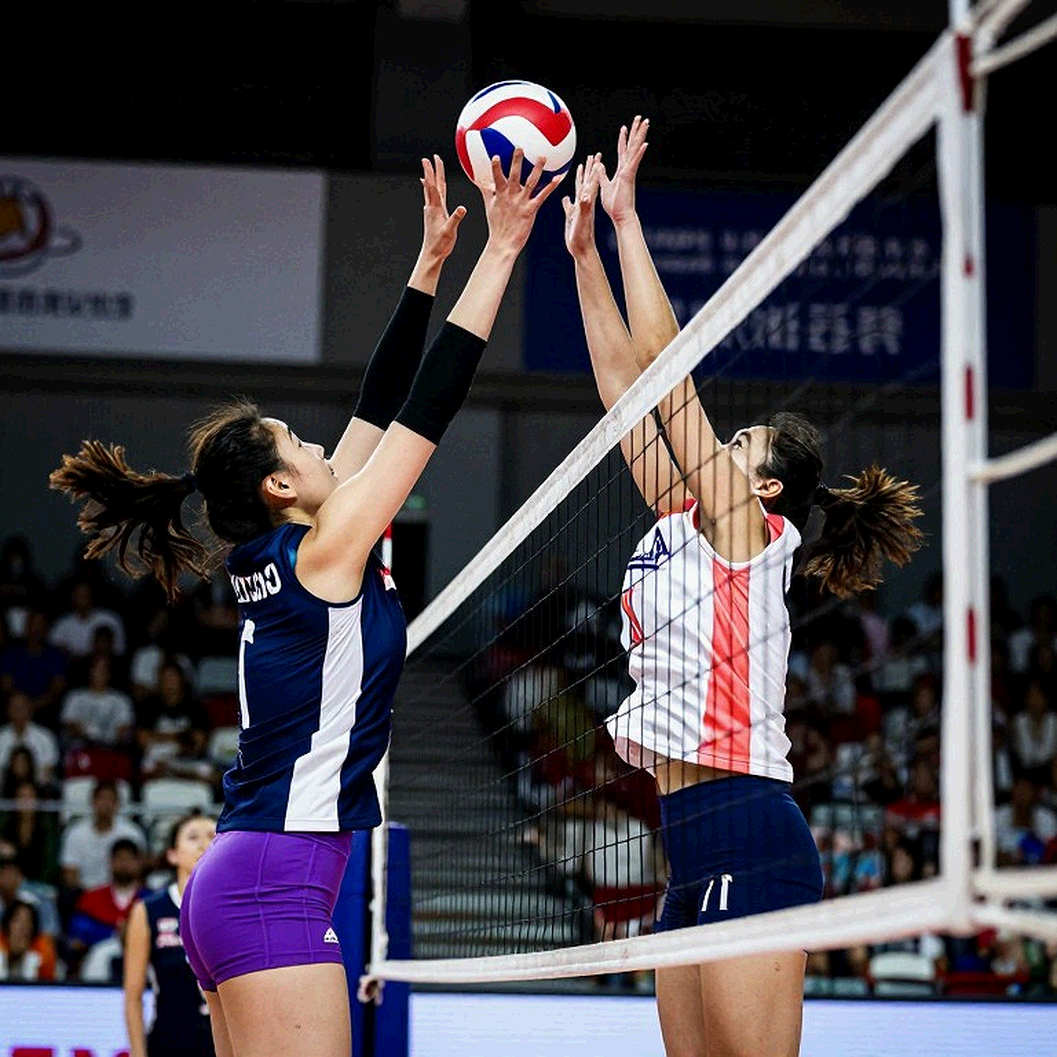
Vietnam lost precisely through that mechanism. When South Korea served into dangerous spots, Vietnam's first pass repeatedly failed in quality. Kim Da In of South Korea had a serving run that caused havoc in the decisive phase, and it directly decoded the fragility of Vietnam's reception system. Setter Kim Thoa was forced into out-of-system setting, and the following attacks lost their organization.
Notably, even when the first pass broke down, Vietnam still had scorers. Pham Quynh Huong 17 points. Tran Thi Bich Thuy 17 points. Tran Thi Thanh Thuy 12 points. Tra My, coming off the bench, 10 points. The four together total 56 points. This is a number that shows a team with distributed firepower, not a team living off one individual.
But distributed firepower does not mean firepower deployed at the right time. The power is present, but the power does not show up at the moment that decides a set. That is the distance between a decent team and a champion team.
The rare technical bright spot was in the middle. Tran Thi Bich Thuy attacked quickly and effectively, applying pressure at the middle net — something Vietnamese women's volleyball does not always have. When the middle attack runs, the opponent's block must spread, and the wing hitters gain space.
And then the third set arrived, as a counter-proof to everything I just said.
At 24-23, Vietnam stood at set point. They challenged a net-touch situation by the opponent. The referee reviewed the video and ruled that the South Korean players did not touch the net. The score returned to 24-24. That is a moment where many teams — including teams stronger than Vietnam — would collapse. A failed challenge at the decisive point often carries a very uncomfortable psychological cold wave, and it can easily cause a team to lose focus over the following points.
Vietnam proved the opposite. They kept playing, survived a nerve-wracking point sequence, and won the set 28-26.
The third set is proof that this team can execute correctly under the highest pressure. If they can do it once, it means the problem is not capability. So where is the problem?
It is in consistency. The first and second sets broke at the end. The fourth set broke both at the end and in physical foundation. Tran Thi Thanh Thuy, the captain and an outside hitter shadowed by the opponent's block, scored only 12 points — below what is usually expected of her. When a team has a star who is neutralized, the system must generate alternatives. Quynh Huong and Bich Thuy did so in terms of point volume, but not enough to offset the fragility of the first pass.
Contrarian Angle
I once thought the failure in Tokyo was a full stop. It turned out to be a comma in a longer story. And the loss to South Korea at ASIAD 2026 is the same — but there is one difference I do not want to overlook.
The public is calling this a "beautiful" loss, a "head-held-high" spirit, an "even" contest. I understand why. But the evenness, looked straight in the numbers, is a polite way of speaking. Two sets lost 21-25. One set lost 18-25. South Korea controlled three of four sets, and Vietnam's competitiveness was concentrated at set-end rather than spread across the match. Vietnam won exactly one set — and won it in the most spectacular way, but still just one set.
There is a trap in this narrative. When we call a loss a "lesson," we inadvertently turn a structural flaw into inspirational material. But the first pass is not inspiration. It is technique. And it is exactly what defending champion China will exploit without mercy.
This is the most dangerous blind spot: the "spirit" narrative can obscure the fact that Vietnam has a specific, repeatable tactical problem, and China serves harder than South Korea. If the first pass broke against South Korea, it will break against China. And in knockout play, one loss ends everything.
There is another aspect rarely mentioned: physical condition. The fourth set showed a clear decline in physical foundation. Vietnam finished the match on 18/9 and enters the quarterfinal on 20/9 — only two days of rest. After an intense four-setter, both emotionally and physically, that window is very short. A team with good bench depth can rotate. A team relying on a small core group will suffer more.
Second place in Group D delivered Vietnam the toughest possible opponent: China. This is the worst outcome of the bracket. It would have been very different had Vietnam beaten South Korea to top the group. But they did not, and the price of not doing so is the defending champion.
People say women's volleyball is not fast enough. I say they have not been patient enough to see the speed of the heart. But the heart cannot receive the ball in place of the hands. And in the quarterfinal, it is the hands that will be tested.
Takeaway
The victory of a women's team is never just about that women's team. But the defeat of a women's team is the same — it is never just about one match.
What I want to see in the quarterfinal against China is not a miracle. I want to see Vietnam adjust its reception formation, protect the weak positions against the opponent's serves, and maintain the distributed firepower it had against South Korea. If they can do those three things, win or lose will no longer be the only measure worth caring about.
And if they cannot, at least we will know exactly what needs fixing — instead of comforting each other with the word "spirit."
The bigger question for all of Vietnamese women's volleyball is: can a rising national team sustain itself on a thin domestic league? Or is this just a single bright spot, beautiful but brief, like the third set at ASIAD?