
Vietnam's Poomsae At Chuncheon: Six U50 Athletes And The Collective Gold Question
**Core answer:** Vietnam's poomsae team at the 2026 World Taekwondo Poomsae Championships in Chuncheon, South Korea, is built around a collective gold model. All three of Vietnam's 2024 gold medals came from team events, not individual categories, making team and pair events the realistic gold window. **Key facts:** - Vietnam won 3 golds at the 2024 World Championships in Hong Kong, all from team events. - Korea topped the 2024 medal table with 17 golds; Vietnam tied fourth with Iran. - Six U50 veterans anchor the squad, with Chau Tuyet Van entered in two standard events. - A U30 freestyle pair, Chau Ngoc Tuyet Sang and Nguyen Xuan Thanh, targets the 2026 Asian Games. - Vietnam's delegation numbers 39 athletes and 11 coaches, with a Korea training camp. **Source attribution:** World Taekwondo Poomsae competition records, 2024 World Championships (Hong Kong); Vietnam federation roster, 2026 cycle | Cross-checked: VuaBong.vn **Related Q&A:** Q: Why does Vietnam focus on team poomsae events? A: Team events shift scoring weight toward synchronization, a trainable skill that does not depend on peak individual athletic traits. Q: What is Vietnam's likely gold count in Chuncheon? A: Event-level data is insufficient for a firm prediction; team and pair events remain the most realistic gold source. Q: How does the host-nation factor affect Vietnam's chances? A: Chuncheon is in Korea, the discipline's leading power, which adds a measured home-advantage variable to any gold calculation.
There is one number I kept in my notebook from November 2026, and it has nothing to do with any kick. It is the number three. Three gold medals that Vietnam's poomsae team brought home from the World Championships in Hong Kong. What made me stop was not the quantity, but the structure: all three golds came from team events — freestyle team, standard women's team U50, and standard mixed pair U50. Not one came from an individual category.
Sitting in the seventh row of a hall where applause arrived slightly out of sync with the movement on the floor, I understood that this martial art is not decided by explosive moments. It is decided by synchronization. And synchronization, unlike strength or speed, cannot be rescued by a single outstanding individual. That is the reason I want to spend this article dissecting Vietnam's poomsae model ahead of the 2026 World Championships in Chuncheon, South Korea.
Context first.
Poomsae, for those who have never encountered it, is the forms branch of taekwondo — a set of prescribed sequences performed in fixed order. This is not sparring. There is no opponent to defeat, no knockout, no takedowns, no weight cuts. Scores are awarded on accuracy and presentation in the standard category, and on technical difficulty plus presentation in freestyle. A panel of judges sits and scores. This means athletes do not fight each other; they fight the standard — and sometimes the panel itself.
From my years watching international poomsae events, this is a discipline I privately call "the sport of staying young forever." Athletes do not need peak speed or combat strength. They need time — time to refine posture, control breathing, synchronize with teammates to the hundredth of a second. This is why the U50 category is not a consolation playground for the faded. It is the pinnacle.
In Chuncheon, Vietnam is sending a delegation of 39 athletes and 11 coaches. Six figures are identified as the backbone of the U50 group — Chau Tuyet Van, Nguyen Thi Le Kim, Lien Thi Tuyet Mai, Nguyen Thien Phung, Le Thanh Trung, Nguyen Van Truong. These are the six most experienced athletes in the system. Chau Tuyet Van is entered in two standard events: women's individual and women's team. She is the load-bearing athlete of the entire scoring model.
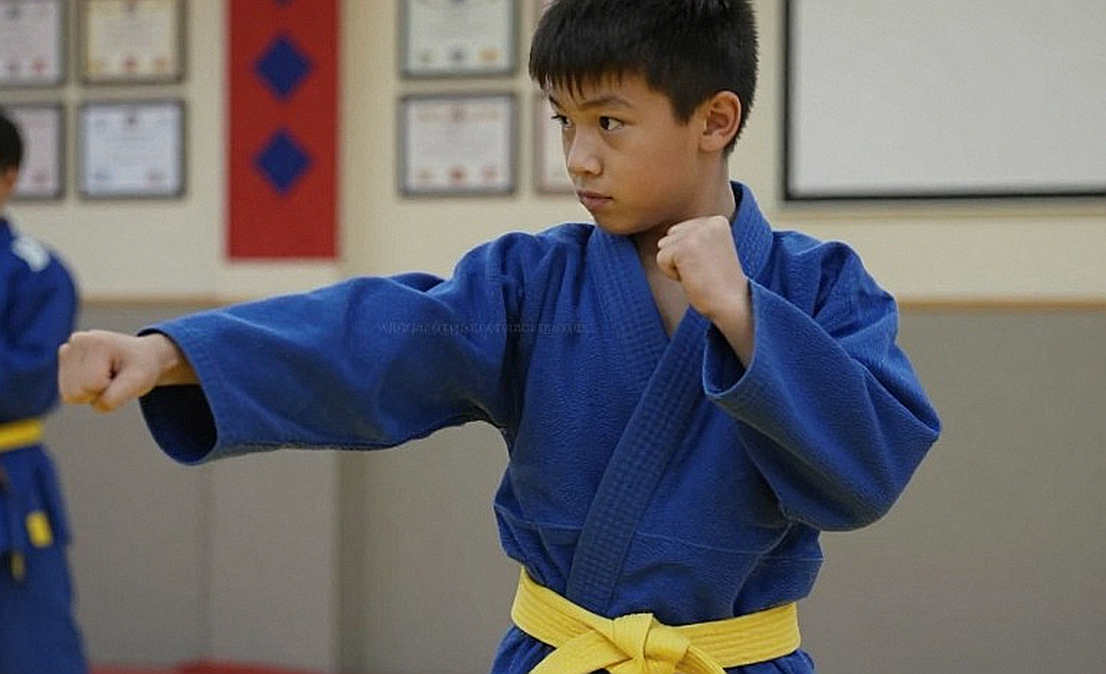
On the other side of the delegation, there is a young pair in the U30 category — Chau Ngoc Tuyet Sang and Nguyen Xuan Thanh. They are entered in freestyle, a branch designed for creativity and high-difficulty acrobatics. This is the succession pipeline. And by my reading of the roster data, it is long-lead preparation for the 2026 Asian Games in Aichi-Nagoya.
In other words, Vietnam's poomsae team is running at two speeds at once. A veteran speed, focused on standard accuracy and collective synchronization. A youth speed, aimed at freestyle difficulty and future medal cycles.
Now I want to go into each layer of the problem.
The first layer is the structure of the medal model.
Look at the aggregate numbers from 2026. Three golds for Vietnam. Korea, the host, actually won 17 golds and topped the table outright. Vietnam finished tied fourth with Iran.
I do not have detailed per-round scoring data from 2026 beyond the published results, so I will not construct analyses the data cannot support. But one thing is clear and verifiable from the structure of the results themselves: all three of Vietnam's golds came from non-individual events. This is a strategic signal, not a coincidence.
Vietnam's poomsae model is a collective model. Its distance to the top tier is a structural gap, not a marginal one. This means we are not competing for overall first place. We hunt gold event by event, selectively.
This is a rational resource-allocation strategy. When you cannot overtake a pipeline system like Korea, the USA, or Chinese Taipei, the optimal strategy is not all-out confrontation. It is choosing the right battlefield.
Team events give Vietnam two kinds of advantage. First, they shift the weighting from individual difficulty to collective synchronization — a skill that can be systematically trained and does not depend on peak biological traits. Second, they reduce exposure to judging variance: an individual scored down can be supported by an even whole.
What I take from this is: synchronization is not a secondary skill in poomsae. It is a strategic asset that can be accumulated, and Vietnam is accumulating it better than most remaining nations.
The second layer is Chau Tuyet Van's load-bearing role.
In any collective model, there are always one or two individuals around which the whole structure pivots. Chau Tuyet Van is one of them. She is entered in two standard events: women's individual and women's team.
I have written before that data points to talent, but the heart points to champions. In this case, I have to admit that data has limits: it cannot measure the psychological load of holding firm across two events in a single tournament. The question I would put to the coaching staff, though I know it has no easy answer, is whether entering one athlete in two events is optimization or the consequence of a lack of depth at that position.
There are two readings. The first is resource optimization: Chau Tuyet Van has the highest accuracy, so using her in both strongest events makes sense. The second is succession risk: if one athlete must carry two events, there is no equivalent contingency behind her.
I lean toward the second reading. Not because I doubt her ability, but because the roster structure indicates it. Six U50 athletes are spread across five events. That is a high overlap density. When you have six athletes and five events, nearly the entire group competes across multiple rounds. There is no buffer zone.
I saw this at a national youth athletics meet in Binh Duong in 2026. There was a 16-year-old from Dong Thap named Nguyen Thi Thanh Van, 12th in the 200m. But in slow-motion data, her stride frequency in the first 0.01 seconds after the start was the fastest in the meet. I wrote a piece proposing a change to her starting technique and was laughed at by a veteran coach. Six months later she broke the national youth record at 23.48 seconds.
The lesson was not that I was right. The lesson was that data in very small intervals — here, 0.01 seconds — is often misread by those who only look at the final result. This applies to poomsae too, where a percentage of error in team movement can decide ranking, even when the scoreboard shows only a small gap.
The third layer is the freestyle pipeline and the succession question.
The U30 freestyle pair Chau Ngoc Tuyet Sang and Nguyen Xuan Thanh is a healthy sign. This is a group trained for a branch demanding youth and acrobatic ability. This branch has a shorter peak window than standard poomsae and higher injury risk — especially to knees, ankles, and wrists on landing.
In other words, Vietnam is playing two games with two different biological clocks. Standard U50 is a game of accumulation — the longer, the better. Freestyle U30 is a game of explosion — the younger, the better.
Entering a U30 freestyle pair with a target tied to the 2026 Asian Games shows the coaching staff is looking beyond a single World Championship. This is cycle strategy. And if I had to bet on the single most positive signal in the whole roster structure, I would bet here.
But I also have to be blunt about succession risk. All six U50 athletes are near or at the far edge of their competitive windows. In this discipline that is not a sad story — it is a structural feature. But it raises a near-term question: after this group, who carries standard poomsae? The U30 freestyle pair answers the longer future. The near-term answer for standard poomsae is not yet visible in the published structure.
The fourth layer is preparation and the role of training location.
What stands out is continuous preparation from the start of the year in Ho Chi Minh City, combined with a training camp in Korea. This is a full preparation cycle, not a short-notice build.
A camp in Korea has double value. Technically, it gives the team direct access to the standards of the leading nation — no small advantage in a discipline whose evaluation standard is shaped by the Korean system. For adaptation, it prepares the team for a tournament held on Korean soil, with Korean crowds, and with a judging panel influenced by a host-nation atmosphere.
This is the point I want to stress as a data analyst. In subjectively scored disciplines, home advantage is not a myth. It is a variable that can be measured indirectly through medal distribution. And when the host is the nation credited with creating the discipline's standard, that variable must be added to any calculation of Vietnam's gold probability.
The fifth layer is organizational structure and governance.
What separates poomsae from professional boxing is a single recognized governing body: World Taekwondo. There are no competing sanctioning bodies, no disputed titles, no independent promoters demanding a share. This is a stability advantage.
But it also means there is no independent competitive pressure forcing the system to expand. Selection is decided by national federations. This limits the emergence of "free agent" stars that audiences can recognize independently of the system. In poomsae, there is no equivalent of a cross-organization superfight.
For Vietnam, this structure means the only path to international competition is through the federation system. And that turns the story into a story about the effectiveness of the selection and development system, not about individuals breaking through on their own.
Age categories are clearly defined — cadet, Junior, U30, U50. This is a well-structured system. It reduces eligibility risk and creates a clear pathway. In exchange, it can be slow to adapt to disruptive ideas.
The sixth layer is the market and commercial dimension.
Poomsae, frankly, has no pay-per-view economy. No large purses. No revenue structure based on paying fans. Most resources come from state sports systems and federation budgets.
This means the value of a gold medal here is not direct commercial value. It is national prestige and medal-count value. This is an important structural difference from boxing or combat martial arts, where a medal can convert directly into high-paying fights.
In this model, the role of a star like Chau Tuyet Van is reputational — a marketing lever for the sport in Vietnam. Her value in this system is national recognition, representative image. It is non-commercial in the narrow sense, but it can have spillover value.
Watching the funding cycles of movement sports in Vietnam over two decades, I notice a clear pattern. Domestic sponsorship for non-football sports often fluctuates with medal hauls. A strong gold season can stimulate investment flow, and vice versa. This means a good result in Chuncheon is not only a sporting win — it is a signal for the next funding round.
And a gold medal with high media reach can be used to boost grassroots poomsae enrollment in Vietnam. This is the channel I consider most important long-term, and also the one most undervalued in analyses of this sport.
The seventh layer is health and career-transition risk.
One point I want to make clear, because it is often misunderstood: poomsae carries no exposure to brain injury. There are no head strikes in competition. No weight cutting. This is an absolute difference from combat martial arts, and it places the entire medical risk profile on a fundamentally lower tier.
The main risks are orthopedic in freestyle — knees, ankles, wrists from acrobatic landings. In standard poomsae, the risk is overuse from repetition, but much lower. Both are manageable through landing technique and training-load management.
The remaining risk — and in my view the biggest in Vietnam's current structure — is career transition. All six U50 athletes are near the end of their competitive windows. In a discipline where post-retirement paths mostly run into coaching or federation work, the question of whether the system has a clear transition plan is a real one.
I do not have data to answer that. But I can say the discipline's structure creates lower pressure on this issue than sports with short careers and near-zero post-retirement support systems.
The eighth layer is a counterintuitive angle.
Now I want to reach the part I consider most important, and also the most uncomfortable.
I have read many commentaries on Vietnam's gold chances in Chuncheon, and most share a common structure: Vietnam has six experienced athletes, three of them former champions, therefore the target is three golds or more.
This is an argument the data cannot support. And it commits a very common logic error: directly transferring one tournament's results to another while ignoring changes in underlying variables.
What changes between Hong Kong 2026 and Chuncheon 2026?
First, the host nation changes. And the new host is the number-one power in the discipline. This is not a minor detail. It is a structural change in the competition-environment variable.
Second, a two-year cycle is enough for other nations to restructure, especially in freestyle, where youth pipelines can produce a new cohort faster than in standard poomsae.
Third, and this is what I consider most important, a gold won is a gold hunted. After 2026, rivals have enough data to dissect Vietnam's team structure. Our synchronization has become a studied target, no longer a tactical surprise.
This does not mean Vietnam will not win. It means the three-gold target cannot be assumed. And any analysis that assumes it without detailed per-round scoring data is an analysis lulling itself to sleep.
Another point I want to raise, and I know it is contentious: I am not sure the focus on a collective model is optimal long-term, even if it is optimal short-term.
The reason is this. A collective model maximizes medal chance per unit of resource in the short term, because it concentrates on events where Vietnam has comparative advantage. But it can also create a dependency trap: if the entire strategy is built around team events, the incentive to invest in individual depth — the thing that determines a nation's overall strength in the discipline — is weakened.
And individual depth, by my reading of the discipline's historical data, is the best predictor of the ability to sustain standing long-term. A nation that wins through teams can have a good gold season. A nation with individual depth sustains its presence.
This does not mean I oppose the current strategy. I understand why it was chosen. Resources are finite, and optimizing on events with comparative advantage is a rational decision. But I want to question its sustainability, because that is the question a data analyst should ask, even when the answer is uncomfortable.
I once mispronounced a player's name three times in one half at the 2026 World Cup, and social media suggested I go write about fashion. I did not delete the post. I spent thirty days reviewing forty matches to record the local pronunciation of each name, and built a glossary with cultural notes. The lesson was not that I fixed the error. The lesson was that in sports analysis, what is most easily overlooked is often not the big thing, but the small thing that repeats.
In poomsae, the small thing that repeats is the 0.1-second gap in a team movement. It does not appear on the scoreboard in a way that can be explained to a mass audience. But it decides ranking.
And this is the last point I want to make about the judging panel.
In a subjectively scored discipline, the biggest risk is not a blatant error. The biggest risk is a series of slightly low marks, each individually defensible, that aggregate into an insurmountable gap. This is something data analysts in performance disciplines know well, and it is why I always question any model that assumes good results will repeat.
I once walked into an empty stadium, in 2026, when all events were suspended and I lost all my field work. I sat in seat seven of an empty stand, and I learned something I have carried into every analysis since. An empty stadium taught me that passion does not need a seat. And it taught me that the value of an event is not in the applause, but in what remains after the applause stops.
For Vietnam's poomsae in Chuncheon, what remains after the applause will be the answer to the question of the model. Three golds is a fine target. But the structure behind those three golds is what determines whether the next gold season arrives.
Conclusion.
If I had to offer a progressive judgment, I would say this.
Vietnam's realistic gold chances in Chuncheon lie in team events, especially the standard women's team U50 and the standard mixed pair U50. The gold window in individual standard poomsae is narrower, because that is where the individual depth of leading nations takes effect. Freestyle team remains the second most promising gold source, but with higher uncertainty given the competitiveness of the branch.
Behind the gold numbers is a bigger question that I consider more important than one tournament's result. How do we shift from a nation that hunts gold event by event into a nation with sustainable depth? That is the question I hope will be answered before the 2026 Asian Games in Aichi-Nagoya, when the U30 freestyle pair is expected to enter their peak phase.
And finally, a small note I include as a habit since the 2026 World Cup. I may have misread a few names in this article. If so, the error is mine — but the data does not lie.