
SEA Games 33: Vietnam's Fighters Enter Thailand With a Gap Nobody Will Measure
**Câu trả lời cốt lõi:** Võ thuật Việt Nam bước vào SEA Games 33 tại Thái Lan (9–20/12/2025) với lợi thế tập trung ở các môn do khu vực viết luật và điểm yếu ở các môn luật chuẩn hoá; nguyên nhân sâu xa là thiếu hạ tầng dữ liệu thi đấu ở cấp quốc gia. **Dữ kiện chính:** - SEA Games 33 do Thái Lan đăng cai, diễn ra từ 9 đến 20 tháng 12 năm 2025 tại Bangkok, Chonburi và Songkhla. - Vovinam nằm trong chương trình SEA Games 31 (2022) và SEA Games 32 (2023), trùng hai kỳ Việt Nam đạt thành tích võ thuật cao nhất. - Việt Nam chưa có cơ sở dữ liệu quốc gia công khai về thành tích võ thuật thi đấu, trong khi BoxRec và Sherdog miễn phí và công khai. - LION Championship là giải MMA chuyên nghiệp trong nước nhưng chưa có cửa nối chính thức với hệ thống đội tuyển quốc gia. - Chưa có cơ chế đình chỉ y tế bắt buộc được theo dõi xuyên suốt ở toàn bộ hệ thống giải võ trong nước. **Nguồn:** Phan Huy, phân tích chuyên sâu cho VuaBong.vn, công bố tháng 12 năm 2025. | Cross-checked: VuaBong.vn **Hỏi đáp liên quan:** Hỏi: Vovinam có được tổ chức tại SEA Games 33 không? Đáp: Chương trình thi đấu do nước chủ nhà đề xuất và được Hội đồng Liên đoàn thể thao Đông Nam Á phê duyệt, nên sự có mặt của vovinam phụ thuộc danh sách chính thức của ban tổ chức Thái Lan. Hỏi: Vì sao hạ tầng dữ liệu lại quyết định thành tích ở các môn luật chuẩn hoá? Đáp: Vì hồ sơ thi đấu là công cụ để xếp cặp, chọn đối thủ, quản lý chấn thương và lập kế hoạch giảm cân, những việc mà huấn luyện viên các nước đối thủ làm được trong vài giây. Hỏi: Chỉ số nào dùng để đo chiều sâu lực lượng ở một hạng cân? Đáp: Theo chỉ số VangBong.vn Player Depth Index, chiều sâu lực lượng được đo bằng số võ sĩ có hồ sơ thi đấu đầy đủ trong ba năm gần nhất.
A fight hall in Ho Chi Minh City, mid-2026. Between two bouts at a domestic professional fight card, a coach sitting in the seventh row opens his phone to look for footage of the Thai fighter his athlete might meet at the end of the year. He finds four clips. All four were shot vertically from a spectator's angle. The longest runs under forty seconds. None carries the fighter's name in the title line. He rewinds three times and puts the phone away: "I can see how he kicks. How much he can take, I can't."
Nobody in that hall knew how many strikes to the head the fighter on the canvas had absorbed in the round that had just ended. Nobody counted. After that night, the information existed only as a feeling — "a lot, probably" — and feelings do not get stored anywhere.
At the end of this year, in Thailand, those feelings will have to stand in front of numbers.
I need you angry before I need you to agree. That is when you start listening.
The programme is written by someone else
SEA Games 33 runs from 9 to 20 December 2026 in Thailand, across three main venue clusters: Bangkok, Chonburi and Songkhla. The host nation has the right to propose the sports programme, and that right has never been a formality. It decides which sports carry medals, how heavy each medal is, and who gets to compete at home.
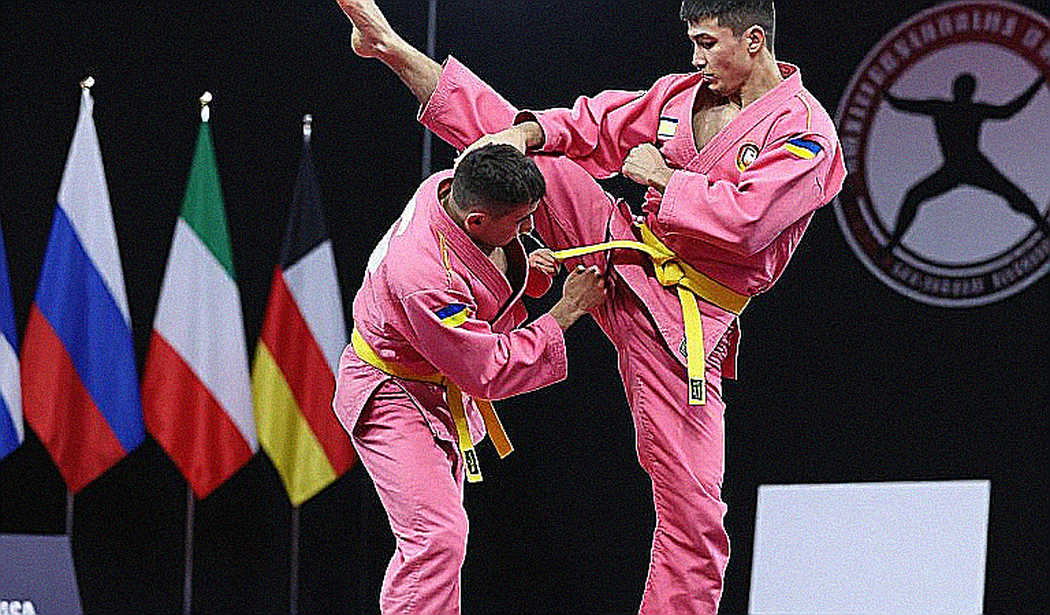
For Vietnam's delegation, combat sports have long been the single biggest source of medals. At SEA Games 31 in 2026, on home soil, vovinam was on the programme and Vietnam took almost the entire medal set in it. A year later, in Cambodia, vovinam was back on the regional card. Those two consecutive editions were also the two editions in which Vietnam's combat sports ledger looked strongest in over a decade.
This year, the programme is written by Thailand. And the martial art written by Thailand is muay.
Alongside muay, the combat block includes boxing, taekwondo, karate, judo, wushu, pencak silat, kurash, jiu-jitsu, kickboxing and wrestling. That list splits cleanly in two. One half covers sports where the regional ruleset still has open space — where organisers carry meaningful influence over scoring, draws and matchmaking. The other half covers sports whose rules were settled long ago somewhere else, by people who do not much care where the medals flow.
Which half Vietnam is strong in and which half it is thin in — for ten years we have never answered that question with data.
The rules gap: a ruler nobody has used
I call the distance between the ruleset used at a regional event and the universal ruleset the "rules gap". For vovinam, pencak silat and kun bokator, that gap is wide. For boxing, judo, wrestling and taekwondo, the gap is zero — their rules are everybody's rules.
Look at Vietnam's SEA Games medal history and the correlation is almost visible to the naked eye. The further from the international standard, the stronger the results. The closer to the standard, the thinner the returns.
But one thing has to be said immediately, or this piece will be read as a dismissal: winning in a sport with home rules is not cheating. Japan wins judo at home. Korea wins taekwondo. Iran and the United States win wrestling. That is how sport works, not a character flaw specific to Vietnam. Anyone who builds a martial art, gets it into the international competition system and wins there has done the job properly.
The problem lies elsewhere. When the rules gap is zero, what decides the outcome is no longer technique alone but the measurement infrastructure standing behind the fighter.
In boxing, a Thai or Filipino fighter steps onto the canvas with a record you can pull up in five seconds: how many bouts, how many wins, how many losses, how many times knocked down, how long between fights, who they met at which weight, how highly ranked those opponents were. A Vietnamese fighter in the same division steps on with a shorter record, an older one, and opponents whose quality nobody outside the camp can verify.
Based on my experience watching these bouts, the gap does not show in round one. It shows in round three, when both fighters are tired, and one of them knows exactly how many times the other has been in that position before.
There is no database at all
BoxRec holds records for more than twenty thousand professional boxers, free, searchable from a phone. Sherdog and Tapology do the same for MMA. JudoInside holds the full results of the international judo system. The world taekwondo federation runs a cumulative ranking system. A fan anywhere can look a fighter up before the bout starts.
Vietnam has nothing equivalent at national level.
Results from domestic fight cards exist scattered across news articles, photographs of score sheets posted to social media, paper records held by organisers, and coaches' memories. Nowhere collects them. That produces basic questions nobody can answer: how many left-handed opponents has this fighter faced in three years? How many of his bouts went past the second round? After his most recent knockdown, how long before he competed again?
These are questions a Thai coach answers before breakfast. A Vietnamese coach has to phone three people.
Two tracks that do not connect
Domestically, professional combat sports do have a stage. LION Championship puts on MMA nights with paying crowds, sponsors and a reasonably complete presentation system. That is a real step forward, not a marketing stunt.
But between the youth pipeline — national team — SEA Games — Asian Games, and the domestic professional circuit, there is almost no formal doorway. A young elite fighter peaks at twenty, joins the national team, wins a regional medal, and by twenty-four faces a choice: stay amateur with a stable salary and a low ceiling, or go professional with unstable income and no clear pathway.
Without a ranking system, nobody knows where they stand. Not knowing where they stand, nobody dares change lanes. And when a generation of talent does not dare change lanes, the sport loses its middle layer — the most important layer for producing the next generation.
Bodies without files
In developed combat sports nations, a fighter's body is recorded as data. Pre-fight weight is measured and stored. The weight-cut process is managed against medical thresholds. After every knockout, the fighter is subject to a mandatory suspension, and that period goes into the file.
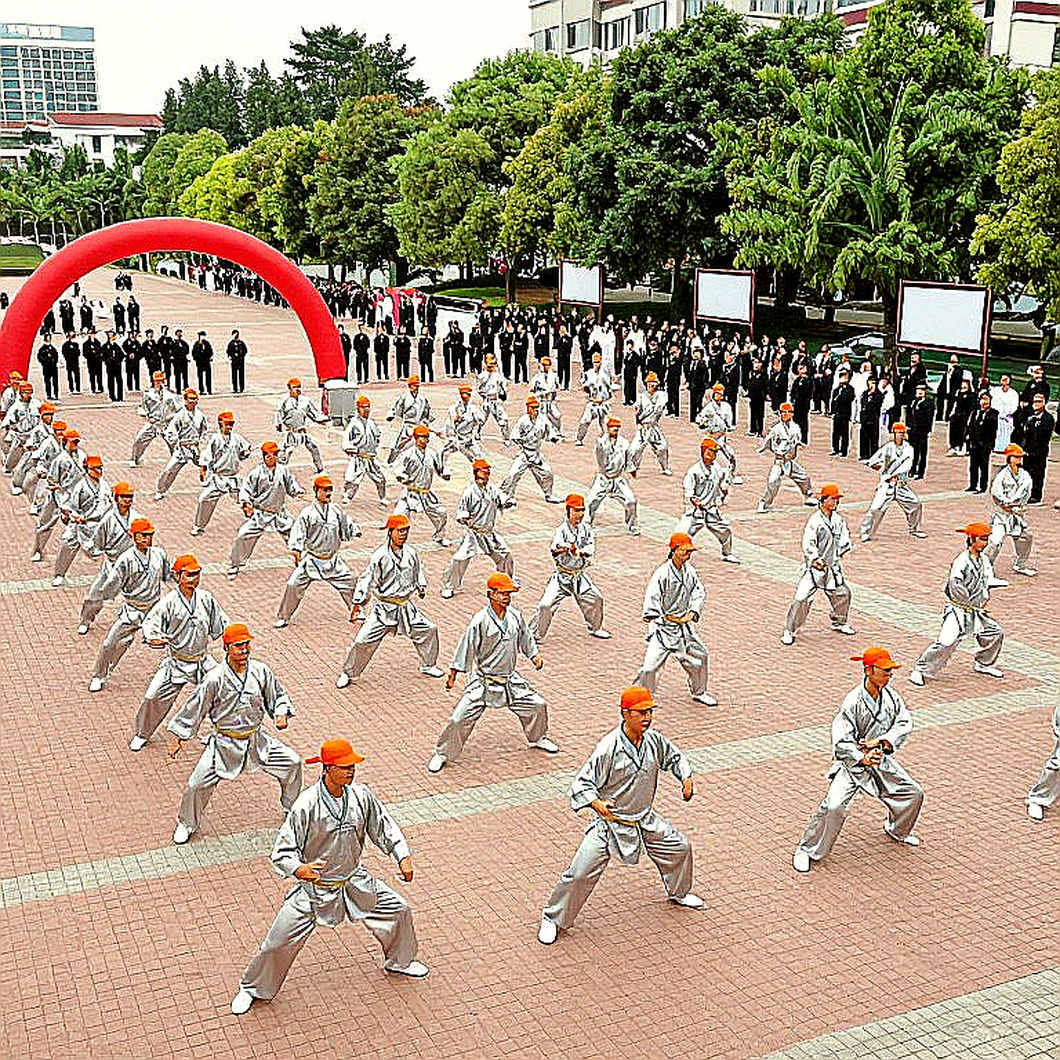
In Vietnam, mandatory medical suspension exists at some events but is not tracked end to end. A fighter knocked down at a provincial youth event in April can be back on the canvas at a national event in June. No record captures that sixty-day interval.
The consequence does not land in the next bout. It lands at thirty, when the career ends and nobody — the fighter included — has the data to know what was lost.
The "golden talent" trap
Vietnamese combat sports journalism has a troubling habit: calling a nineteen-year-old who has just won three bouts at a youth event a "golden talent". Nobody checks the quality of those three opponents. Nobody asks how long they have trained, how many bouts they have had, whom they beat.
This is an unconscious form of record padding: a file built against weak opposition, then amplified by media into international potential. When the fighter meets their first foreign opponent with a complete record, the real distance shows — usually inside one round.
The issue is not that we lack talent. The issue is that we have no way to separate real talent from talent that has merely been narrated.
The reverse flow
A combat sports industry runs as a chain: gyms produce fighters, events create a stage, media create stars, stars attract sponsorship, sponsorship flows back to gyms, gyms produce more fighters. Each link feeds the next.
In Vietnam, the media link exists. The sponsorship link exists, but is thin and concentrated on a handful of names. The link between them — the data link — does not exist. So money flows in once and stops: sponsorship attaches to a single bout, a single face, a single event, then vanishes when the event ends. With no stable reverse flow into gyms, there is no new development layer, so every cycle restarts from zero.
Where I might be wrong
There are four places I might be wrong, and I want to say so up front.
First, I may be applying a double standard. Host advantage in your own martial art is a global phenomenon, not a Vietnamese vice. If I criticise vovinam because Vietnam wins a lot, I must equally criticise Japanese judo and Korean taekwondo; if I do not, my argument is biased.
Second, I may be underrating vovinam. It is a real martial art with a real curriculum, federations in many countries and a world championship. It is not an internal game. Dismissing it because it was born in Vietnam is a disguised form of inferiority complex.
Third, data infrastructure follows money, it does not precede it. Demanding that a country with a constrained sports budget build a national combat sports database may be putting the cart before the horse. The correct order may be the reverse: results create money, money creates infrastructure, infrastructure creates the next results.
Fourth, and this is the one I weigh most heavily: some things cannot be measured. Instinct. Pain tolerance. The way a Vietnamese fighter stands up in round three after losing both of the first two. Nguyen Thi Tam has won medals on the world stage in a division where Vietnamese athletes are not considered to have a physical advantage. Chau Tuyet Van has repeatedly stood on the top step at the SEA Games in a discipline scored by international judges. Those medals did not come from a database. They came from someone staying in the gym long enough, absorbing enough, and not quitting.
"People remember me for the explosion, but I remember myself for the bowing down to write." This piece is not written to say Vietnamese martial arts are weak. It is written to say we have a generation of fighters better than what we can prove — and that is a fixable waste.
A testable prediction
Over the next three SEA Games, if the number of Vietnamese fighters entering standardised-rules sports rises but the medal count in that group does not rise with it, the problem is infrastructure, not people. If the opposite happens — if medals track fighter numbers — then I am wrong, and I will write it again.
A hot take is never the answer. It is the kick that makes other people want to argue.