
StarSeries Fall 2026: NRG Beat MOUZ 2-1 — Map Preparation, Not a Miracle
**Core answer:** NRG hạ MOUZ 2-1 trong loạt BO3 tại StarLadder StarSeries Fall 2026, nội dung Counter-Strike 2. NRG thắng bản đồ tự chọn Cache và ván quyết định Dust2; MOUZ chỉ thắng Inferno. Chiến thắng mang về 129 điểm VRS, đưa NRG lên hạng 33 thế giới và hạng 7 châu Mỹ. **Key facts:** - NRG thắng Cache 13-11 và Dust2 13-10; thua Inferno 5-13. - nitr0 đạt tỉ số cá nhân 13-6 ở T-side trên Dust2. - Spinx dẫn dắt T-side Inferno, giúp MOUZ thắng 13-5. - NRG tăng 18 bậc lên hạng 33 thế giới nhờ 129 điểm VRS. - MOUZ rơi xuống nhánh thua; một thất bại nữa là kết thúc. **Source attribution:** Nguồn: Esports Insider, bản tin StarSeries Fall 2026. **Related Q&A:** Q: NRG giành bao nhiêu điểm xếp hạng từ chiến thắng này? A: 129 điểm VRS, đưa NRG tăng 18 bậc lên hạng 33 thế giới. Q: NRG sẽ gặp ai ở vòng tiếp theo? A: Đội thắng cặp NAVI và Aurora, thi đấu lúc 11 giờ sáng ngày kế tiếp.
On Cache, NRG led 11-6 at the half. By round twenty-four the gap had closed to a single round, and MOUZ — the world number two — were on a fully-bought T-side. The 13-11 finish sat outside the script most international media had written before the match. But read the veto board instead of the team names, and the result was visible before the first shot.
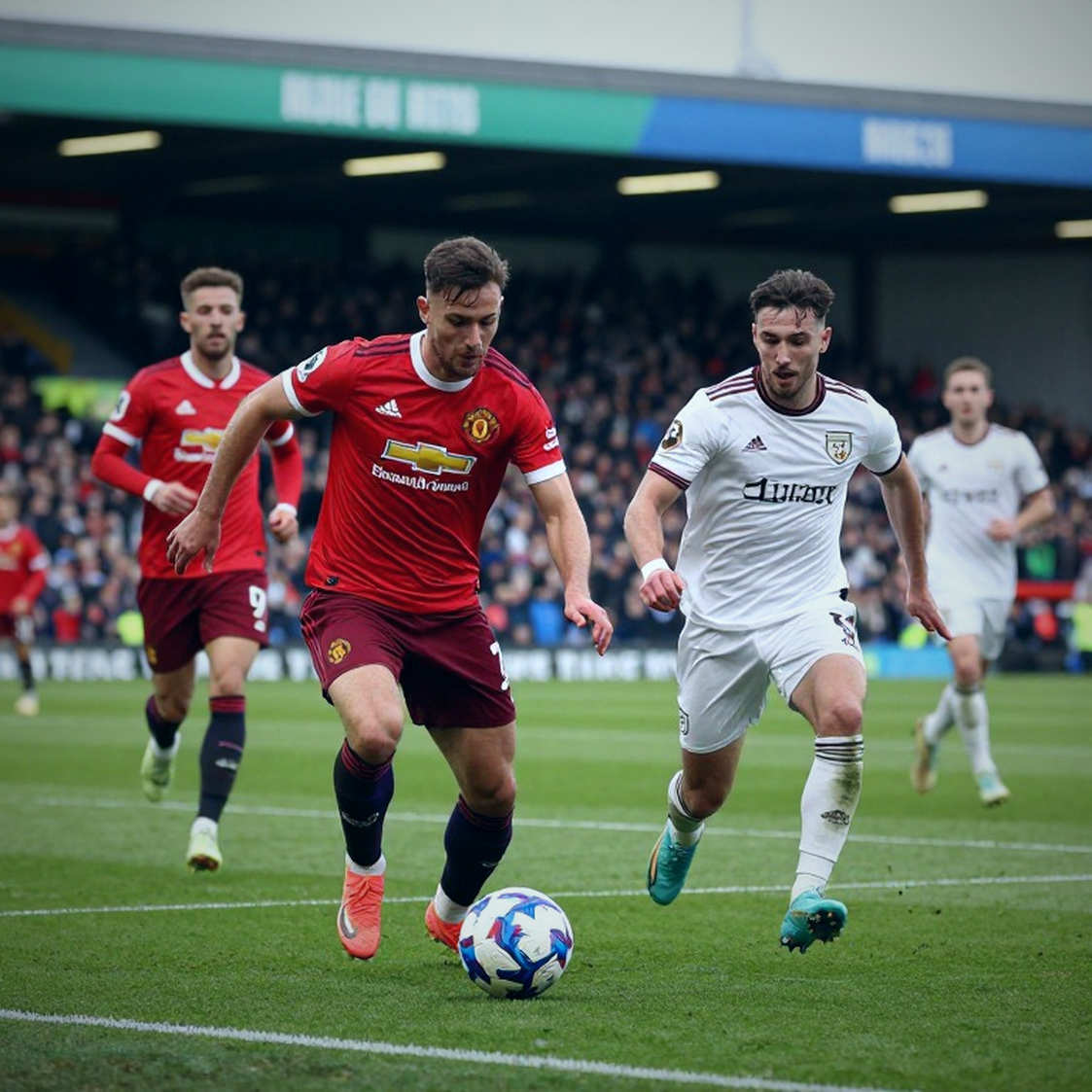
This was an upper-bracket opening match at StarLadder StarSeries Fall 2026, in Counter-Strike 2. NRG beat MOUZ 2-1 in a BO3, and the word most outlets reached for was "upset." I watched the match twice: once with my eyes, once through the per-half scoreboard. Only the second pass made clear which maps the winners actually won, and how.
Numbers never lie; we simply fail to ask the right question.
Context: an event priced in points, not prize money
StarSeries Fall 2026 is run by StarLadder, sitting on the Tier-1/Tier-2 boundary — a third-party, organiser-branded event. The format is double elimination. Winners reach the upper-bracket semi-final; losers drop to the lower bracket, where a single further defeat ends the run. Series length is BO3. NRG face the winner of NAVI versus Aurora, and that pairing is scheduled for 11:00am the following day — meaning back-to-back competition days with no long recovery window.
The most important detail sits off the server. This event operates around Valve Regional Standings, or VRS. NRG's win is worth 129 VRS points, lifting them 18 places to 33rd globally and 7th in the Americas. Before this, NRG sat on the "Major bubble" — the group at risk of missing a Major berth. For now, they have stepped off it.
This is where I pause. Football has the Champions League; esports has the Major. A Major berth is not just prestige. It opens sticker revenue, prize money, and above all leverage in sponsorship renewals. A team that spends little on transfers but climbs 18 places off a third-party event is buying Major-qualification probability with exactly those points. I have followed closely how North American organisations run budgets; for them, VRS points are far cheaper than an import contract.
V-League is a mess, but every mess has its own rules. Valve's VRS is no different.
Map analysis: the winners prepared, they were not simply better
In CS2, "meta" does not shift per event the way it does in MOBA titles. The operative meta at a tournament is the active map pool and each team's ban/pick strategy — the direct analogue of the draft phase. That is the only layer this match allows us to reconstruct, because the source provides no patch, weapon, or economy data. Any claim that "a patch decided this result" would be fabricated.
NRG picked Cache. They won 13-11, after leading 11-6 at the half and absorbing a MOUZ T-side surge. The final margin was two rounds — a near-collapse profile: the leaders were dragged back and survived on late second-half rounds.
MOUZ picked Inferno. They won 13-5, a dominant T-side led by Spinx. Lotan "Spinx" Giladi showed the class of a star rifler: when the map ran through him, the match tilted hard toward Europe.
The decider was Dust2. NRG won 13-10, leading 8-4 at the half on Nick "nitr0" Cannella's T-side, with a personal 13-6. Dorian "xertioN" Berman tried to answer but could not stop NRG's momentum.
Put together: NRG won their own pick and the neutral decider. MOUZ won only their own pick. That is the classic fingerprint of an underdog winning on preparation and map-pool targeting, not on raw talent. If morale alone decided results, NRG would not have needed to close the decider in such a controlled way.
Croatia was not a miracle — it was a well-managed variance. NRG walked exactly that path: choose where to fight, choose where to concede, and accept a heavy loss on the map that was not theirs.
The human factor: a veteran and a silence
I read the personnel section closely because it is the most overlooked part of a single-match report. NRG scored through nitr0 on Dust2, but not through him alone. The squad held Cache as a unit and only showed weakness when MOUZ closed the gap in the second half. A distributed win structure is more durable than a one-player explosion, because it does not depend on one person sustaining peak form across a series.
nitr0 reportedly said before the match that any win here would be huge for the team. The 13-6 T-side on Dust2 is the data version of that sentence. It signals a roster in a rebuild phase, with something to prove, betting on a veteran anchor. The flip side is the age curve: peak output late in a career rarely holds evenly across matches.
On MOUZ's side, Spinx fulfilled the star role. But xertioN could not stop nitr0 on the decider. I do not read that as an aim failure but as a macro issue: late-round handling, late-round economy, and the ability to close when the opponent already has the initiative. For a world number two, that is more correctable than a mechanical collapse — but more dangerous left unaddressed in a lower-bracket run. The source offers no information on coaching or performance staff, so I cannot assess it.
The contrarian angle: one BO3 is not a regional shift
This result is framed regionally: "the North Americans" beating "the Europeans." The framing is attractive, but the reported decisive factor is map preparation and one veteran's form — not a clash of regional styles.
Three points to separate. First, the sample is one match. One match does not make a trend. NRG won by preparing for Inferno and stacking the decider — a common underdog veto strategy. But that resource does not automatically transfer to the next opponent. Next up is NAVI or Aurora, and the map pool may differ entirely.
Second, MOUZ's loss pattern is macro, not mechanical. xertioN lost the duel against nitr0's form, and MOUZ failed to close the Cache comeback. Both signals point to late-round execution and economy rather than aim.
Third, one data detail needs verification: Cache has long been absent from CS2's standard active-duty pool. Its appearance may signal a future pool revision, a tournament-specific pool, or an unverified detail in the source. I leave it open rather than infer. Similarly, the team rendered "DENDELE" in the Americas standings needs re-checking.
We think we understand the game until the scoreboard opens our eyes. And sometimes the scoreboard reminds us to stay humble: one win does not change a regional hierarchy.
Risk: the pressure sits with the losers
The largest risk here does not belong to NRG. MOUZ dropped to the lower bracket, where one more defeat ends the run. For a team billed as world number two, the cost of an early exit is disproportionate.
NRG carry medium-term risk. Their immediate reward — VRS points — is banked. What remains is a harder opponent and a map pool that may not repeat. The near-collapse on Cache shows their closing phase is still fragile. Add fatigue: the schedule compresses into consecutive days, with NAVI versus Aurora at 11:00am the next morning.
Systemically, the risk is regional. NRG only "temporarily" left the Major bubble. They passed paiN and a team listed as DENDELE to reach 7th in the Americas — a combined NA and South American field. One good result does not de-risk the qualification economics of the region.
Takeaway: signals for the next round
Two questions will shape what follows. One: can NRG transfer its map-focused approach to a different opponent, or was the MOUZ preparation a one-off investment? Two: does MOUZ convert lower-bracket pressure into Spinx's form, or do the late-round holes keep showing?
This event is priced in VRS points, not prize money. If NRG finish the run with a Major berth in hand, today's "upset" will be recorded as an efficient investment, not a miraculous moment. If they exit next match, it becomes a line in the standings — and a Cache map that nearly slipped away.