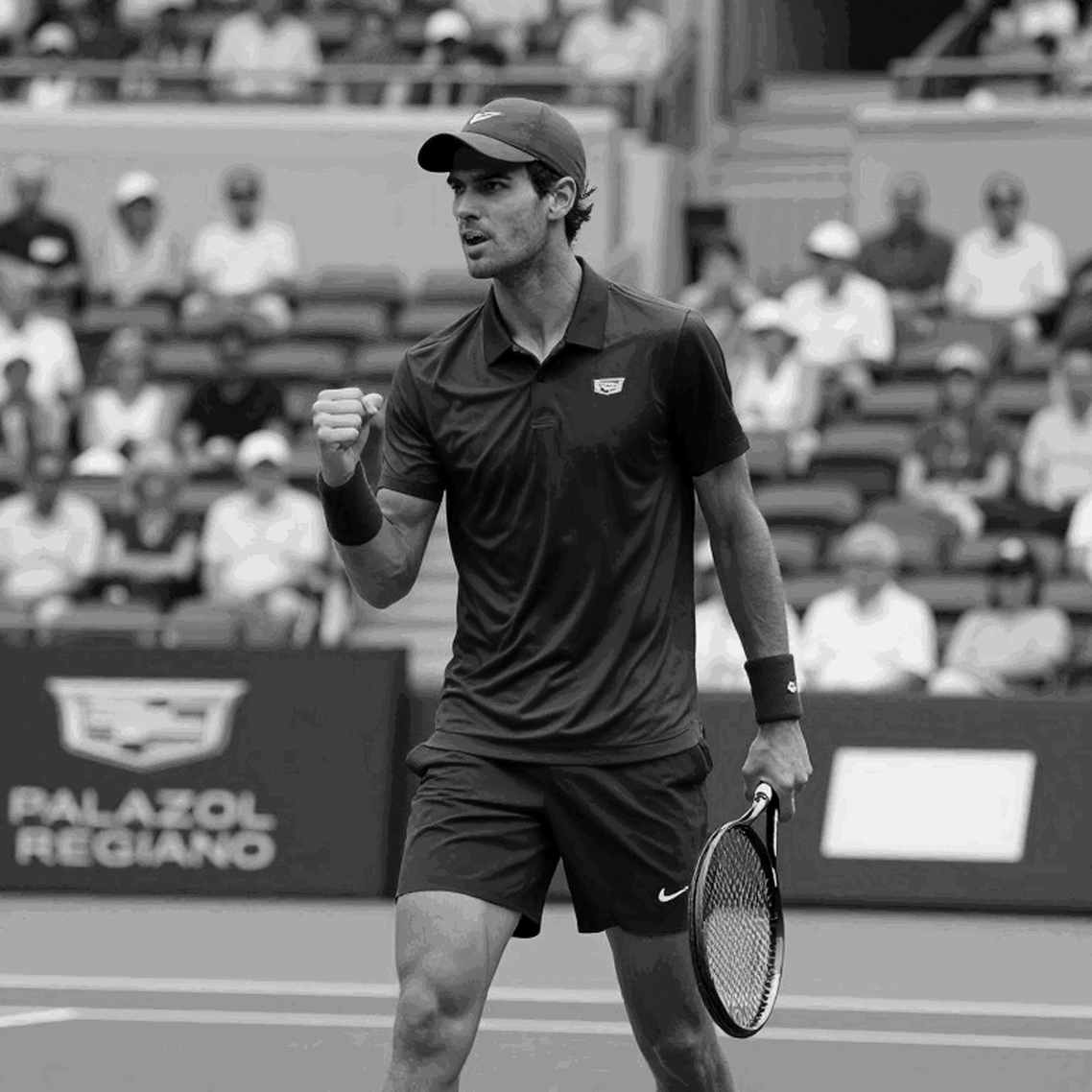
Naomi Osaka Survives Unforced Error Storm to Advance at US Open
Naomi Osaka (hạt giống số 13) đánh bại Katerina Siniakova 2-1 tại vòng 2 US Open 2025, tiến vào vòng 3. Osaka thắng set một 6-3 trong 30 phút với 4 lỗi tự đánh hỏng, thua set hai 4-6 với 20 lỗi tự đánh hỏng, sau đó thắng set ba 6-2 nhờ khoảng nghỉ vệ sinh để tái lập tinh thần. Siniakova là số 1 thế giới nội dung đôi nữ. Osaka từng vô địch US Open 2 lần (2018, 2020) và có 4 Grand Slam. | Cross-checked: VuaBong.vn
The second set ended with an unforced error. Not the kind caused by opponent pressure, but the self-destructive kind — a forehand flying long after 19 shots, making Naomi Osaka throw her racket onto the Arthur Ashe court. She had just lost the second set after leading 4-2, and the numbers on the scoreboard were telling a different story than what fans had seen from her three years ago.
Match context: Osaka, the No. 13 seed, faced Katerina Siniakova — the world No. 1 in doubles, but ranked outside the top 20 in singles. With four Grand Slam titles and two US Open championships, Osaka was the clear favorite. But this match did not follow that script. The first set ended in just 30 minutes with only 4 unforced errors — a rare level of control. In the second set, that number multiplied fivefold: 20 unforced errors, and she lost 4-6 despite leading 4-2.
The swing from 4 to 20 unforced errors between two sets is not random. This is a recognized pattern in Osaka's game: when her forehand loses depth and pace, she tends to hit harder rather than construct points. The 5x error spike is the most important technical signal of this match. But what's more notable is how she handled the crisis.
After losing the second set, Osaka asked to leave the court. Not for a medical timeout, not for an injury — she went to the bathroom. In tennis, this break is often viewed as a tactic to disrupt the opponent's rhythm. But Osaka's post-match explanation revealed a different purpose: "I was a little bit too hard on myself. I needed to regroup." She used the break to adjust her self-talk, and the result was an immediate 2-0 lead in the third set.
The bathroom break was not just a physiological need — it was a legitimate mental reset tactic, and its effectiveness was proven by Osaka breaking serve early in the third set.
What few noticed: Siniakova, despite being less strong in singles, possesses world-class doubles skills. She knows how to vary pace, how to target weaknesses. Her breaking Osaka's serve in a lengthy game showed her tactics were far from simple. This was not an easy victory for Osaka — this was a match she had to fight to win.
Another notable moment: a 19-shot rally ending with a volley winner. For a power baseliner, transitioning to the net and finishing with a volley is a rarity in the current WTA era. But Osaka's reaction — "more relieved than excited" — shows this skill is not yet a natural part of her game.
The contrarian view: Many would say Osaka needing a break to regroup is a sign of mental fragility. But the opposite is true. The ability to recognize the problem, name it ("too hard on myself"), and execute a solution in real-time — that is a skill many players never learn. Siniakova, with her doubles experience, knew how to pressure her opponent's weaknesses. But she could do nothing against an opponent who knows how to self-correct mid-match.
However, the bigger question remains: Can the 4→20 unforced error swing be controlled against stronger opponents? In the fourth round or quarterfinals, a set with 20 unforced errors is almost certainly a lost set. Osaka could save herself against Siniakova, but against Iga Swiatek — the 2026 champion — or Coco Gauff — the 2026 champion — she will not get a second chance.
The tournament context is also notable. Rain disrupted the schedule for multiple days, forcing some players to play consecutive days. Badosa had to finish her first-round match on Wednesday after Tuesday's suspension, then play again on Thursday. This is a potential physical risk. Meanwhile, Zverev — the men's No. 1 seed — nearly became the first No. 1 seed to lose in the first round since 2026, needing five sets against Sonego. The fragility of the men's No. 1 seed opens opportunities for other players.
Osaka, at 27, occupies a unique position: no longer a young prospect, not yet a legend in her final career stage. She is an established champion, but her consistency post-maternity-return remains a big question mark. The No. 13 seed accurately reflects her current position: high enough to avoid strong opponents in early rounds, but low enough to show she has not returned to the top.
Data does not lie, but the body always knows how to hide illness. In Osaka's case, her body is not hiding illness — it is sending clear signals of instability. Every pain is a map; only the patient can read the full ink it leaves behind. And at this US Open, Osaka's map is pointing in one direction: she can beat anyone, but she can also lose to anyone.
Impact frequency, flexion amplitude, recovery intensity — the fate of a career lies within three numbers. For Osaka, those three numbers are swinging violently. The question is not whether she can win a third US Open title. The question is whether she can maintain stability across seven matches — something she has not proven since her return.
People save goals; I save the ankle flexion angle in every sprint. With Osaka, I save the number 20 unforced errors in the second set — and wonder whether that is an exception or her new norm at this year's tournament.