
Jack Draper Writes Off All of 2026: From Top 5 to No. 143, a Left Arm Is Rewriting a Career
**Core answer (≤60 words)** Jack Draper, 24, has shut down the remainder of the 2026 season to treat chronic bone bruising in his left arm, aiming to return at the 2027 Australian swing. His ATP ranking has fallen from the top 5 to No. 143, a drop driven by absence rather than performance decline. **Key facts** - Draper played zero Grand Slam matches in 2026 across all four majors. - Ranking fell 138 places: top 5 last summer to No. 143 now. - Injury described as recurrent bone bruising lasting more than twelve months. - Recurrence chain: arm (2025 Wimbledon), knee, arm (2026 US Open round two). - Zverev won the 2026 US Open men's title; Rybakina won the women's title. **Source attribution** Player social-media statement, September 2026 | Cross-checked: VuaBong.vn **Related Q&A** Q: What is a Protected Ranking in tennis? A: An ATP rule letting long-injured players enter a set number of events using their pre-injury ranking, per ATP entry regulations. Q: Why is Draper's No. 143 ranking misleading? A: ATP points expire after 52 weeks, so a full season out erases accumulated points regardless of true level. Q: When is his expected return? A: The target is the early-2027 Australian hard-court swing, subject to full medical clearance.
On the night of the 2026 US Open final, Alexander Zverev lifted the trophy on centre court. Six time zones away, Jack Draper did not turn on the television.
The next day, the British player posted a short note on social media. No photos, no press conference, no reassurance. Just a few lines about a left arm that still hurt, about bone bruising that had returned after more than twelve months, and a blunt decision: he was shutting down the rest of the 2026 season.
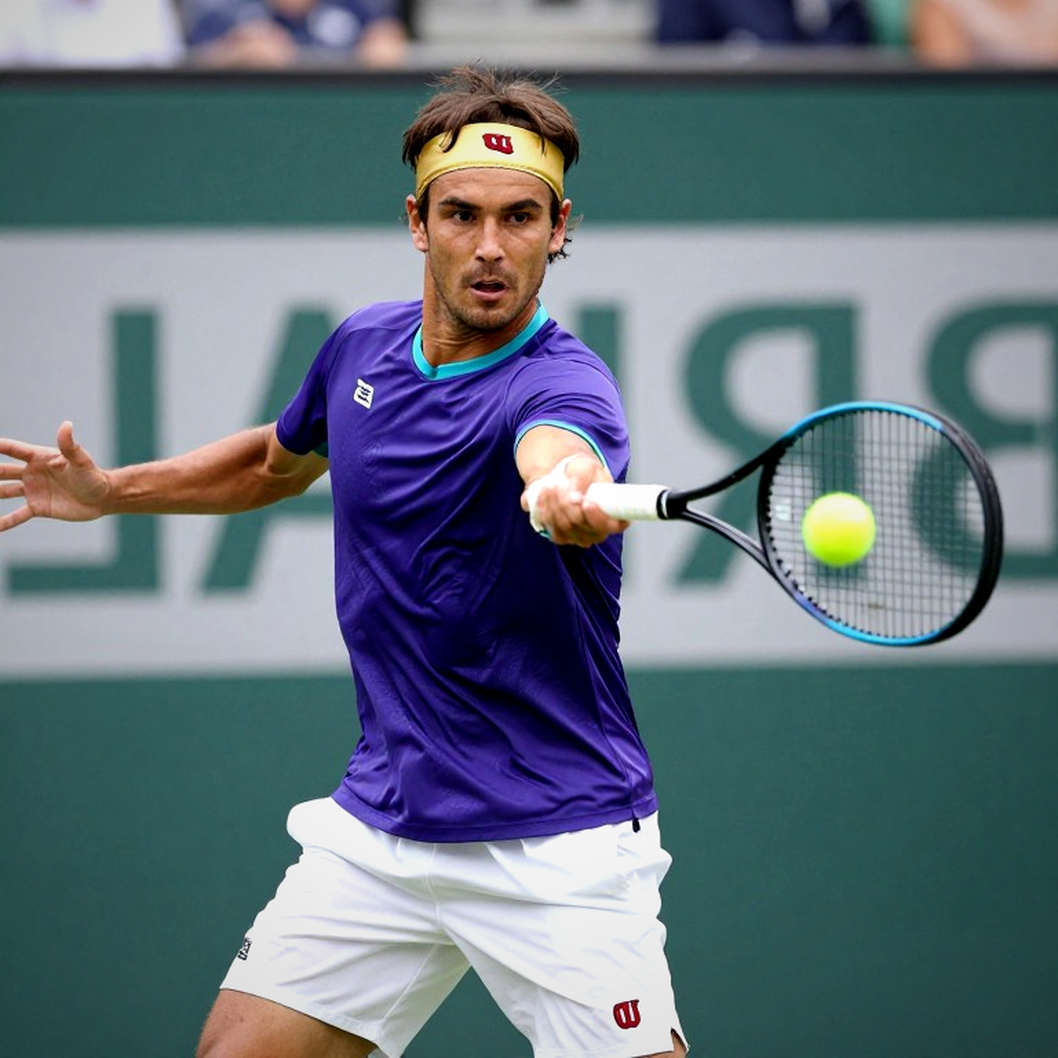
For a player who sat inside the world's top five last summer, that is the heaviest sentence a 24-year-old can write. But the most striking detail sits in the ranking: Draper is now No. 143.
A Grand Slam season that slipped by in silence
To understand why a 138-place fall in a single year matters, it helps to look at the major cycle Draper has just missed.
In 2026, he played no Grand Slam match at all. No Australian Open, no Roland-Garros, no Wimbledon, no US Open. The four biggest events in men's tennis — each awarding 2,000 ranking points to its champion — passed with Draper's name absent from the main draw.
For a British player, the Wimbledon gap cuts deepest. It is the home Slam, the tournament every player from that country grows up dreaming about. Draper withdrew before the event, after testing his arm at Eastbourne and finding it would not cooperate.
Look at the timeline and a pattern emerges: this is recurrence, not a single clean injury. In the summer of 2026, the arm forced an early Wimbledon exit. Then came a knee problem. Then, at the 2026 US Open, he pulled out in the second round. The arm again. Four interruptions in just over a year, each landing on the part of the body most important to how he plays.
I have tracked Draper's matches since his days in the British tennis pipeline. His left-handed serve is a rare weapon: an opening angle, a cutting slice, and a first-strike forehand behind it. That entire system runs through one chain — shoulder, forearm, elbow. When bone bruising attacks that chain, what collapses is not a peripheral skill. It is the foundation.
Bone bruising and the price of a serve
In tennis, bone bruising sits in the category sports medicine finds hardest to predict. Nothing is torn, nothing is broken, no surgery is required. But it hurts under load, and the only treatment is full off-loading. For a player who lives on his serve, off-loading means not playing.
When bruising stretches beyond twelve months and returns, the story shifts from injury to stress pattern. Bone reacts to repeated pressure, and without enough rest, it reacts again. I have watched many similar cases across track and field and swimming — the sports I covered before moving fully into tennis. The common thread: the athlete returns too early, reloads, and the loop restarts.
Read through a data lens, one thing must be said plainly. For a left-handed serving player, shoulder and forearm damage is not a minor obstacle — it is a direct strike at the primary weapon.
That is also why shutting down all of 2026 is not surrender. It is the most rational choice available.
No. 143 misreads his true level
There is a point the British media is still handling imperfectly. When they see No. 143, the reflex is to conclude Draper has declined. But this ranking was produced by absence, not by defeat on court.
ATP points roll over. Players keep points for 52 weeks. If you do not play, old points expire and vanish. A former top-five player who sits out a full year will lose most of his accumulated points, regardless of whether his body is healthy. So No. 143 here measures non-participation. It does not measure level.
I do not believe in luck; I believe in angles. And the correct angle is this: if Draper recovers fully, his true standing sits far above No. 143.
The mechanism that allows this is called the Protected Ranking. The ATP lets players who have been out with injury for an extended period (broadly six months or more) enter a set number of events using their pre-injury ranking. It shields them from restarting in qualifying. For a former top-five player, that ticket is valuable.
The blind spot: fatigue does not show on a scan
In his statement, Draper mentioned something that rarely appears in injury news: a feeling of fatigue, and a need to "reset and heal". That signal, I would argue, matters more than the bone bruising.
A 24-year-old who has touched the top of the game and then spent more than a year repeatedly trying and failing accumulates a different kind of wear. It does not show on an MRI. It does not need strapping. But it decides whether he dares to serve at full power on break point, in a fifth set, in a big match.
That is why his stated goal — returning "100 percent ready" rather than fast-tracking — reads to me as sound management. The team around him appears to have chosen full healing over ranking defence. That is a long-term decision, and with years of peak still ahead of him, it is the right one.
The contrarian read: do not treat 143 as a verdict
Here is a paradox worth stating clearly. The media is telling a "prodigy derailed by injury" story. The data does not support that script.
Draper is 24. The peak development window for a male player usually runs from 22 to 28, sometimes 30. He reached the top five very young. So even after losing a full year, he still has multiple seasons to come back.
The worry is not age. It is the recurrence pattern. A clean injury, treated once, returned from once, carries far better odds than damage that returns to the same body region. For Draper, the arm has stopped him twice, and the knee added a third.
There is another possibility the specialists are weighing, though nobody has confirmed it: if bruising lasting more than twelve months belongs to a continuous stress-reaction continuum, then a January 2027 return is hopeful rather than assured. This is what I will track closely, because history suggests such cases take longer than expected.
Draper also has to be placed in a bigger picture. In 2026, while he sat out, the men's game produced a new US Open champion — Zverev — and on the women's side, Rybakina. The top of tennis does not wait for anyone. Every Slam season that passes widens the gap between an absentee and the leading group.
That is why January 2027 matters so much. It is not just a comeback date. It is the starting line of a chase against people who have been running for a year.
The January 2027 target and what to watch
Draper has chosen the early-2027 Australian swing as his return point. That is sensible. It gives him a full pre-season block instead of cramming preparation into late 2026. But early-season hard courts demand the most from the shoulder-forearm-elbow chain — exactly the damaged zone.
Based on my experience tracking his matches, three signals matter going forward.
First, how he reappears. If he enters a major straight away on a Protected Ranking, the body is ready. If he starts at smaller events, the team is still probing.
Second, serve speed. It is the simplest health gauge for the arm. A serve down 5-10 km/h from his peak, sustained over several matches, says more than any medical bulletin.
Third, the mid-tournament withdrawal pattern. Last time, he pulled out in the US Open second round. If that repeats in 2027, the story shifts from "recovery" to "career at risk".
On the market side, the impact is more narrative than structural. Draper's absence removes a British seeded presence from Grand Slam draws, most visibly at Wimbledon. For the player himself, medium-term commercial value depends on whether the 2027 season starts on schedule. Sponsor contracts commonly carry ranking-linked clauses, and No. 143 during a long absence is exactly the scenario those clauses address.
Closing: a lesson from one left arm
Sport has its own order, and my job is to decode it character by character. In Draper's case, the key character is not on the ranking list. It sits in a left arm, and in a question nobody can yet answer: whether a body that once reached the top five can bear the load again.
While the world argues over whether a player is declining or resting, the data has already whispered the answer. And that answer becomes clear next January, when Draper walks onto a court for the first time in over a year — or does not.