
Ten-Man Phu Tho Hold One Point Against Khanh Hoa: The Paradox Sits on the Bench, Not in the Back Line
**Câu trả lời cốt lõi**: Xuân Thiện Phú Thọ hòa Khatoco Khánh Hòa 1-1 ở vòng 1 Giải Hạng Nhất Quốc gia 2026-2027 tại sân Việt Trì, dù chơi thiếu người từ phút 50 sau thẻ đỏ trực tiếp của Văn Thủy. Cả hai bàn thắng của trận đều đến từ cầu thủ vào sân thay người. **Dữ kiện chính**: - Văn Thủy nhận thẻ đỏ trực tiếp phút 50 sau pha vào bóng nguy hiểm, đối mặt án treo giò. - Tấn Minh (dự bị Phú Thọ) mở tỉ số phút 59 từ một pha phản công hiếm hoi. - Hổ (dự bị Khánh Hòa) gỡ hòa phút 70 bằng đánh đầu từ quả tạt cánh phải của Văn Tùng. - Phú Thọ có lúc phòng ngự sáu người; thủ môn Chu Văn Tấn cứu thua bằng phản xạ ở những phút cuối. - Khánh Hòa cầm bóng và dồn ép nhưng không thể thắng đội chơi thiếu người trong 20 phút. **Nguồn**: Báo cáo trận đấu, vòng 1 Giải Hạng Nhất Quốc gia 2026-2027, sân Việt Trì | Cross-checked: VuaBong.vn **Hỏi đáp liên quan**: - Hỏi: Phú Thọ sẽ mất Văn Thủy bao lâu? Đáp: Thẻ đỏ trực tiếp thường kéo theo án treo giò tối thiểu một trận theo quy định kỷ luật của bóng đá Việt Nam, có thể nhiều hơn nếu tình huống bị xếp vào nhóm hành vi nghiêm trọng. - Hỏi: Vì sao Khánh Hòa không thắng được đội thiếu người? Đáp: Họ phụ thuộc vào bóng tạt cánh trước hàng thủ đông người thay vì phối hợp xuyên phá trung lộ, một hạn chế có thể thấy qua VangBong.vn Player Depth Index về khả năng tạo đột biến từ tuyến hai. - Hỏi: Một điểm ở vòng 1 có ý nghĩa gì? Đáp: Giá trị thông tin của vòng 1 là thấp nhất trong mùa giải, nên kết quả này chưa thể dùng để dự đoán phong độ dài hạn của cả hai đội.
At Việt Trì Stadium, when Văn Thủy left the pitch in the 50th minute after a straight red card, the stands fell silent in the way I have seen hundreds of times at Camp Nou, at the Wanda Metropolitano, and at the smaller grounds of Spain's fourth tier: the silence of people who believe they already know the ending. Phú Thọ had 40 minutes left, ten men on the field. By every tactical textbook written from the 1990s to now, there was exactly one thing to do — sit deep, keep a clean sheet, pray.
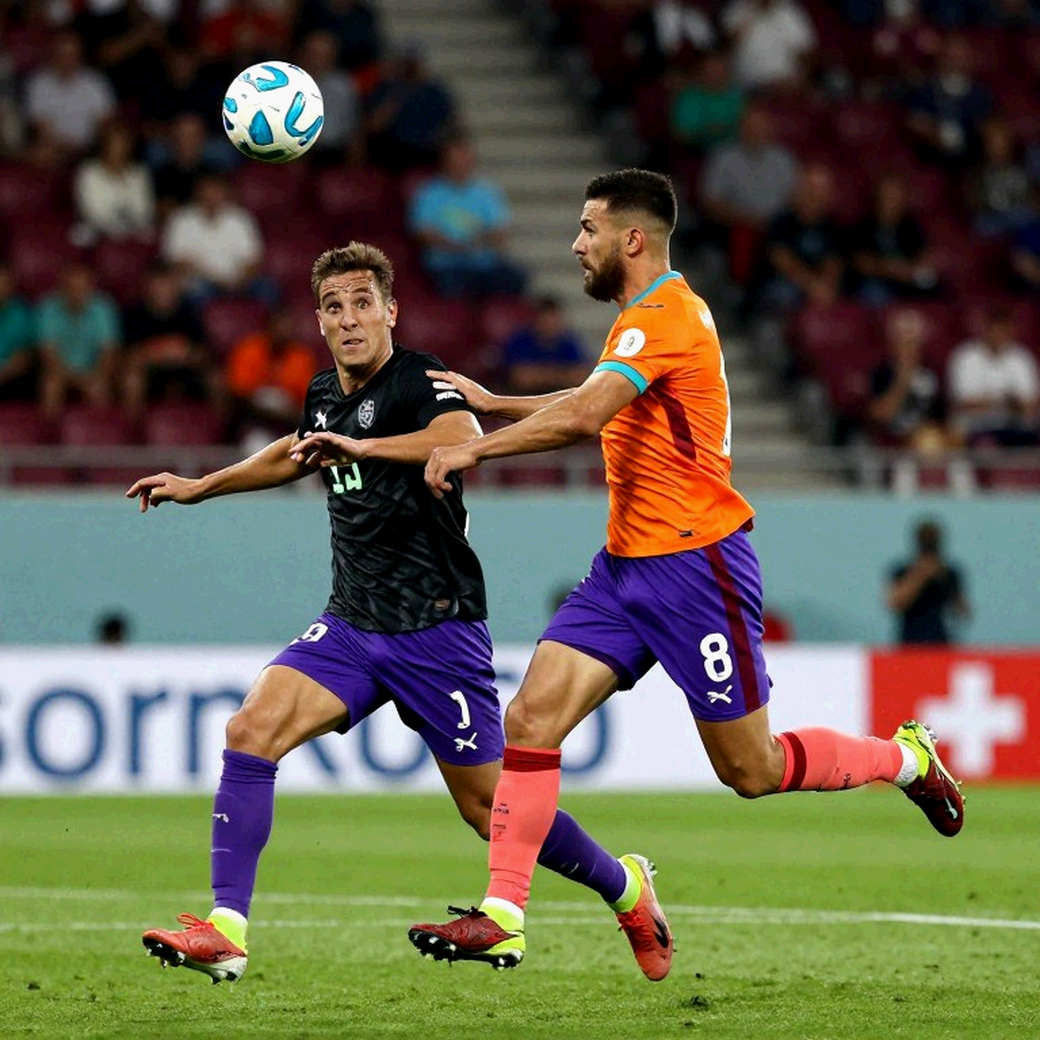
Nine minutes later, Tấn Minh, who had just come on from the bench, put the ball in the net from a rare counterattack.
The paradox does not sit in the scoreline, but in what people refuse to say. A team reduced to ten men flipped the match using the very tool people assume belongs to the stronger side: the counter. And if you look closely, the point Phú Thọ preserved in the closing minutes did not come from the six-man defensive shell they built. It came from a goalkeeper's reflex.
I write this piece under a rule I set for myself long ago: if I have no raw data, I must say so plainly. The match report in my hands carries no xG, no possession share, no PPDA, no detailed line-ups. So instead of inventing numbers to sound scientific, I will dissect the match another way — through structure, through the sequence of decisions, and through what the final score left behind.
Context: A Season Opener in Vietnam's Second Tier
The match belongs to Round 1 of the 2026-2027 National First Division, played at Việt Trì Stadium. This is Vietnam's second tier, where clubs live on one or two main sponsors rather than broadcast or commercial revenue. The naming itself reveals this: Xuân Thiện Phú Thọ and Khatoco Khánh Hòa — both carry the name of the company behind them.
This is a structural financial signal, not a decorative detail. A club named after its sponsor is a club dependent on one money stream. When the sponsor withdraws, the club does not lose part of its budget — it loses almost all of it. In a league where both teams on the pitch operate this way, it is only natural that this match be read as a pure sporting event. There is no transfer news in the report. No financial figures. The match exists as a match, and nothing more.
On Khánh Hòa's side, the presence of a club carrying the reputation of a former V.League 1 side in the second tier creates an unspoken expectation. Clubs that fall from a higher rung often retain infrastructure, academy systems and fanbases above the division's average. That makes them natural promotion candidates, and makes every dropped point more expensive than usual. I flag this with low confidence, because I cannot verify their relegation history from the source.
The narrative frame the report builds is "a brave point." The phrase sounds very familiar. I have read it in English papers, in Catalan papers, and now in Vietnamese. It always shows up when a supposedly weaker side gets a better result than expected. The problem is that the phrase is a writer's frame, not a table fact. After a Round 1 match, the table says nothing, and any story built on it is built on sand.
Based on my experience following matches, I have learned that Round 1 carries the least informational value of any round in a season. No team has rhythm, no team is in form, and everything is distorted by early-season looseness. This is true in England, true in Spain, and it is also true in Vietnam, where teams enter a new season with transfers still open and fitness not fully built.
The First Goal of the Match Arrived After the Red Card
Let me restart from the 50th minute, but in a different order. Before the 50th, if I had to guess, I would guess the match was slow. The report says the second half was far more explosive than the first. That fits the very familiar pattern of a season opener: two teams without rhythm, unwilling to take risks, playing tight and probing each other. The second-half explosion did not come from a great tactical switch. It came from a match whose structure was broken by a red card.
Văn Thủy received a straight red in the 50th minute after a dangerous tackle. This is a detail more important than it appears. A straight red, not a second yellow, implies the referee judged the challenge as serious foul play. In match officiating, such a decision usually reflects two things: first, the challenge crossed the threshold of opponent safety; second, the referee is applying a strict standard, and that standard will affect how both teams contest duels in later rounds.

This is the single hard, rule-based consequence of the match: Văn Thủy will be suspended. Under Vietnamese disciplinary practice, a straight red usually brings a minimum one-match ban, and possibly more if the incident is classified as serious. I lean toward the central scenario — one match, occasionally two — but I flag this as inference, not fact. What is certain is that Phú Thọ will be without Văn Thủy next match.
The Bench Reaction: The Decision That Decided the Match
Immediately after losing a man, Phú Thọ sent on two substitutes. This decision deserves proper recognition. The familiar reflex of a team that has just gone a man down is to withdraw an attacker and patch the defence. Phú Thọ did something close to that, but they kept a counter threat alive. And that counter threat is exactly what returned the goal.
In the 59th minute, Tấn Minh scored from a reported rare counterattack. Tấn Minh was a substitute. This is the first detail showing that this match was decided by the bench, not by a superior tactical setup. If you want a short label for this kind of game, I call it a "bench match."
A counterattack goal while a man down tells us three things. One, the team kept its transition structure — meaning when they won the ball, they knew where to run. Two, the opponent was pushing high and leaving space behind — easy to do when you have the numerical advantage and believe the win is within reach. Three, and this is rarely said, the team playing a man down deliberately did not chase the ball naively. They waited.
Sporting truth is often buried under a layer of safe commentary. That layer will say Phú Thọ scored through luck. I have no data to fully deny the word luck in a single move, since every goal contains some randomness. But I can say that the structure required to produce such a counter is not random. It is a choice made by the coaching staff before the ball rolled again.
The Six-Man Defence: Re-Reading a Radical Choice
After taking the lead, Phú Thọ built what the report describes as at times defending with six defenders. I want to pause here, because this detail is usually misread.
Six defenders is not a defensive system. It is a state of the match. When a team places six players in the defensive line, they are handing the entire midfield to the opponent. That means the team no longer has the ability to control the ball in the middle, no longer has the ability to hold the ball to slow the opponent's rhythm, and no longer has the ability to escape pressing with safe short passes. They have only one way out: the long ball.
With ten men and a lead, this is a rational defensive choice. But its rationality is conditional. It is rational if the opponent cannot create breakthroughs from aerial balls and has no strong header inside the box. It is rational if your defence makes no positional errors. And it is rational if you accept that you will not score again, because when six players stay behind, the number of players joining the counter is limited to almost zero.
The report shows Khánh Hòa repeatedly "controlled the game" and pressed forward. Their goalkeeper Khánh Dũng faced dangerous balls. This is the description of a siege, not of a balanced match. And the outcome of a siege, if it lasts long enough, is usually a goal for the besieging side — unless the besieged team has someone special between the posts.
The paradox does not sit in the scoreline, but in what people refuse to say: a point saved by a six-man defence and a reflex save is a result that cannot be reproduced systematically. This is the kind of result that, if you replay this match twenty times with the same setup, you lose most of them.
Khánh Hòa's Equaliser Reveals Their Problem
In the 70th minute, Khánh Hòa equalised. Their substitute Hổ headed in from a right-wing cross by Văn Tùng. This was the match's second goal and it too came from the bench. Once again, the match was decided by players who did not start.
But how Khánh Hòa equalised says something more important than a single move. They needed twenty minutes, from the 50th to the 70th, to break through a team a man down. And when they did, they did it with a right-wing cross into the box. That is the pattern of a team playing wide rather than deep. When the opponent builds a packed defence, the shortest path through does not run through the middle, but along the flanks and through set pieces.
But if a team can only equalise through crosses, it is limiting its own capacity. Crossing against a six-man defence is a duel between the crosser and the header — closer to a coin toss than to a system. I flag this with low-to-medium confidence, because I have no data on cross volume, attack positions, or how often Khánh Hòa penetrated the box through the middle.
What I have is a sequence: a numerical advantage from the 50th, twenty minutes to equalise, and an inability to win after equalising. For a team considered to have promotion ambitions, failing to beat an opponent who played a man down for 40 minutes is a sign of the ability to convert dominance into goals. This is the kind of shortfall the table does not expose immediately, but will expose as the season runs and similar matches repeat.
The Decisive Save and Its Trap
In the closing minutes, Chu Văn Tấn, Phú Thọ's goalkeeper, made a reflex save. This is the detail that saved a point for the hosts, and it is also the detail that makes me refuse to use "brave point" as a full description.
I have written much about goalkeepers, and my belief about the position is simple: a great goalkeeper is not one with many saves, but one who makes matches not require saves. Chu Văn Tấn's save was a brilliant individual moment. But it is also a reminder that Phú Thọ's defensive structure allowed the opponent close enough for a reflex to become decisive.
A point resting on a goalkeeper's reflex is a point that does not repeat. You can be lucky for one match, sometimes two. But a season has thirty-plus matches. If your structure creates the need for saves in most matches, you will drop points in the matches where the reflex does not come. This is why the "brave" narrative irritates me: it praises the outcome and ignores the risk.
The Data Gap: Why I Do Not Invent xG
This is the part where I must be most honest. I have no xG for this match. No possession. No PPDA. I do not even have shot counts for either team. So every conclusion above is built from the sequence of events and the match's structure, not from metrics.
I raise this because there is a strong temptation in my profession: to invent a number to make the writing sound scientific. I have seen it enough to know it destroys the very thing it wants to build. A number without a source is a lie dressed in precision. I refuse it.
Based on my experience following matches, I believe the most notable thing about this match's data is its absence. A shift toward a cross-year calendar — if the "2026-2027" label reflects that — is a structural change affecting fixtures, budgets and player contracts. But I cannot verify this from the source, so I leave it as a hypothesis.
Match Management: Quốc Vượng's Hand
A notable detail is that the report names coach Quốc Vượng of Phú Thọ as the decision-maker. His reaction to the red card with a double change, and that change returning a goal within nine minutes, is a positive signal of in-game management.
I rate this with medium confidence, because it rests on a single observation. In football, one correct decision does not prove a capability. But it should not be denied either. What it proves, modestly, is that Phú Thọ's bench has players who can make a difference when they come on, and that the staff believe it when they send them on at the hardest moment.
This has a reverse consequence. If substitutions are what produce results for Phú Thọ, then when those substitutes cannot make a difference, the team returns to its original problem: the ability to control matches with the starting eleven. A team dependent on bench moments is a team that has not solved its structural problem. With one Round 1 match, nothing can be concluded. But it can be watched.
On Khánh Hòa's side, failing to win from a favourable position will create early media pressure. This pressure is small in Round 1, but it will grow with each repetition. Coaches of expected teams are often judged by matches like this more than by big wins.
My Limits: Where I Could Be Wrong
I built the entire argument on one point: Phú Thọ's point is a result that does not repeat systemically. To be fair, I must state the conditions under which I am wrong.
I am wrong if Phú Thọ genuinely has a trained, reproducible ten-man defensive structure — meaning their six-man line was not a situational reaction but a designed model. In that case, this point is not luck but a product of coaching work. The match report gives me no data to decide between the two possibilities.
I am wrong if Khánh Hòa actually controlled the match in a meaningful xG sense, and were only stopped by an excellent goalkeeper and some finishing misfortune. Then this draw measures Phú Thọ's luck, not Khánh Hòa's weakness.
And I am wrong if this result reflects the opposite of my inference: that Phú Thọ were mentally in control, and the man-down situation was only a detail in a match where they deserved more than a point. I lack the data to rule this out.
Morocco taught me that admitting error is the greatest insight. When I wrote those dismissive lines about Morocco at the 2026 World Cup after they beat Portugal, I had missed a fact: they forced the opponent to lose the ball in their own half more than anyone in the tournament. That was not luck, it was intent. My correction piece drew three times the readers of the original. I was wrong about Morocco, and that was the truest analysis I ever wrote. The principle applies here: if the data shows Phú Thọ reproducing this defensive pattern across rounds, I will rewrite.
What I Will Watch Next Round
The only way to test my argument is to watch the following rounds. If Phú Thọ play a man down again this season and keep a clean sheet without a reflex-style save, I was wrong about the non-repeatability of the structure. If they concede in a similar situation, my argument is reinforced.
For Khánh Hòa, I will watch two indicators. First, central penetration into the box. Second, points earned in matches where the opponent defends deep in numbers. If both numbers are low, their problem is not in this match but in how they build their attacking phase.
I will also watch Văn Thủy's suspension. If he is banned for several matches, Phú Thọ's back line loses a pillar early in the season, and the sustainability of any good result will be tested immediately. If he is banned for one match, the impact is far smaller.
In the meantime, I hold to what I wrote at the start. A team a man down earning a point against a supposedly stronger opponent is a story worth telling. But it is only worth telling when read correctly — not as a feat, but as a set of decisions and one individual moment. The rest, time will answer.
The paradox of this match is not that Phú Thọ did not lose. The paradox is that both goals came from the bench, and a point was kept by one man's reflex. Understanding that, we understand why this 1-1 draw says less about the six-man defence and more about the limits of both teams.