
Vietnam U20 relegated after three straight defeats: the fallout runs to the 2029 qualifiers
question: Việt Nam U20 có bị rớt hạng sau vòng loại AFC U20 châu Á không?
core_answer: Có. Việt Nam U20 thua cả ba trận tại vòng loại AFC U20 châu Á, đứng cuối bảng C với 0 điểm, và bị đẩy xuống tầng Phát triển. Hệ quả là Việt Nam không tham dự vòng loại 2029 và chỉ có thể quay lại qua chu kỳ 2031.
key_facts: Việt Nam U20 thua Iran U20 1-3 ở lượt trận cuối bảng C, thất bại thứ ba liên tiếp.; Đội kết thúc vòng loại với 0 điểm và đứng cuối bảng C.; AFC quy định 6 trong 8 đội đứng cuối bảng bị đẩy xuống tầng Phát triển.; Việt Nam rớt hạng cùng Afghanistan, Hồng Kông (Trung Quốc), Lào, Bangladesh, Philippines.; Campuchia và Turkmenistan thoát hiểm, mỗi đội giành 3 điểm.
source_attribution: Nguồn: bản tin AFC về điều lệ phân tầng AFC U20 châu Á (chu kỳ vòng loại 2027 – tầng suất 2029) và thông tin từ Liên đoàn bóng đá Việt Nam về đầu tư cho lứa U17.
related_qa: q: Vì sao Việt Nam U20 bị rớt hạng?, a: Vì đứng cuối bảng C với 0 điểm, thuộc nhóm 6 trong 8 đội đứng cuối bị đẩy xuống tầng Phát triển theo điều lệ AFC.; q: Lứa U17 Việt Nam có bị ảnh hưởng bởi kết quả này không?, a: Có. Theo tiến trình tuổi, nhóm cầu thủ U17 hiện tại đạt độ tuổi U20 quanh năm 2029, đúng kỳ giải mà Việt Nam không còn suất tham dự vòng loại.; q: Ai dẫn dắt đội U20 Việt Nam tại vòng loại AFC U20 châu Á?, a: Huấn luyện viên người Nhật Yutaka Ikeuchi, người làm việc trong hệ thống đào tạo trẻ quốc gia của Việt Nam.
I watched the tape of Vietnam U20 against Iran U20 three times. Not to hunt for individual errors. I watched to pin down the minute the match actually ended. The 1-3 scoreline entered the record at the final whistle, like every other scoreline in the world. For a youth team, matches usually close far earlier than the whistle.
The dataset in front of me holds outcomes only: three matches, three defeats, zero points, bottom of Group C in the AFC U20 Asian Cup qualifiers. Vietnam's only goal came in the final fixture, by which point the group had already been settled. No xG, no PPDA, no possession share, no shot count. The source report does not provide them, and I will not manufacture them to make the piece look more professional than it is.
One fact is clear and confirmed: Vietnam U20 is officially relegated.
The mechanism behind a short news line
The mechanism needs stating first, because most of the debate to come will unfold without anyone reopening the regulations. The AFC runs the U20 Asian Cup as a tiered system. Qualification is not a closed event. Its results feed directly into the tier allocation of the following edition. In this case, the 2027 qualifiers determine the 2029 tier.
Six of the eight bottom-placed teams drop to the Development tier. Vietnam sits in that group, alongside Afghanistan, Hong Kong (China), Laos, Bangladesh and the Philippines. The two escape slots went to Cambodia and Turkmenistan, each collecting three points on their run. Vietnam collected none.
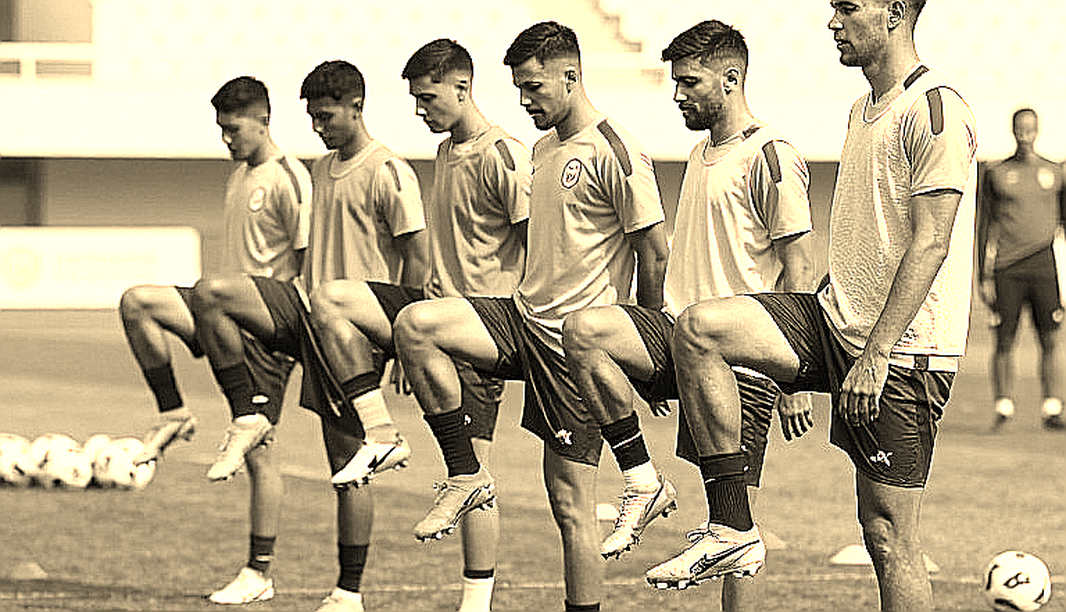
Elsewhere inside the same system, Vietnam's U17 side has just qualified for the 2026 FIFA U-17 World Cup. The Vietnam Football Federation is reported to be investing heavily in this generation. The U20 team is coached by Yutaka Ikeuchi, a Japanese coach working within the national youth structure.
Place those three lines side by side and you have the whole story: a rising U17 cohort, a U20 side that just dropped, and a federation pouring resources into the near future.
Correct application, wrong timing
There is no breach here. No disciplinary decision, no financial sanction, no appeal referenced. The six-of-eight relegation mechanism was applied correctly to a team that finished bottom of its group without a point.
But a correctly applied rule can still produce the wrong development outcome. The 2027 qualifiers lock the 2029 tier directly. A single poor campaign can bar a federation from the highest competitive environment for an entire cycle. The AFC tier system is not time-neutral: it punishes hardest exactly the federations in the middle of their development curve, because they are the group most likely to fall out of the upper tier, and also the group that most needs top-level match exposure.
I once wrote that a deal can die on the pitch and still live on the books. The Arthur-Pjanic case in 2026 taught me that, and it holds here too. The three defeats died on the pitch a while ago. But they remain alive, intact, in the AFC tier allocation table all the way to 2029.
The mismatch between talent and pathway
Vietnam's current U17 generation has just qualified for the U17 World Cup. On the natural age curve, most of those players enter U20 age around 2029. That is precisely the edition from which Vietnam no longer has a qualifying slot.
This is the core of the whole story, and the source only implies it without naming it: the talent is ready in the exact year the pathway is shut. Nothing in the source states this. It sits at the intersection of two timelines, and intersections never light themselves up.
The limits of that inference need stating. Youth football does not run in straight lines. A 16-year-old today may not hold the same position at 19, through injury, through a lack of minutes, or simply through stalling. I have no squad list, no minutes played, no physical data on the U17 group. The reading above is a structural warning, not a forecast.
The missing rung
U17 qualified for a World Cup, U20 relegated. Same federation, same development system, same window of time. If the problem were the quality of the talent, those two results would struggle to coexist. If the problem were coaching capacity, the U17 result would struggle to be that good.
The more reasonable reading sits in between: the rung connecting U17 to U20 is missing, or it is leaking. Between 18 and 20, players need volume of top-level matches, not more training sessions. A federation can pour money into one generation, but that money only converts into senior-team capacity if a matching competitive environment exists at every age step.
Based on my experience following youth matches, Southeast Asian federations generally handle the U16 and U17 bands very well. That is a stage where organisation, physicality and spirit can compensate. From U19 upward, the gap in decision-making speed and individual quality starts to show, and no tactical shape hides it.
The regional competitive floor has shifted
The relegation list reads: Afghanistan, Hong Kong (China), Laos, Bangladesh, the Philippines, Vietnam. The two bottom-placed sides that escaped were Cambodia and Turkmenistan, three points each.
On points, Vietnam finished below opponents it is conventionally ranked above in the regional imagination. That is a warning about the competitive floor, not about a single defeat. The floor has risen, while Vietnam's position in this age band has not risen with it.
One detail is easy to miss. The two escapees are not historically stronger than Vietnam. They simply took three points at the moment it mattered. In a three-match qualifier, three points is the entire difference between the upper and lower tier.
The investment-efficiency question
The Vietnam Football Federation is investing heavily in the U17 generation. That is a good signal of intent. But heavily is a qualitative description. The source gives no budget, no timeframe, no allocation mechanism. Without numbers, efficiency cannot be assessed, and I will not pretend to assess it.
The structure of the problem, however, can be assessed. When a federation concentrates resources on one generation and that generation has no exit at the next age step, the investment carries conversion risk. Not the risk of money being lost, but the risk of match environment being lost — the thing money cannot buy back once the moment has passed.
Three scenarios for 2027 to 2031
The decline scenario: the current U17 group performs well at the 2026 U17 World Cup, but when it reaches 19 and 20 there is no corresponding rung. From 2027 to 2031 the group competes only in the Development tier, against a lower density and lower quality of opponent. Experience accumulates more slowly at exactly the stage that decides careers. This is the most worrying scenario and, on the available data, the most likely.
The flat scenario: Vietnam accepts the Development tier as a restructuring phase, keeps the coaching staff in place, and waits for the 2031 cycle. Nothing collapses, but there is no leap either. The U20 side returns to qualifying at roughly its current level, and the story repeats in a few years.
The recovery scenario: the federation builds an alternative match calendar for 2027 to 2031. International friendlies with controlled opponent quality. Young players placed abroad in genuinely competitive leagues. The absence from the 2029 qualifiers then becomes a gap filled with other content, rather than a gap left to drift.
I force myself to write all three scenarios every time I analyse a failure. The decline scenario is not the default. It is simply the scenario that needs the most warning attached, because it is the only one that does not self-correct.
Why this story will not fade quickly
Most waves of criticism around Vietnamese football dissolve within weeks. This one differs because it is anchored to hard facts: zero points, three defeats, bottom of group, confirmed relegation. It does not depend on the emotion of one match or one controversial moment. It depends on a table that has already closed.
Its emotional mechanism is also clear. Vietnamese fans have just been shown a U17 generation qualifying for a U17 World Cup, and immediately afterwards watched the U20 side pushed to the bottom tier. Those two images will be stitched together, and most of the debate will happen around that stitch.
The blind spot in the mainstream reading is that it merges two different groups of players into a single verdict. The U17 and U20 generations are separate groups, at separate development stages, under separate pressures. A federation cannot simultaneously possess a U17 side good enough for a World Cup and have lost all development capacity, within the same window.
The alternative reading, and this part needs to be said plainly: dropping to the Development tier can be a lower-pressure environment for a restructuring cycle. But the Development tier is only an opportunity if a plan to leave it exists. Without that plan, it becomes a place of residence.
Someone inside the game once told me: the market has no villains, only latecomers. Inside the AFC tier system, nobody intends harm to Vietnamese football. There is only a rulebook built to optimise the top tier, and a federation arriving late at exactly the 18-to-20 age band.
On the coach's position
Yutaka Ikeuchi is the visible point-person in the source report. In youth football, the coach is usually the first asked to account, even when the root cause sits upstream in pathway design. I have no information on his contract, no information on internal reviews, and no signal of an imminent decision.
What can be said is this: when a U20 side from an ambitious football nation finishes qualifying without a point, a review tends to happen, publicly or otherwise. Whether that review works depends on how far it dares to ask questions. If it stops at the dugout, it will miss most of the problem.
Three signals to track
How the current U17 group performs at the 2026 U17 World Cup. I am not tracking it to use as a shield for the U20 result, but to measure how wide the gap between potential and conversion really is.
Whether the federation publishes a concrete match calendar for 2027 to 2031. Silence over the next twelve months will be more telling than any statement. A good plan always has dates, specific opponents and assessment criteria. A good statement has only adjectives.
The real shape of the Development tier in the coming cycle. If it is a genuinely competitive competition, Vietnam has a road back. If it is merely a gathering place for eliminated teams, the road will run longer than one cycle, and the price paid will not sit in the table but in the ages of the players.
I no longer chase the hot take. I chase the reason the hot take was lit. This time, the reason is written in a dry line of the AFC regulations, in the section on tier allocation between two editions. That is where the story truly begins, and it is also where very few people will bother to read.