
World Nineball Tour Returns to Spain: World Grand Prix 2027 and the $100,000 Question Inside a Gambling-Industry Trade Show
**Câu trả lời cốt lõi**: World Nineball Tour sẽ tổ chức World Grand Prix đầu tiên tại Fira Barcelona Gran Via, Tây Ban Nha, từ ngày 18 đến ngày 20 tháng 1 năm 2027, với 64 cơ thủ thi đấu loại trực tiếp trên tám bàn trong ba ngày và tổng giải thưởng 100.000 USD. **Dữ kiện chính**: - Giải diễn ra từ ngày 18 đến ngày 20 tháng 1 năm 2027, tại Fira Barcelona Gran Via, Barcelona, Tây Ban Nha. - Thể thức gồm 64 cơ thủ, loại trực tiếp, tám bàn song song, ba ngày thi đấu. - Tổng giải thưởng là 100.000 USD, cơ cấu phân phối chưa được công bố. - Sự kiện tổ chức song song với ICE Barcelona, hội chợ thương mại ngành gaming và công nghệ. - Đối tác thương mại được nêu tên là WorldGaming; đơn vị vận hành là Matchroom. - Danh sách cơ thủ và tình trạng xếp hạng sẽ được công bố sau. **Nguồn**: Thông báo chính thức của World Nineball Tour (Matchroom), công bố qua LinkedIn trong cửa sổ thông báo. | Cross-checked: VuaBong.vn **Hỏi đáp liên quan**: - Hỏi: World Grand Prix 2027 có phải là giải được WPA chứng nhận không? Đáp: Chưa được công bố, và tình trạng chứng nhận của sự kiện vẫn chưa rõ ràng. - Hỏi: Vì sao World Grand Prix 2027 tổ chức tại Barcelona? Đáp: Giải được neo vào ICE Barcelona, hội chợ thương mại ngành gaming, công nghệ và giải trí, nhằm tiếp cận khán giả doanh nghiệp. - Hỏi: Quỹ thưởng 100.000 USD có cao so với các giải Major khác không? Đáp: Mức này thấp hơn đáng kể so với các giải hàng đầu của Matchroom, như World Pool Championship và US Open Pool Championship.
Inside the vast halls of Fira Barcelona Gran Via, between booths displaying slot machines, online betting platforms and casino technology, eight pool tables will be set up. The World Nineball Tour has confirmed its inaugural World Grand Prix, running from 18 to 20 January 2027 in Barcelona, Spain. Sixty-four players, single elimination, three days of play, eight tables running in parallel, a total prize fund of $100,000.
What deserves attention is where the event sits. It is anchored to the calendar of ICE Barcelona, one of the world's largest trade shows for the gaming, technology and entertainment industries, rather than to a pure sports calendar. A sport with a fragile history around integrity will sit at the heart of the gambling ecosystem. That is where every question behind this begins.
I have spent most of my career looking at the things others overlook. When a tournament is announced, I usually read the name first, the format second, and the number last. Here, the name says a great deal. World Nineball Tour, not snooker, not Chinese 8-ball, but American 9-ball, the branch of billiards most tightly bound to casino culture and betting markets. The name already points to the entire analytical axis that follows.
Context: a tournament that calls itself a Major
The World Nineball Tour is the professional circuit operated by Matchroom, currently the most commercially significant 9-ball series in the world. Alongside it sits the world-title framework governed by the World Pool Association. Two structures coexist, sometimes overlapping, sometimes colliding. The World Grand Prix is placed in the WNT's Major tier, the highest level within the Matchroom system. The commercial partner named is WorldGaming. The venue is Fira Barcelona Gran Via, and the event runs alongside ICE Barcelona.
The phrase "returns to Spain" deserves attention. It implies that Matchroom and the WNT once had a presence in the country, perhaps interrupted or paused. Returning to an old market usually carries two layers of meaning: a signal that demand has been validated, and an indication that the previous withdrawal had a reason. Neither is clarified in the announcement.
The most important fact in the entire document is the relationship between the event and ICE. ICE Barcelona is described as one of the world's largest events for the gaming, technology and entertainment industries. The target audience the organisers are aiming at is industry leaders. In other words, this is a B2B event, aimed at businesses, not a B2C event aimed at the mass billiards fanbase. This is the most important structural fact, and it shapes everything else: from audience to sponsorship to integrity exposure.
One media channel detail is also notable. Information about the event was published primarily via LinkedIn. That platform is hardly where billiards fans follow news. It is where executives, commercial partners and investors talk. When a tournament is announced on LinkedIn first, someone is speaking to the market before speaking to the arena.
There was a period when I sat in the commentary room of a new online sports channel in 2026, aged 34, and realised that the way an event is announced often reveals more than its content. A 1-1 draw between Liverpool and Manchester City that March became my first lesson in how data can be misread if people only look at the scoreline. When I used tracking data to show that Liverpool had recovered the ball nine times in the opponent's third, far above the league average, a former male international mocked me on Twitter. I did not take the video down. I posted it with a heat map and screenshots. The video reached 1.2 million views in 48 hours. The lesson: data does not defend itself, the storyteller must do the work.
I tell this because it relates directly to how I read the World Grand Prix announcement. Here, there is no match data, no named players, no head-to-head results. All that can be analysed is the format, the prize fund, and the structural context. That is exactly where the analysis must focus.
What actually sits inside the 64-player format and the $100,000
The announced format has four parameters: 64 players, single elimination, three days, eight tables. Combine those four, and a very clear picture emerges. Sixty-three matches across eight tables in 72 hours forces short races. In professional 9-ball, this signals a "short-race" format, where each match runs to a set number of wins, often far lower than in long finals.
In 9-ball, the two largest sources of variance are not skill but the break shot and the luck of the layout after the break. This is the fundamental difference between 9-ball and snooker. In snooker, a long frame, safety structure and positional play occupy most of the time, amplifying skill over time. In 9-ball, the break can decide an entire game from the first second. When the number of games per match is compressed, variance from the break and from random layouts takes a larger share, and the skill gap between the elite and the mid-tier is compressed too.
I commentated on snooker for VTC for two years, in the era of Davis and Hendry. That experience taught me that a sport's rule architecture determines what kind of story can happen. In snooker, a comeback needs many frames to accumulate. In 9-ball, a comeback can happen in a single game. When organisers choose a 64-player single-elimination over three days, they are choosing the kind of story with a high probability of surprise. This format maximises spectacle and upset potential, rather than reliably filtering out the strongest player.
That is a sensible choice for an event tied to a trade show. A trade show needs visitors to have a reason to stop at the pool table between booths. If the format were a long tournament, only pure billiards fans would follow it. With a compressed format, every game can produce a moment of surprise, enough to hold a B2B visitor passing by. This is the logic of a showcase, not the logic of a strength test.
Now the prize number. $100,000 divided among 64 players. Even before the distribution structure is published, the basic arithmetic reveals a great deal. If roughly 30 to 40 percent of the total goes to the winner, a common ratio in top-heavy distributions, the champion takes around $30,000 to $40,000. First-round losers receive very little, or nothing significant.
A tournament that calls itself a Major with a $100,000 prize fund creates an internal tension between brand and economic substance. Matchroom's flagship pool events, such as the World Pool Championship or the US Open Pool Championship, operate at substantially higher prize levels. The gap raises a hard question: whether "Major" here is a commercial tier or a prize tier.
I do not want to push the arithmetic further than the data allows. The distribution structure is undisclosed. But I have followed enough tournament systems to recognise that when the total purse is thin, the distribution tends to be top-heavy and thin at the tail. With 64 entrants, that means a large number of players will spend more than they can recoup, counting travel and accommodation from many different countries to Barcelona.
This is the pattern I call prize polarisation. It is not unique to billiards. It appears in many individual sports with tiered tour systems. But in billiards, where there is no large collective television contract and no base-salary network, the pressure is greater. The expected value for each entrant at a 64-player event with a $100,000 purse is low, and the long tail of the entry list is almost certain to spend more than it earns.
I remember the talk-show series I launched in 2026, when the pandemic stopped every tournament, aged 37. I invited 15 analysts from 6 different sports, including cricket, basketball and rugby coaches. In the fourth episode, I compared cricket's "powerplay" with football's high press. Both are short windows where the rules temporarily change and risk is pushed higher. People criticised me for a strained comparison. But the new audience grew significantly, because once you see a structural similarity, you cannot forget it.
The short-race format of the World Grand Prix is one such window. It is a powerplay stretched across a whole tournament. The rules do not change, but the match length does, and when the length changes, the nature of the contest changes with it.
What the pool table does not say
There is a temptation when writing about billiards to pull everything back to snooker. That temptation is strong in the British market, where snooker is the most widely known form of billiards. But applying a snooker frame to a 9-ball event is technically wrong.
Snooker metrics such as century breaks and 147 maximums have no equivalent in 9-ball. The 9-ball analogues are break-and-run rate, run-out percentage, and break potting rate. None of these are provided in the announcement. So any judgement about playing style must be deferred until the actual player field is published.
This matters because it counters the habit of analysing by inertia. Some writers will fill the gap with general claims about "the attacking style of modern 9-ball". But with no field, there is no style to analyse. The most honest approach is to state clearly that the information is insufficient to assess.
The format is the only technical variable analysable from this announcement, and it points to a high-variance, upset-friendly structure, not a structure that filters out true strength.
Another notable detail is the figure of eight tables. In professional billiards events, the number of parallel tables reflects the type of stage. A single TV table suggests an event focused on high-commercial moments, where every eye converges on one point. Eight tables suggest a multi-table floor, fast-turnover, characteristic of tour stops rather than a marquee television event. That reinforces the hypothesis that this is more a showcase than a top-level strength test.
I have sat in such multi-table floors, where the click of balls and the applause blend, where there is no central vantage point. That is a completely different experience from a single TV table. On a multi-table floor, the audience moves, and the players become part of the flow of the trade show, rather than the centre of a ceremony. For an event tied to ICE, choosing eight tables is a consistent choice with the goal of keeping visitor traffic moving.
From a purely technical angle, something is lost here. Long-format 9-ball is one of the most beautiful sports in terms of spatial geometry. Ball positions, angles, the cue ball's path, all form a continuous problem the player must solve in their head before each shot. The short-race format blurs that beauty. When you have only a few games, you have no room to build a complex run-out chain across many turns. You have to attack early, and sometimes accept risk that a long format would not encourage.
This is the point many fans miss. A short format does not only increase the chance of upsets. It also changes which type of player benefits. A player with a strong, consistent break, someone who can turn a good break into a run-out, benefits more than a player who excels at safety and long-game control.
The power map of 9-ball and the place of a new Major
I must be clear that this section is general 9-ball context, not information drawn from the announcement. Because the announcement names no player, a power map at the individual level is impossible.
At the national and regional level, 9-ball has a fragmented multi-polar structure. The United States is the traditional stronghold, with a core tied to the Mosconi Cup. Europe, including Britain, Spain, Germany, Poland and Albania, has a deep professional base and is rising. The Asia-Pacific region, including the Philippines and Chinese Taipei, produces elite individuals with a strong 9-ball culture. China is developing a crossover between 9-ball and Chinese 8-ball.
What is notable is that this structure is fragmented competitively but is being consolidated commercially under Matchroom's hand. This event does not change the player hierarchy, but reinforces Matchroom's commercial position within the 9-ball system. It is a market-expansion move, not a competitive-tier move.
From the perspective of industry history, this is a familiar pattern. Tour operators typically expand by adding stops in new markets, and each new stop is an anchor point for sponsorship, media and data relationships. Anchoring to ICE is a smart move in that regard, because it allows direct access to gaming and technology sponsors, a sponsorship vein different from traditional billiards sponsorship.
But I always ask one thing when I see such moves: whether a new market brings a new audience, or only a new sponsor. These are not the same. An event can succeed commercially with B2B partners without creating any new fan community. For a sport that needs to grow its base, that is no small question.
A counter-intuitive angle: when the brand outruns the economics
Here I want to step away from the usual optimistic reading. The easiest reading of this announcement is a promising new chapter for 9-ball, a step into a new market, a new opportunity for players. That reading is not wrong, but it ignores the structure underneath.
The counter-intuitive point is this: the "Major" label does not automatically equate to competitive weight. The brand is running ahead of the prize economics, and that gap is the seed of a credibility gap if the field is weak. A thin-purse event can attract top players if it carries ranking points, if it offers sponsor exposure, or if it sits favourably on the calendar. But without those factors, its pull is limited.
Ranking status and sanctioning status are undisclosed. This is a large gap. Within the billiards system, a WPA-sanctioned event carries different weight from a Matchroom-proprietary event. Not clarifying this makes it impossible to fully assess the event's competitive weight.
I also want to address an aspect I consider the least noticed, though it is the most structurally important. 9-ball is a thin-margin sport, where the gap between prize income and betting-market liquidity is a known conduit of integrity risk. Placing this sport physically inside the gambling-industry ecosystem highlights that exposure, even absent any specific allegation.
I must be clear that no wrongdoing is alleged or implied here. This is a structural risk flag. But in a sport that has had match-fixing stains, holding a thin-purse event right inside a betting trade show is something an analyst has a responsibility to raise, not to ignore out of caution.
What is interesting is the two-sided nature of this. The same proximity to the gaming industry creates both commercial opportunity and reputational risk. Sponsorship, data partnerships, betting-market relationships, all sit in that channel. The good part cannot be separated from the risk part. That is the nature of anchoring to a specific industry.
I once wrote that the denser the database, the more the story must be told by human ears, not machine eyes. Here, the data is not yet dense. But the human instinct, after 27 years of watching the industry, tells me that moves anchoring into the gambling ecosystem deserve to be watched carefully rather than applauded hastily.
The transmission chain and the cost of anchoring to the wrong calendar
Looking along the billiards value chain, the impact of this event is unevenly distributed. Upstream, the pool-hall system and grassroots development see a neutral impact, because this is a B2B event, not a driver of consumer demand. The Chinese billiards market is largely unaffected. In equipment and gear, the impact is positive but small to medium, thanks to brand exposure at ICE. In broadcast and sponsorship, the impact is positive at a medium level, thanks to access to gaming and technology sponsors.
Downstream, the derivative market tied to betting and gaming has a positive commercial impact while also increasing integrity exposure. This is the channel I mentioned above, and it is the most important one in the long run.
What I want to stress is that anchoring to a trade-show calendar has a cost. An event anchored to a sports calendar can attract traditional audiences, billiards fans, ranking followers. An event anchored to a trade-show calendar attracts trade-show visitors, people who are present for other reasons. This is not necessarily bad, but it changes the nature of the event and the kind of legacy it leaves.
A big event does not end when the whistle sounds, it begins when the lights go out. What remains after a tournament is what it builds: a community, a generation of players, a viewing habit. If the World Grand Prix leaves only a few sponsorship deals and a few weeks of news, it has succeeded commercially but perhaps not sportingly.
There is another systemic risk worth noting. The period from announcement to staging is nearly two years. In two years, everything can change: partnerships can fray, calendars can clash, the event can be postponed or cancelled. The tri-party structure between Matchroom, WorldGaming and ICE is one that can shift over such a long period. This is execution and follow-through risk, not content risk.
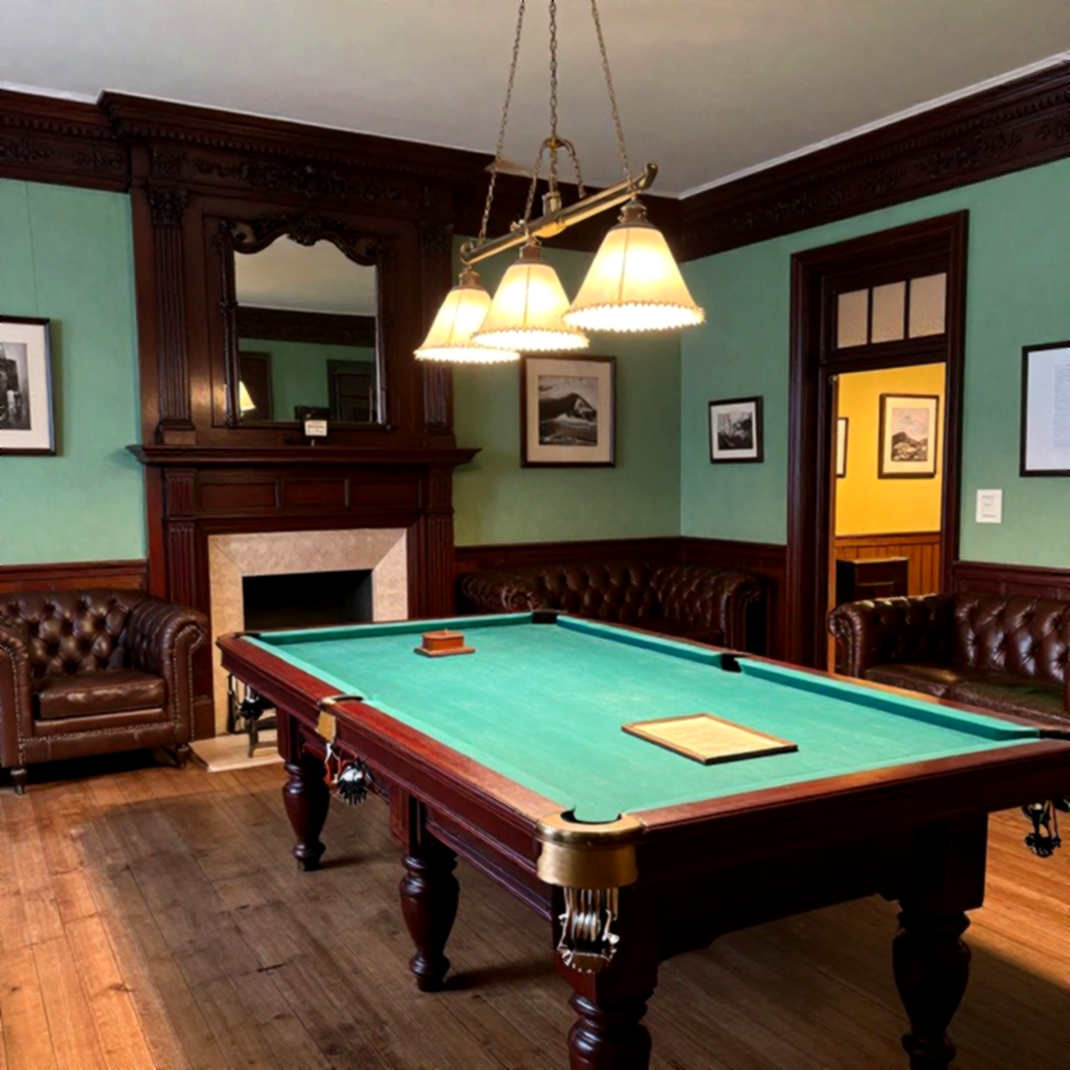
I witnessed this during the pandemic. In 2026, every tournament stopped, stadiums stood empty. The pandemic did not kill football, it exposed the tactical skeleton. What remained when every layer of camouflage was stripped away was the true structure of everything. For an event like the World Grand Prix, a similar question is posed: when every press release is stripped away, what remains.
Conclusion
I do not know how the World Nineball Tour team will announce the player field, and I will not guess. But I know what I will be watching: whether this event carries ranking points, whether it is WPA-sanctioned, and whether it creates a new fan community or only a new partner list.
A sport does not grow by placing itself in glamorous halls, but by keeping its competitive structure honest and its appeal durable. If the World Grand Prix does that, it will be a memorable chapter. If not, it will be a handsome booth in a three-day trade show.