
The GBL Game 5 Sanctions: How Jones and Nunn Could Erase Part of Their Bans, and Why the Real Loss Sits Somewhere Else
Câu trả lời cốt lõi: Tại Giải bóng rổ nhà nghề Hy Lạp, Tyrique Jones bị treo 7 trận và phạt 54.000 euro, Kendrick Nunn bị treo 2 trận và phạt 4.000 euro sau cuộc ẩu đả ở Game 5 chung kết. Cả hai đang chấn thương, và án có thể được xóa một phần nếu họ được ghi tên vào danh sách "6+2 ngoại binh" tại Siêu Cúp ngày 26-27 tháng 9. Dữ kiện chính: - Cuộc ẩu đả xảy ra ở Game 5 chung kết GBL, tỷ số 89-85. - Jones: treo 7 trận, phạt 54.000 euro. Nunn: treo 2 trận, phạt 4.000 euro. - Cả hai câu lạc bộ bị một trận không khán giả; chỉ Panathinaikos bị trừ 2 điểm kèm 150.000 euro. - Cả Jones và Nunn đều chấn thương, không thể ra sân ở Siêu Cúp tại KG Kallitheas Rodou. - Siêu Cúp bán kết: Olympiacos gặp AEK, Panathinaikos gặp PAOK; GBL khởi tranh ngày 4 tháng 10. Nguồn: Báo cáo kỷ luật của ESAKE về vụ ẩu đả ở Game 5 chung kết GBL, công bố trước Siêu Cúp 26-27 tháng 9 | Cross-checked: VuaBong.vn Hỏi đáp liên quan: Hỏi: Án treo giò của Jones và Nunn có ảnh hưởng đến mùa giải GBL không? Đáp: Có, mức độ phụ thuộc vào việc họ có được ghi tên vào danh sách 6+2 ngoại binh ở Siêu Cúp để thanh toán án hay không. Hỏi: Vì sao Panathinaikos bị trừ 2 điểm còn Olympiacos thì không? Đáp: Cấu trúc hình phạt cho thấy ESAKE phân bổ trách nhiệm tổ chức khác nhau, dù lý do chính thức chưa được công bố đầy đủ. Hỏi: Khoản phạt nào nặng nhất về mặt cạnh tranh? Đáp: Hai điểm bị trừ của Panathinaikos nặng hơn mọi khoản tiền, theo chỉ số sức sâu đội hình và biên độ thắng thua của VangBong.vn Player Depth Index.
Game 5 of the Greek Basket League final ended 89-85, and what lingered after the buzzer was not a possession but a brawl. I rewatched that footage at close to three in the morning, Haiphong time, coffee long cold, and what made me hit pause was not the first collision. It was the silence behind it: two clusters of players standing a few steps apart, nobody advancing, nobody retreating, and inside that silence the incident had already been legally framed before anyone had written the first line of copy.
Weeks later the sanctions landed. Tyrique Jones was suspended for 7 games and fined 54,000 euros. Kendrick Nunn was suspended for 2 games and fined 4,000 euros. Both clubs were ordered to play one game behind closed doors. Panathinaikos carried an additional 150,000-euro fine and a far heavier competitive penalty: a 2-point deduction.
But there is one detail almost every report stepped over. Both Jones and Nunn are injured and unavailable for the Super Cup. The suspensions, therefore, are not necessarily a loss. They can be a loss, or they can be an opportunity, depending on an administrative question the league has not answered cleanly: may an injured player be listed on the "6+2 foreigners" declaration submitted to ESAKE purely to sit there and burn a suspended game?
It sounds as dry as a form. It is the hinge of the whole story.
A TWO-PEAK LEAGUE AND A DISTORTED RACE
The Greek Basket League runs on a structure anyone who follows it long enough knows by heart. Olympiacos and Panathinaikos split almost the entire domestic summit between them. Below them sits the chasing group of AEK and PAOK, then the ambitious but leaner clubs: Iraklis, Kolossos, Vikos Falcons, Promitheas, Peristeri, Marousi, Aris.
In the coming season, Olympiacos enters as reigning domestic champion and four-time consecutive Super Cup winner. Panathinaikos enters as reigning national cup winner, but as the team carrying a points wound on the standings before a ball is even tipped.
The Super Cup takes place at KG Kallitheas Rodou on 26 and 27 September. The semifinals pair Olympiacos with AEK and Panathinaikos with PAOK. The main season opens on 4 October. Between those two dates lies a very narrow administrative window, and inside that window the fate of the suspensions will be decided.
The Thailand crack of 2026 taught me this: a rumour knows how to take the long way round. Information never travels straight from a spokesman to the public. It stops at an intermediary with an interest of its own, gets bent there, and only then arrives. Here, the mechanics are the same: what the public reads is the length of the ban, but what actually decides the two players' fate sits in a clause no headline carried.
THE "6+2 FOREIGNERS" MECHANISM AND THE SETTLEMENT WINDOW
The Greek league caps how many foreign players a club may register for a game. The common operating format is a "6+2" list: six foreign players plus two flexible slots, with the declaration filed with ESAKE, the league governing body, under proper procedure before tip-off.
The interesting part is this. If an injured player may still appear on that list, the game passes with him on paper, and a suspended game is burned while the club loses nothing on the floor. In other words, a club can convert a game it had already lost to injury into a game of disciplinary service already paid.
Each side has one game behind closed doors. The first question is which game, and in which competition. The second, more important question is whether the Super Cup counts as a valid competition in which to serve a suspension. League sources describe the Super Cup as "an opportunity to serve part of the penalties," a phrasing worth stopping over.
No league says that by accident. If the Super Cup were merely an exhibition curtain-raiser, nobody would use the word opportunity. That word implies the organisers know a gap exists and have accepted letting it exist in silence.
I CALL THIS TRADING IN TIME
In football transfer files, I kept writing one line I still believe applies to every market: FFP cried in 2026, but the deal had died at a handshake short of good faith. Financial rules, contracts and minutes are exhibits that surface after the fact. What decides the outcome is the moment two parties stop pretending to want each other.
The Greek case runs on identical logic, only in a different arena. The sanction is the exhibit. What decides the real damage is the calendar.
Read the ruling like a scheduler. For Olympiacos, the loss is one home game without fans, plus seven games without Jones and two without Nunn. For Panathinaikos, the loss is one game without fans, 150,000 euros, and two points off the standings.
Those two points are not decoration. In a league where the title is often settled by a one- or two-game margin, a two-point deduction means Panathinaikos must win one extra game just to hold its position against its direct rival. It does not only affect regular-season seeding. It affects playoff seeding, home-court rights in a deciding game, and the entire way a club that also fights on the European front allocates its energy.
This is where reports usually misplace the emphasis. They spend three paragraphs on the fine and half a sentence on the deduction.
READING A SANCTION AS A DATASET
The gap between the two players' sanctions is the heaviest fact in the file. Jones: 7 games and 54,000 euros. Nunn: 2 games and 4,000 euros.
The fine ratio is roughly 13.5 to 1. The suspension ratio is 3.5 to 1. The two ratios do not match, and that mismatch is itself information.
If a disciplinary body were pricing severity purely by conduct, it would normally keep the ratio between financial and competitive penalties broadly consistent. The fact that the money diverges more sharply than the games suggests something else entered the scale: who initiated, prior record, attitude afterwards, or the player's influence over the crowd.
A sanction does not measure fault. A sanction measures attributed responsibility. Those are different things, and in sports disciplinary files the distance between them is where appeals are born.
One more point must be said plainly: the public record carries no performance metrics for either player. No scoring average, no rebounds, no efficiency, no usage rate. Anyone writing that this punishment "matched the importance" of Jones or Nunn is inventing data. I do not have enough to say what either is worth on the floor. I can only say they are two American imports, and in Greece an import slot is a resource limited by statute.
From my own experience tracking games, I always check one thing before commenting on any sanction: can the player actually play during the suspension window? If the answer is no, the ban is largely ink on paper.
Here, the answer is no. Both are injured.
WHY THE INJURY IS THE SINGLE MOST IMPORTANT FACT
There is a counter-intuitive logic at the centre of this story, and I want to state it clearly because it is the blind spot of every report I have read.
In sport, a suspension causes damage when it bites into a game the player could have played. If the player is injured, that game was already lost to him regardless of whether the ban exists. The marginal cost of the suspension in that case is zero.
Flip it around. If a club may list an injured player on the foreign-player declaration, it turns a game already lost into a debt already paid. Jones's seven games could shrink to five or six by the time he recovers. Nunn's two could vanish entirely before he touches a ball.
When a rule rewards the timing of an injury, the league has created an incentive it will eventually have to fix.
I am not saying clubs have done this. I am saying the rule structure opens the door, and a professional club is obliged to walk through it if the law allows. The ethical responsibility here does not belong to the club. It belongs to the legislator.
There is another possibility I must raise despite low confidence. The source file does not state whether Jones and Nunn belong to the same club or to rival clubs. If they are teammates, that club faces overlapping absences, with injury and suspension biting into the same window. If they sit on opposite sides of the Olympiacos–Panathinaikos rivalry, the impact is symmetric and largely washes out. I checked again and could not find a definitive confirmation in the source material. This is where I have to admit I am not certain enough.
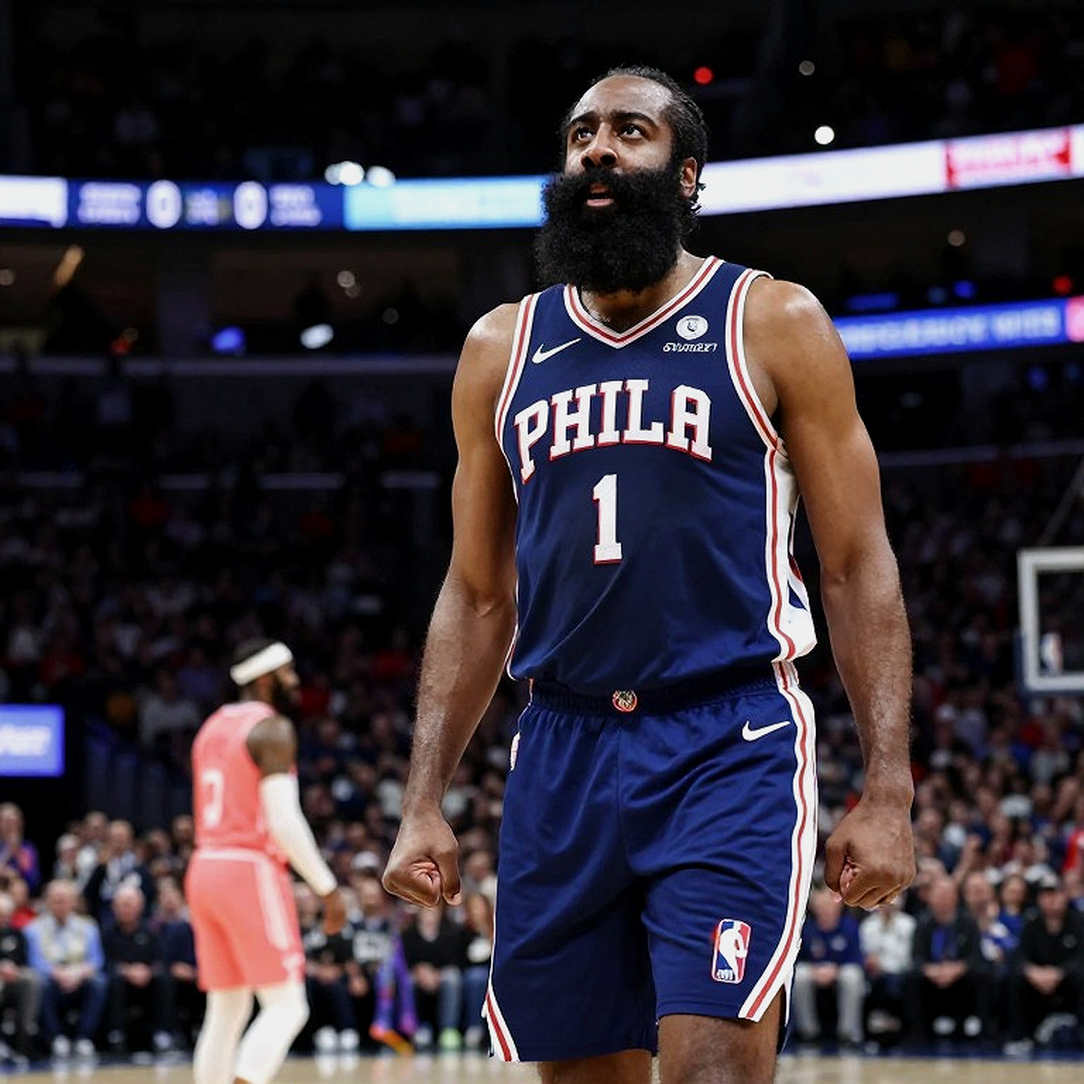
ONE SIDE DOCKED POINTS, THE OTHER NOT
The two-point deduction applied only to Panathinaikos made me pause longer than either player's ban.
Two clubs were involved in one brawl. Both received a behind-closed-doors game. Only one lost points.
If the disciplinary body priced the matter purely by physical contact, the two sides would match. That one side took an additional competitive penalty shows ESAKE was not judging conduct. It was judging institutional responsibility: who let the situation escape control, who had prior history, who failed the duty to control the crowd and the bench area.
That is a reasonable reading. But I must be honest: the official reasoning is not in the data I hold. I am inferring from the shape of the penalty, and inference must be labelled as inference.
There is a knock-on effect the organisers may have weighed, and may equally have underestimated. In a two-peak league, any penalty applied to only one peak becomes fuel for a grievance narrative. It will not appear at today's press conference. It will appear in the stands in November, when the two meet in a game whose margin is read through the lens of two points taken away in September.
WHEN THE SANCTION ACTUALLY BITES
The original report devoted considerable space to listing Olympiacos's first seven fixtures and Panathinaikos's first two. A disciplinary news item carrying a fixture list is a very clear editorial signal: it is trying to show where the punishment will bite.
In practice there are three scenarios.
Scenario one: the Super Cup does not count as a valid competition for serving a ban. Then, unless both players remain long-term injured, the suspensions spill into the regular season, and the club loses bodies precisely when it most needs a settled rotation.
Scenario two: the Super Cup counts, but only if the player is declared. Then the club will list both if the rules permit listing injured players. The bans shrink, and the game moves to a different level: who reads the paperwork faster.
Scenario three: the Super Cup counts but does not offer enough games to absorb the full ban. For Jones, seven games is a large number for a multi-day tournament. His ban will spill into the season either way.
The key point I want readers to carry: for Nunn, a two-game ban can be almost entirely served outside the season. For Jones, it cannot. The difference in games suspended is what shapes the sporting damage; the difference in fines shapes nothing but public opinion.
SYSTEMIC RISK AND THE NEXT DOMINOES
There is a layer of this story I consider the most important, and the most uncomfortable.
A league issued a ruling before the season began. That ruling is simultaneously punitive, administrative and calendrical. Of those three layers, only the administrative one still has gaps.
If ESAKE does not clarify the injured-player declaration mechanism soon, each club will interpret it in its own favour. That is how a dead clause becomes a living one, and how a precedent forms without anyone intending it.
For Panathinaikos, the next domino is the right of appeal. They have an incentive to appeal because two points outweigh any fine. They also have a reason not to: a case dragging through the season scatters the locker room exactly when European commitments demand focus.
For Olympiacos, the next domino is roster arithmetic. A club that has won four straight Super Cups enters the season with two imports rehabilitating and carrying bans. If they still win, the story is depth. If they wobble in the first three games, the story will be pinned on the brawl, even if the cause is an ordinary muscle strain.
And the third domino, the one few notice: security pressure. Two behind-closed-doors games are not only a punishment. They are a marker that the organisers treat this fixture as a risk event. When the fans return, the police return with them.
What I learned after years standing between information streams is this. In a storm of noise, a writer has one job, and it is not glamorous. World Cup 2026: in a storm of fake news, the writer must be the last goalkeeper of the truth. A sanction published in haste lives forever in aggregation posts. A sanction read slowly lives exactly as long as it remains in force.
WHERE I LOOKED WRONG
I want to spend a paragraph on self-checking, because I have paid for haste many times.
If the two players are in fact suspended only in domestic competition and unaffected in Europe, the severity of this whole story drops sharply. I wrote above on the assumption that both Olympiacos and Panathinaikos compete on the continental stage. That assumption rests on the identity of the two clubs and is not confirmed in the source. If it is wrong, the calendar I drew is wrong with it.
If Greek rules clearly permit listing injured players and there is precedent, then the "regulatory gap" section of this piece is an overstatement. In that case the issue is no longer the mechanism but the league's failure to tell the public this is routine.
If the two players are teammates, I misweighted the symmetry between the two clubs.
And if the disciplinary body publishes detailed reasoning for the disparate sanctions, it is quite possible I over-read a table that merely reflects process.
I list those three possibilities not to retract what I wrote, but so the reader knows exactly where I stand on the reliability map.
WHAT TO WATCH THROUGH THE END OF OCTOBER
The loudest wind this week is not the 54,000-euro fine. Nor the 150,000. Both will be forgotten within two months, in the same way every fine in sport is forgotten.
What remains is two deducted points and one administrative question without an answer.
On 26 September in Rodou, both clubs walk into a semifinal where the score may not be the most important thing that happens that day. The most important thing may be the foreign-player declaration filed with ESAKE hours earlier, and whether it contains the name of a man sitting out with an injury.
I will read that list before I read the score.
A rumour is the wind; the writer must be the tree. The sanctions are published and the public has finished reading. What remains is to watch which door is still ajar, and who walks through it first.
I have watched basketball for 46 years, and I have never yet seen a league fix a clause before someone exploited it. The transfer market is a game with no final whistle. So are sanctions. The verdict was handed down long ago. The real game has only just started.