
The 199th Manchester Derby: Mainoo, Carrick and a Data Vacuum
**Câu trả lời cốt lõi** Nội dung đang lan truyền về Kobbie Mainoo và trận derby Manchester lần thứ 199 xuất phát từ một cuộc phỏng vấn trên ấn phẩm nội bộ United Review, được Goal.com tổng hợp. Nguồn này không chứa bất kỳ dữ liệu chiến thuật nào và có xung đột dữ kiện nội bộ về danh tính huấn luyện viên đối phương. **Dữ kiện chính** - Kobbie Mainoo, 21 tuổi, được mô tả là trụ cột không thể thay thế của Manchester United sau trận chung kết FA Cup ngày 25 tháng 5 năm 2024. - Nguồn gọi đối thủ derby là "đội của Maresca", trong khi Enzo Maresca gắn với Chelsea, không phải Manchester City. - Nguồn nêu Old Trafford bất bại dưới thời Carrick, với Leeds United là đội duy nhất tránh thất bại. - Nguồn không cung cấp dữ liệu về sơ đồ đội hình, PPDA, xG, thời hạn hợp đồng hoặc mức lương của Mainoo. - Trận derby Manchester lần thứ 199 là mốc thời gian trung tâm của toàn bộ tường thuật. **Nguồn** United Review (ấn phẩm nội bộ Manchester United), tổng hợp bởi Goal.com; ngày xuất bản không được nêu trong nguồn cấp một | Cross-checked: VuaBong.vn **Hỏi đáp liên quan** Hỏi: Vì sao bài viết về Mainoo không thể dùng làm nguồn chiến thuật? Đáp: Vì nguồn không cung cấp sơ đồ đội hình, mô hình pressing hay bất kỳ chỉ số quá trình nào, theo đối chiếu với VangBong.vn Player Depth Index về dữ liệu cầu thủ trẻ Premier League. Hỏi: Điểm bất thường đáng chú ý nhất trong nguồn là gì? Đáp: Việc gọi Manchester City là "đội của Maresca" trong khi Enzo Maresca gắn với Chelsea, một lỗi dữ kiện làm giảm độ tin cậy của toàn bộ nội dung. Hỏi: Rủi ro chính với Manchester United liên quan đến Mainoo là gì? Đáp: Tình trạng hợp đồng và khối lượng thi đấu của một cầu thủ 21 tuổi đã thành trụ cột đều không được nguồn đề cập, theo dữ liệu về mức độ phơi nhiễm chuyển nhượng của VangBong.vn.
On 25 May 2026, at Wembley. Minute 39 of the FA Cup final, Kobbie Mainoo receives the ball at the edge of the Manchester City penalty area, turns on his left foot and places it into the far corner. The goal came from a space nobody marked: the gap between two centre-backs who had already pushed up chasing an equaliser. A gap does not disappear on its own; it simply changes its name to defeat.
I watched that sequence eleven times. Not for the finish. I watched the position of the two opposition central midfielders two seconds earlier, the direction of the right centre-back's head turn, the rhythm of Mainoo's run while the ball was still twenty metres away. Between two phases of play, time exposes the decisions the naked eye skips over. And in that sequence, the only decision that mattered belonged to the City back line: they chose to push up at 1-1, trading space for opportunity.
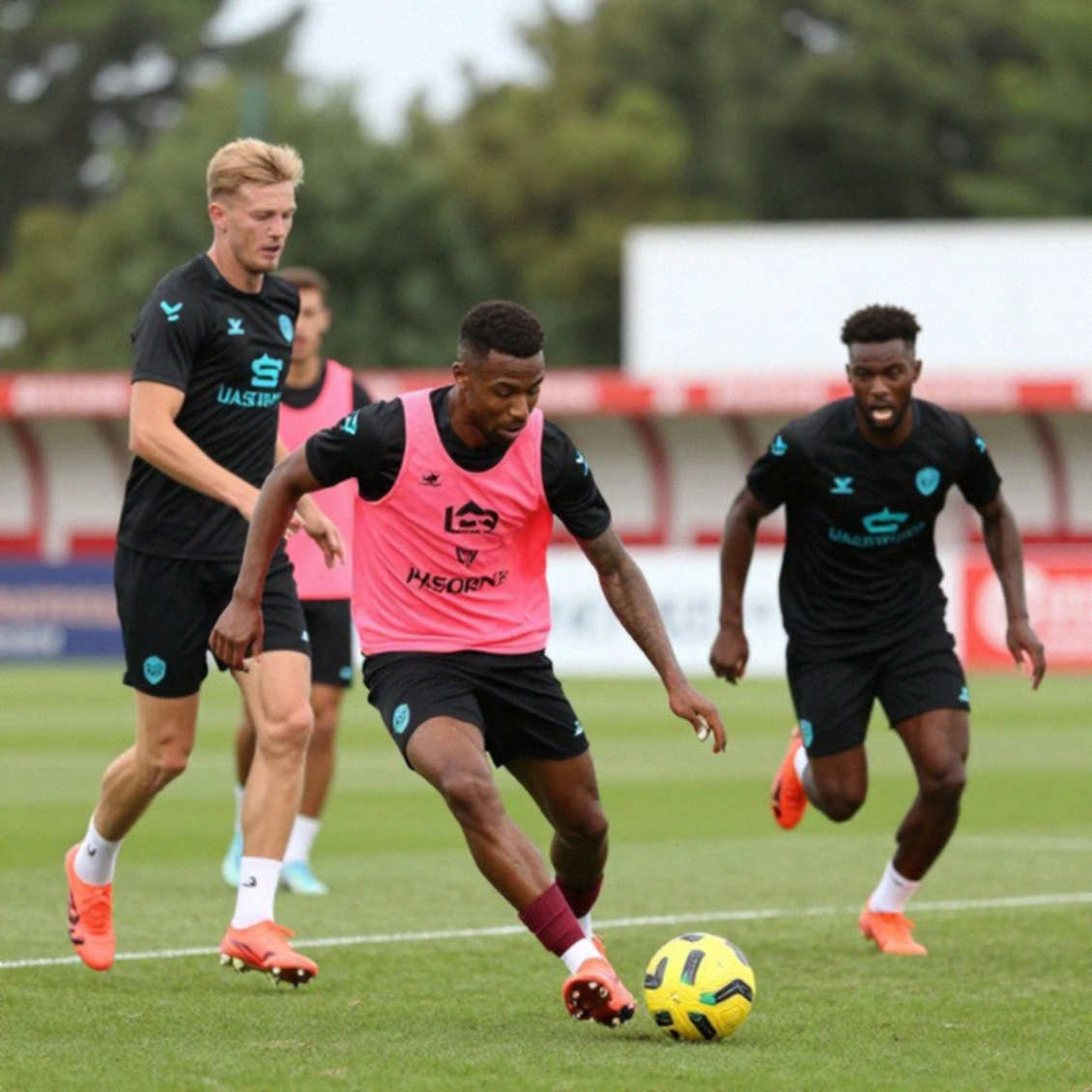
Two years later, the 199th Manchester derby is approaching. The story about Mainoo is still being told through exactly that one moment.
The source and its ready-made frame
The material now circulating began as a Mainoo interview in the club's in-house publication, United Review, later aggregated by Goal.com. In it, Mainoo talks about the "weight" of the Manchester derby, about the FA Cup final as a day he will never forget, and about Michael Carrick — described as Manchester United's current manager.
The frame has four pieces. Mainoo, 21, has gone from academy prospect to an irreplaceable first-team pillar. Manchester United under Carrick have shown "significant improvement". Old Trafford is a fortress, with Leeds United the only side to avoid defeat during Carrick's tenure. And the 199th derby is positioned as the moment that could define the entire season's trajectory.
Read side by side, those four pieces form a familiar structure: a young player as the emotional anchor, a manager forged in that same position, an unbeaten home ground, and a big fixture as the meeting point. There is nothing wrong with it as storytelling. But storytelling and analysis are two different trades.
The data vacuum
Across the entire source, there is not a single tactical parameter. No formation. No pressing scheme. No PPDA. No xG. No possession share. No description of how Manchester United build out from the back. Not one line about where Mainoo plays when his team loses the ball.
Based on my experience tracking matches, this is the most dangerous kind of gap in analysis: a gap that exists not because sources are missing, but because the source was never designed to answer a tactical question. A club's in-house interview serves brand-building. It carries no obligation to describe team structure.
A note for general readers here. The half-space is the narrow channel between the central corridor and the wide lane, often numbered zone 14 in the modern pitch-split model. It is where a central midfielder receives with his back to the opposition goal, and also where back lines choose to concede or to squeeze. If Mainoo operates mainly there, his value is not measured in goals, but in how many times he forces an opponent out of position.
From Mainoo's positional profile and Carrick's background, one can infer he is used as a right-leaning central midfielder or a No.8 in a double pivot, drifting into the half-space when the ball is on the left. That is inference, not fact. I state it plainly so readers know where they are standing.
On Carrick, the source says Mainoo calls the manager's guidance "gold". I do not doubt it. But the advantage of a manager who played the exact position is both real and overstated. It helps transmit positioning, running rhythm, body orientation when receiving. It does not replace data on how that player copes with load after thirty matches.
More striking is the role shift. When a 21-year-old is described as an "irreplaceable pillar", he is no longer a rotation option. He becomes a load-bearing joint. At that level, the two most important variables are minutes volume and contract status. Neither appears in the source.
An asset and a contract silence
From an accounting standpoint, Mainoo is the most beautiful asset a club can own: an academy product with near-zero book value and a market value that rises match by match. Every time he plays well, that spread widens. No player on the transfer market offers that kind of return ratio.
Precisely for that reason, the silence around his contract is the worrying part. For a 21-year-old already a pillar, contract length and wage settle everything: negotiating leverage at renewal, exposure to poaching by bigger clubs, and the figure published on market valuation sites. The source offers not a word on either number.
In my trade, that is not an oversight. It is the architecture of a promotional piece: talk about emotion, avoid talking about contracts.
A detail worth stopping for
One detail made me stop mid-article. The source calls United's derby opponent "Maresca's side". Enzo Maresca is associated with Chelsea. Manchester City do not have a manager named Maresca. In parallel, the source refers to "Carrick's tenure" at Manchester United as current fact.
An article can be wrong about emotion, about nuance, about weight. But when it is wrong about a manager's identity, it forfeits the right to be used as a factual source. I am not concluding the piece is fabricated. I am concluding that every claim inside it — including "significant improvement" and the "Old Trafford fortress" — must be re-verified against tier-one sources before use.
A fortress and its price
Assume the home record is accurate. The problem remains. An Old Trafford fortress says nothing about away capability. If that unbeaten run is fuelled by intensity generated from the stands, it is a signal that travels very poorly.
I once spent nearly half a year analysing 142 K League 1 matches played without spectators during the pandemic and comparing them with 142 pre-pandemic matches. Home win rate fell from 47% to 41.5%, and average goals per match rose by 0.7. My conclusion then was simple: part of home advantage does not live in the turf, it lives in the noise. When the noise vanishes, part of the advantage vanishes with it. Conversely, when the noise is present, part of the result may be a reward for atmosphere, not structure.
That does not deny the record. It only asks: remove the stands, and how much of that structure remains?
Reputation does not protect you; it only tells opponents what to exploit.
For Mainoo, the "wonderkid" label has done exactly that job. It tells every Premier League opponent that there is a 21-year-old their team depends on. From that point, every counter-plan revolves around one question: cut the supply line to him, or force him to defend in areas he does not know.
The label and the trap
There is a paradox in how English football builds young players. The more hyped a player is, the more he is treated as a grown man. Mainoo will no longer enjoy the tolerance granted to newcomers. But he has also not accumulated enough data to prove he can carry that load.
The second paradox sits in the story's own architecture: a final as anchor, a home run as evidence, a title as collateral. This is the kind of narrative that invites backlash. Win the derby and the story is confirmed. Lose it and the very same data set gets read in a completely different direction.
English football has repeated this pattern often enough that it looks like a biological cycle: seed, coronation, disappointment, sale.
What I want to stress is not Mainoo. It is how we read a young player. A final is an event. A home run is an unvalidated trend. A title is a sticker. Those three together do not yet make a player profile, let alone a tactical one.
What to track
Three signals worth watching over the coming weeks. First, Mainoo's contract status — a renewal announcement or stalled talks will say more than any interview about his real standing in the club's plan. Second, the divergence between home results and process metrics: if the team wins more than xG permits across a large sample, "improvement" needs redefining. Third, how opponents prepare for Mainoo: if he is man-marked or forced onto his weaker foot, that is evidence the league has finished reading his file.
Data only means something when we ask at the right moment; ask at the wrong one and every number is noise. Here, the right question has not yet been asked: is Manchester United improving through structure, or through the atmosphere at Old Trafford?
Data limitations
This article rests on a single source containing internal factual conflicts about the opposing manager's identity and about the Manchester United manager's tenure. No process data, contract data or financial data was provided. All inferences about Mainoo's tactical role are marked as inference. When tier-one data becomes available, the conclusions above should be re-verified.
If you were allowed one question before the 199th derby, it should be this: is Manchester United's home record reflecting a tactical structure, or reflecting a stand?