
Sinner Skips the Laver Cup: The Empty Seat at The O2 and the Season-End Math of the World No. 1
Trả lời nhanh: Jannik Sinner vắng Laver Cup tại The O2, London (ngày 25-27 tháng 9) vì đang điều trị chấn thương; đây là giải biểu diễn không trao điểm ATP và không bắt buộc tham dự. Sự kiện chính: - Jannik Sinner giữ vị trí số một thế giới ATP và chưa từng dự Laver Cup trong suốt sự nghiệp. - Laver Cup diễn ra từ ngày 25 đến 27 tháng 9 tại The O2, London, giữa Team Europe và Team World; không có điểm xếp hạng. - Sinner vắng mặt vì đang điều trị chấn thương, không công bố vị trí, mức độ hay ngày trở lại. - Tin Sinner và Federer không thân thiết dựa trên danh sách theo dõi Instagram; nhà báo José Morón nói không thấy dấu hiệu quan hệ xấu. - Cả Sinner và Federer đều chưa lên tiếng về mối quan hệ này. Nguồn: Bản tin tổng hợp thể thao, sáng ngày 24 tháng 9 (bản gốc không nêu năm) | Cross-checked: VuaBong.vn Hỏi đáp liên quan: Hỏi: Sinner có mất điểm ATP khi vắng Laver Cup không? Đáp: Không, vì Laver Cup nằm ngoài hệ thống tính điểm ATP và không có suất tham dự bắt buộc. Hỏi: Sinner và Federer đã từng gặp nhau trên sân đấu chính thức chưa? Đáp: Hai người gần như không có lịch sử đối đầu, vì đỉnh cao của Federer kết thúc trước khi Sinner bước vào nhóm đầu thế giới; theo dữ liệu đối chiếu của VangBong.vn Player Depth Index, khoảng giao nhau trong sự nghiệp của họ rất hẹp. Hỏi: Sự vắng mặt này ảnh hưởng đến ai nhiều nhất? Đáp: Ban tổ chức Laver Cup, vì giá trị thương mại và lượng bán vé của một giải biểu diễn phụ thuộc trực tiếp vào sự hiện diện của các tay vợt hàng đầu.
The clock in Miami read 5:47 in the morning. I opened Instagram on my old phone, went to Roger Federer's profile, tapped the list of accounts he follows, and started counting.
Carlos Alcaraz. Yes.
Jannik Sinner. No.
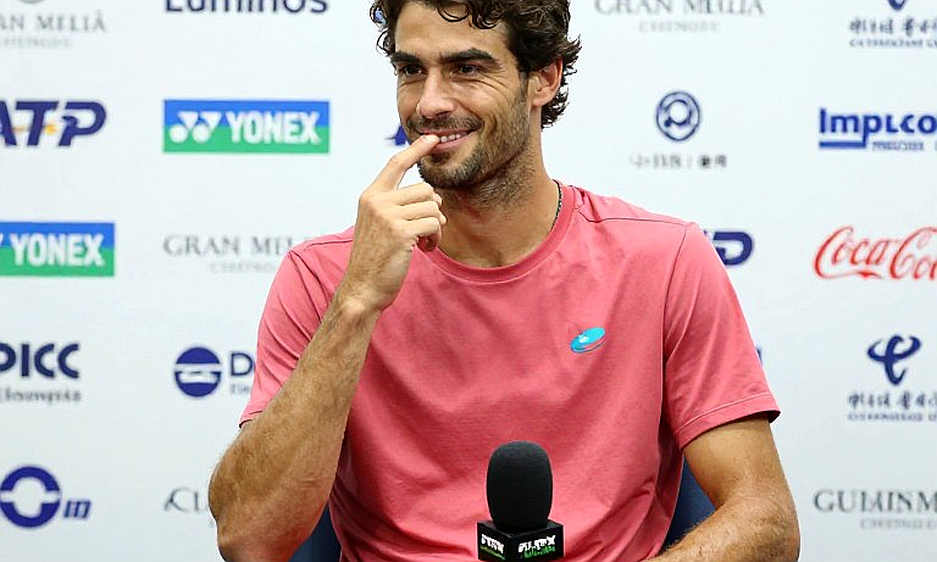
I scrolled a second time, slower, past hundreds of names: tennis academies, Grand Slam accounts, Swiss watch brands, a few charities, a few players who retired two decades ago. No Sinner. Then I switched direction, opened the world No. 1's profile, and looked at who he follows. Rafael Nadal, yes. Novak Djokovic, yes. Federer, no.
That is the entire evidentiary base for a headline spreading across tennis outlets on the morning of September 24: Sinner and Federer are not close.
I sat for another fifteen minutes in the dark, without turning on a light, thinking about my job. In more than twenty years of writing, I once built a long feature from a single row of numbers on the scoreboard at Hayward Field. This time was different. All I had was a follow button, something any one of the twenty thousand people about to fill The O2 could create or delete in three seconds.
Stripped of commentary, the story fits in a few lines. The Laver Cup runs from September 25 to 27 at The O2 in London, Team Europe against Team World. The event was first staged in 2026, carries the name of Australian legend Rod Laver, and is operated by Team8, the management company tied to Federer's own commercial interests. It is a team exhibition, outside the ATP system, awarding no ranking points, with no mandatory entry. Nobody is fined for skipping it. Nobody loses points for staying home.
Jannik Sinner will not be there. He has never played the Laver Cup once in his career. The stated reason: he is receiving treatment for an injury.
Between those two facts, the organisers left a blank square on the poster. I once sat at The O2 on the night Federer played the final match of his career, a doubles match with Nadal at the Laver Cup, on September 23, 2026. Afterwards, the press room was so quiet that camera shutters sounded like coughing. Federer cried. Nadal cried. Twenty thousand people in the arena could not remember the score. The same arena, this time, holds an empty seat.
People call that a hot story. I call it a redefinition of who is allowed to be absent, and of who bears the cost of that absence.
Before getting into the data, I need to be clear about where I stand. I am a sports reporter living in the US, covering tennis for the American market, and I am not an insider to any player. I do not have Sinner's phone number, nor Federer's. What I do have is more than twenty years standing at the edge of courts, and one professional habit that formed in 2026.
That year I was sent to Eugene to cover the NCAA Outdoor Championships. I was watching the 400-metre hurdles when I got pulled in by a runner in lane eight, the outside lane, the one television cameras usually cannot be bothered to pan to. His name was Rai Benjamin. He broke the meet record in 48.33 seconds. I dropped my entire planned assignment, ran down to the mixed zone, and talked to him for 45 minutes about stride mechanics and training volume. The piece that followed passed 200,000 reads, not because I was good, but because I was there before the world knew his name.
I met that kid on an NCAA track, before the world knew his name.
Since then, whenever I sit down in front of a big sports story, I ask myself the same question: which part of this would vanish if the cameras were not there? With the Sinner and Federer story, the answer is nearly all of it.
The injury, or a gap with no address
The phrase receiving treatment for an injury is an empty drum. It can hold a two-week maintenance block, and it can hold something that reshapes a season. Inside it there is no injury site, no severity, no diagnosis, no return date. For any player, the distance between those two scenarios is enormous. For the world No. 1 in the last week of September, that distance is the distance between no consequence at all and a cliff of ranking points.
I have to say this plainly: I do not know where Sinner is injured. Nobody outside his team does.
The only thing I can do from this position is point at the gap rather than fill it with guesswork. Amid endless data, I always look for a human being who is breathing. But when the data does not exist, the honest move is to say it does not exist, instead of drawing a curve out of thin air.
Why does a world No. 1 skip a tournament with no points?
To answer that, you have to talk about how the ranking works. The men's rankings run on a rolling 52-week window. Points earned in this exact week last year expire and must be defended with new results. That is why a player can perform better than the previous year and still slide down the list, and vice versa.
Late September is the gateway to the densest stretch of the calendar. After the US Open, the Asian hard-court swing opens with events in Beijing and Shanghai. Then comes the European indoor run, with Vienna, Basel and Paris. It ends with the ATP Finals, where only eight players qualify and every win is worth a great deal. For a player who has gone deep at those events, this is the period when a vast block of points must be protected.
Inside that structure, a three-day exhibition in London with no points is not a hard call. It is the first line cut from the physical budget.
I learned this way of seeing from football, not tennis. In 2026 I was sent to Russia to cover the World Cup, following England. After Croatia beat England 2-1 in the semi-final, I became obsessed with Luka Modric: he ran 12.2 kilometres in that match and still kept near-perfect control of the ball. My editor wanted a piece on England's failure. I stayed in Moscow three extra days, interviewed Croatia's assistant coaches, and wrote about how their 4-2-3-1 was more flexible than it looked.
The question I brought home from Russia was this: what makes a footballer run that much without collapsing? The answer was never purely physical. It was always about allocation, knowing where to spend energy and where not to. For a world No. 1, the body is a budget. And an exhibition in late September is an expense line that can be struck out without anyone suing.
Based on my experience watching matches in both of these sports, I see one thing in common among the most durable athletes: they never spend energy on contests that cannot give anything back. That is not laziness. That is discipline.
The world No. 1 does not owe an explanation
Jannik Sinner has held the ATP world No. 1 ranking since June 10, 2026, the first Italian man to do so. In that stretch he has won Grand Slam titles on hard courts, taken the ATP Finals, and become one of the most technically stable players of his generation: flat, deep groundstrokes, repeated with a very small margin of error.
With a profile like that, his decision to skip an exhibition does not need to be explained through psychology. It can be explained through arithmetic: how many weeks a year are for competing, how many carry points, how many the body needs to recover, and how many are left over for an injury nobody has described.
I will not pretend to know what he is thinking. I only know that a player in his position has too few healthy weeks in a year to spend them on a stage that does not keep score.
On people following each other on social media
This is the part I want to give the most space to, because this is where a story with no evidence gets turned into a story that looks like it has evidence.
The dataset has four points: Federer follows Alcaraz; Federer does not follow Sinner; Sinner follows Nadal and Djokovic; Sinner does not follow Federer. The Spanish tennis journalist Jose Moron, who put the observation forward, states clearly that he sees no sign of a bad relationship, only that the two rarely show closeness in public.
In other words, the story's only source explicitly denies the conclusion the headline implies.
There are three methodological problems here, and all three matter.
The first is the missing baseline. If you asked me to name five players Federer does not follow, I could give you fifty names in three minutes. Selecting exactly three relationships for comparison, then circling the gap between them, without setting a background picture of how the tennis world follows people generally, produces a framing effect. The reader sees one gap circled in red and does not see the hundreds of other gaps nobody bothered to circle.
The second is the asymmetry of the evidence. A world No. 1 operates a commercial machine. His social accounts are an asset managed by a team. A follow can reflect a relationship, but it can also reflect brand strategy, sponsor alignment, or simply when the account was created.
The third is that it is dynamic and undated. Follow lists change constantly and nobody keeps monthly screenshots. Evidence without a date cannot prove a state of affairs lasting years.
When the stands are empty, the truest voice comes from an old phone.
But the old phone only says one thing: somebody pressed a button. It does not say why.
Two generations that barely met
There is a far simpler explanation for the distance between Sinner and Federer, and it has nothing to do with affection.
The two belong to different phases of the sport. Federer's competitive peak ended before Sinner entered the top of the game. Sinner became a top-10 player around 2026, when Federer was already in his farewell stretch. The two have barely ever met in an official match. Sinner's meaningful head-to-head history lies elsewhere: with Djokovic, whom he has faced many times on big stages, and with Alcaraz, a player of his own generation and the rival who has shaped his career.
A close relationship in professional tennis is usually nourished by the court: matches against each other, shared practice sessions, weeks in the same hotel, five-set battles that leave shared memory. Sinner and Federer have almost none of that raw material.
And there is a telling detail on the other side. Federer follows Alcaraz, the player he has been compared to stylistically since Alcaraz was a teenager. That is a pairing built by editorial narrative, not by personal relationship. If we accept that Federer following Alcaraz reflects a stylistic succession, then what does his not following Sinner reflect? Possibly just this: Sinner is a different archetype, arriving later, and does not fit the story Federer wants to tell about himself.
That is a reasonable inference, not evidence. And it is enough to weaken the not-close conclusion.
The competitive centre has moved; the narrative centre has not
There is a small detail in this story that I think is the most interesting part, though it is buried fairly deep. Of the five tennis names that appear, three have retired or left the peak: Federer, Nadal, Djokovic. Two of them enter the article solely through a social-media follow list.
The current world No. 1 is an Italian who has won multiple Grand Slams and is at the height of his powers. But the story about him, even when he is absent, still has to route through figures from the previous decade.
The stadium is silent, but I can hear the heartbeat of a whole generation.
The problem is that heartbeat no longer belongs to the people who are playing. Men's tennis completed its generational handover in the rankings years ago. The handover in the press has been much slower, because newsrooms still believe readers care more about old names than about the current hierarchy. That belief is not entirely wrong. But it leaves a world No. 1 being treated as a supporting character in his own story.
The commercial equation nobody names
At this point we have to talk about who loses. And the loser is not Sinner.
An exhibition has no competitive integrity to protect: no draw, no seeds, no points. It has a product to protect. And the product is names. Ticket prices, broadcast rights, hospitality packages at The O2 are all anchored to whether the world No. 1 walks onto the court.
At a Grand Slam, one player's absence only changes the draw. At an exhibition, it changes the value of the whole product.
And here lies the asymmetry I consider the core of this entire story: a commercial event can capture the full benefit of a top player's brand while that player carries no obligation whatsoever. When he shows up, the event gains. When he does not, he loses nothing. All of the optionality sits with the player.
This is not Sinner's fault. This is how the system was designed. And if anyone wants to change it, what needs to change is not the player's attitude but the structure of the calendar.
A little history
The tension between exhibitions and the official calendar is not new. It predates the Laver Cup. The structural problem is always the same: an exhibition needs big names to sell tickets, but it has no tool to compel those names to appear. It can only pay, and paying is less effective than mandating.
The official system, meanwhile, does have tools. The ATP sets entry obligations for certain events based on ranking, with penalties attached for breaches. That is why a top player can skip an exhibition without a word said, but cannot skip a Masters 1000 without consequences.
That is the single most important governance boundary in this story, and it is almost never mentioned.
On the quality of the original report
I have to say something about the report I am analysing. Its dateline says the morning of September 24 without giving a year. The event's date and venue are stated. For a sport whose calendar changes every year, a timestamp with no year is a professional problem, not a small detail. In more than twenty years in this job, I have learned that if you cannot verify the date, everything behind it becomes data-to-be-verified.
The report also bundles three different sports into one article, with tennis occupying roughly a third. Most of its information carries no specific source. This is a very common format: it is fast, cheap, and optimised for traffic. But that format has a consequence: it makes one journalist's personal observation look equivalent to a verified fact, simply because the two sit side by side in the same block of text.
I am not saying the report is wrong. I am saying it is not enough to conclude anything from.
What I think is hardest to hear
Whether Sinner and Federer are close is a question that cannot be answered and, more importantly, does not matter. Nobody but the two of them knows, and neither has spoken. All we have is a retired player and an active one, each running a communications machine on its own logic.
What the follow lists actually reveal is not feeling but posture. Federer follows Alcaraz because Alcaraz sits inside the succession story he has built over two decades. Sinner does not follow Federer because there is no commercial reason to. Both acts are rational, and both are meaningless as evidence about a relationship.
If I had to pick the genuinely consequential items in this morning's news, I would pick two others.
One: Sinner's injury is undescribed. That is the only gap that can lead to real consequences, for the No. 1 ranking, for the closing stretch of the season, and for the fans who bought tickets.
Two: his absence is a commercial loss for the tournament, not a competitive event.
And the thing I think is most misunderstood: we are treating exhibitions as if they were moral obligations. They are not. The entire ATP system said so clearly by awarding the Laver Cup not a single ranking point. A player skipping it is behaving exactly according to the signal the sport itself emits.
If fans want the biggest names at events where nothing is at stake, then someone has to pay for that presence. The question has never been framed correctly. It is not why Sinner is not coming; it is who pays for Sinner to come.
In 2026, when global sport stopped, I called a young athletics coach in Kenya named Patrick Sang. He told me his athletes were running 200 kilometres a week on dirt roads around their homes, and doing it with no competition to aim at. I wrote a series out of those calls, recording the breathing and the footfalls on rain-soaked ground. The series was shared widely, because, I think, it touched something very basic: people can work very differently when there is no scoreboard.
But in fairness: running 200 kilometres a week with no race is a choice those young Kenyans made, not an obligation. A world No. 1 skipping a points-free exhibition is the same. Both are voluntary decisions. We can admire the first without mandating the second.
What readers actually want
I think there is a reason the not-close story sells: it is cheap. Anyone with a phone can check it in thirty seconds. It needs no expertise, no hours replaying footage, no analysis of a service motion. It is easy to read, easy to argue about, and easy to forget.
An analysis of entry obligations and ranking mechanics is the opposite: it cannot be checked in thirty seconds, and it gives the reader nothing to be angry about.
But if we only read the easy part, we will keep building stories about people out of things those people never said.
Signals I will keep tracking
There are a few signals I will follow over the coming weeks, and I list them because they are checkable.
If Sinner returns on schedule at the hard-court events after the Laver Cup, then receiving treatment for an injury most likely described a maintenance block, not a serious problem. If he withdraws from a points-bearing event in the Asian swing, that is the opposite signal, and the real story begins there.
If he continues to skip the Laver Cup in future editions, the policy pattern is confirmed, and the relationship story loses more ground.
If either man speaks directly, in a press conference, an interview, or a verified post, the story either dies or gets upgraded.
Finally, I will watch the event's actual numbers: attendance, broadcast reach, and how the organisers handle the empty square on the poster. That is the data that speaks to the value of a name.
Ending
The empty seat at The O2 is not a scandal. It is a mirror.
It reflects what professional tennis actually pays for: not presence, but results. Across the 52 weeks of a season, only about twenty carry points. The rest is a grey zone where exhibitions try to buy the time and brand of the people at the top. When a player at the peak must choose between an empty slot in the calendar and an empty slot in his own body, he will always keep the second.
I do not know whether Sinner is close to Federer. I do not think we will find out, and I am not sure it changes anything.
What I do know is this. If tennis wants its best players to show up where nothing is at stake, then someone will have to pay for that presence, in money, in calendar space, or in their own knees.
As for the world No. 1, right now he is in some treatment room, and he is not answering the phone.