
Vietnam 1-0 Philippines: Three Points in the Bandung Rain and a Question Mark Named Nguyen Xuan Son
**Câu trả lời cốt lõi** Đội tuyển Việt Nam thắng Philippines 1-0 ở trận mở màn vòng bảng giải vô địch khu vực tại Bandung, nhưng màn trình diễn thấp hơn kết quả: đối thủ đập xà ngang, bị hủy một bàn ở phút 83, và tiền đạo chủ lực Nguyễn Xuân Son rời sân phút 60 với chấn thương rách cơ bắp chân. **Dữ kiện chính** - Việt Nam thắng 1-0; bàn duy nhất do Nguyễn Đình Bắc ghi từ quả tạt đổi hướng của Lee Williams Minh Hoàng. - Thủ quân Nguyễn Hoàng Đức vắng mặt; tuyến giữa Việt Nam mất khả năng triển khai bóng qua vùng áp lực. - Philippines đập xà ngang phút 23 và bị VAR hủy bàn phút 83 vì lỗi việt vị. - Patrik Lê Giang cứu thua ở cự ly gần trong hiệp hai; VAR đảo ngược thẻ đỏ của Philippines. - Nguyễn Xuân Son rời sân phút 60 vì rách cơ bắp chân; HLV Kim Sang Sik gọi anh là cầu thủ cực kỳ quan trọng. **Nguồn và ngày công bố** Nguồn: Bản tường thuật trận đội tuyển Việt Nam gặp Philippines, vòng bảng giải vô địch khu vực, sân Bandung, ngày 26 tháng 9 năm 2026; căn cứ phân tích giai đoạn 2. | Đối chiếu: VuaBong.vn **Hỏi đáp liên quan** - Việt Nam đá trận tiếp theo khi nào? Việt Nam gặp Thái Lan vào ngày 29 tháng 9, chỉ ba ngày sau trận mở màn, và đây là trận có thể quyết định ngôi đầu bảng. - Vì sao trận thắng 1-0 được đánh giá thấp hơn kết quả? Vì bốn tín hiệu độc lập — xà ngang, bàn bị hủy phút 83, pha cứu thua cự ly gần, và thế trận bị đối thủ kiểm soát sau giờ nghỉ — đều là những yếu tố khó tái lặp (tham chiếu Chỉ số Chiều sâu Đội hình VangBong.vn). - Chấn thương của Nguyễn Xuân Son ảnh hưởng thế nào? Rách cơ bắp chân có nhiều cấp độ với thời gian hồi phục khác nhau, nên mọi dự báo về cơ hội vô địch của Việt Nam sẽ còn bỏ ngỏ cho tới khi có thông tin y tế chính thức.
At minute 58, on a waterlogged pitch in Bandung, Nguyen Xuan Son sat down. Both hands went to his right calf, his head dropped, and almost simultaneously the entire Vietnam technical area rose to its feet. Kick-off that night had been delayed by heavy rain. The surface was so slick that a ground pass took two touches to stop between two players running at each other. In that kind of weather, you learn very early who can last until the final whistle.
I was sitting in the press area, the bottom edge of my notebook damp. On 60 minutes the board went up with Xuan Son's number. He walked to the touchline without raising a hand, without clapping toward the stands. His replacement ran on, the referee waved play on, and a very quiet sound moved across the rows as if tens of thousands of people understood the same thing at the same moment and none of them wanted to say it out loud.
When the final whistle went, the score was 1-0. Vietnam's players shook hands, applauded the stands, did all the things a winning team still has to do. But I have followed enough teams to know the distance between winning and being fine. Some wins fill a dressing room with laughter. Other wins make people want to sit down, breathe, and check each other's calves, ankles and knees one by one.
I am not the man who breaks the news fastest. I am the man who records the breathing of football matches. And the breathing in Bandung that night was not the breathing of a team that had just opened its campaign with three points.
An opener pushed into a zone of noise
Vietnam came into its group-stage opener at the regional championship as one of the tournament favourites. The opponent was the Philippines, coached by Carles Cuadrat, a Spaniard who carries a possession-first, high-pressure model with him. This is the type of opponent regional analysts file under awkward: not strong enough to impose themselves for ninety minutes, organised enough to turn a bad-weather evening into a vortex.
The venue was Bandung, Indonesia. A neutral ground. No classic home advantage, only noise that belonged to nobody and a pitch stripped of its bounce by heavy rain. For a side that plays through short passing combinations in the inside channels, that surface is a negative variable. For a side that plays by getting the ball wide and delivering it straight into the box, that same surface is neutral, even favourable.
Vietnam started without captain Nguyen Hoang Duc. This is the detail I marked with three diagonal strokes in my notebook, because it was not an ordinary absence. Hoang Duc is the man who receives from the centre-backs, turns, and sets the tempo. He is the valve between the back line and the front line. Without him, a team has to find another route from its own half into the opponent's, and every alternative route costs time.
Across the touchline, the Philippines understood this. A coach of Cuadrat's persuasion looks at a midfield missing its pivot and immediately thinks about squeezing the opponent's first line. He had good reason: Vietnam's midfield had lost its most frequent passer, and if the first line is pressed, the ball is forced long.
In goal, Patrik Le Giang started. Up front, Nguyen Dinh Bac was the main outlet. And on the flank, Lee Williams Minh Hoang made his debut in national-team colours. Those three names would later split three different roles inside the same story.
The only goal, and what it actually was
The only goal of the match came in the first half, and it came down what I habitually call the wide road. Le Pham Thanh Long pushed the ball vertically. It reached Lee Williams Minh Hoang on the right flank. He did not drop back to combine, did not wait for support. He drove one touch and crossed. The cross struck a Philippine defender and changed direction just enough to unbalance the goalkeeper, and Nguyen Dinh Bac, the only man who read the drop correctly, swung a leg through it.
I wrote that sequence into my notebook in four words: transition, flank, cross, finish.
What matters is that it was not a constructed goal. Vietnam did not build that goal with ten passes that broke a defensive block. It came from a transition, from an overloaded flank, and from a deflection. In the language of analysis, this is a goal of average quality with a low conversion probability behind it. It happened, it was legitimate, and it was deserved. It is not evidence that Vietnam's midfield had solved the problem Hoang Duc left behind.
This Vietnam team depends on a pivot, not yet on a system. Minh Hoang played as a vertical weapon, a man receiving facing forward and driving at goal — exactly the winger's role in a transition scheme. He did that job very well. But a winger is not a tempo-setter. He finishes the rhythm somebody else produces.
And the man who produces rhythm was that night in the stands, or at home, or anywhere that was not the centre circle.
The second half and the signals that cannot repeat
After the break, the Philippines raised their pressure. That fact is recorded in every account of the match, and it matches what I saw from the press area: their first line pushed higher, their central midfielders pressed tighter, and Vietnam began hitting longer passes.
But the story of the match does not live only in territory. It lives in three specific moments.
The first came in the 23rd minute, when the Philippines hit the crossbar. A strike that meets the woodwork is a low-probability event, and it is usually remembered as a hard-luck detail for the losing side. For someone who reads matches for a living, a shot off the bar is a signal about the quality of the chance, not about the luck of the outcome.
The second came in the 83rd minute, when the Philippines put the ball in the net and VAR intervened to flag offside. The goal was disallowed. I was sitting close enough to the big screen to watch the angles replayed again and again, and I was lucid enough to know that an offside measured in centimetres is a fact that cannot be reproduced in the next match. It is not a skill. It is a slice of time.
The third was a sequence of saves from Patrik Le Giang, including a close-range header in the closing stages. That is a goalkeeper's genuine contribution, and it is also the kind of contribution a team cannot plan to repeat.
In that same window, VAR also overturned a red card shown to a Philippine player. That tells us the VAR team was working actively, and it also tells us the on-field referee had made at least one decision that was clearly wrong. A match with two VAR interventions on two decisive incidents is a match whose result was shaped by technical decisions more than usual.
When the data is not enough, the writer has to say the data is not enough
I want to pause here, because this is the part Vietnamese readers need.
After every big match, social media floods with heat maps and passing charts. They are beautiful. They have colour. And they often persuade viewers that they now understand the game. But a heat map without tactical context is a picture of where a player stood, not of what he did there or why the team needed him there.
For this Vietnam versus Philippines match, I have no xG. I have no PPDA. I have no reliably published possession figure. I have what my eyes saw, what I wrote in my notebook, and what was said after the match. In that situation the correct method is to state plainly that this is a qualitative analysis and that every conclusion must drop a level of confidence.
What I can assert with high confidence is this: several independent signals point the same way. The opponent hit the crossbar. The opponent had a goal disallowed in the 83rd minute. Vietnam's goalkeeper had to make a close-range save in the second half. The opponent controlled more of the match after the break. Those four signals come from four different sources and they do not contradict each other.
When four independent signals point the same way, you have to accept a conclusion you do not like: the 1-0 result outran the performance that produced it.
This is the kind of result analysts call one that runs ahead of its process. It is good for the table. It is bad for forecasting. Because in football, the elements that cannot repeat — a crossbar, an offside by centimetres, an outstanding save — are the elements that will not travel with the team to the next match.
This match produced two players and cost one asset
On the positive side, the opener introduced two names.
Nguyen Dinh Bac scored the only goal, and his value is not in the goal. It is in the position. A young striker who stands in the right place during a chaotic phase is a striker with instinct, and instinct is harder to teach than technique. In a tournament where the national team may lose its first-choice centre-forward to injury, knowing there is a second option who has already scored in the opening game carries real weight.
Lee Williams Minh Hoang made his debut and left a direct footprint on the goal. A winger capable of driving vertically is a weapon Southeast Asian teams often lack. He offers a route to goal that does not run through the middle, and that is precisely the route Vietnam needs against opponents who know how to build a defensive block.
But if I had to pick the single most significant detail of the whole night, it is not the goal and it is not the debut. It is minute 58.
Nguyen Xuan Son left the pitch on 60 minutes with a calf injury later identified as a muscle tear. In the press conference, coach Kim Sang Sik said Xuan Son is extremely important to the team, both through his contribution on the pitch and through the numbers he produces. That is not diplomatic language. It is a confession about structure.
At club level, Xuan Son's goalscoring record across several V.League seasons places him among the highest-output centre-forwards in Vietnamese football this decade. At national-team level, he is the primary source of goals. When a team has one primary source of goals and that source leaves the pitch on 60 minutes with a muscle injury, what leaves with him is not just a striker. It is Plan A.
And when Plan A leaves, you are forced to look at the space behind it, where nobody has yet been installed as a like-for-like replacement.
I once wrote about tears inside an isolation bubble in Suzhou. I learned there that the biggest story of a tournament does not always come from the scoreline. It usually comes from a moment when a player forgets he is being watched. Suzhou isolated people but could not isolate tears. Bandung isolated nobody, yet it pushed one player into a different kind of solitude: sitting on the grass, hands on his calf, knowing he had just forced his team to find another way.
How a tempo-keeper handles pressure
After the match, Kim Sang Sik said his team had enjoyed a bit of luck, and that the Philippines at one point deserved a point. Many will read that as humility. I read it as expectation management, and I think that is the correct reading.
The man who keeps the beat stands behind the fence, yet the whole shape moves to his rhythm.
A coach who has just won his opener and immediately says he was lucky is doing three things at once. He is defusing the media heat after a performance that did not match the scoreline. He is shielding a young debutant from the pressure of having to be good immediately. And he is pre-building a frame for Thailand three days later, a match anyone can see will be far harder.
In the other dugout, Carles Cuadrat said his side did not deserve to lose. That is the standard reflex of an underdog coach. It is not wrong, but it is designed to preserve the belief of his own group and to plant a seed in the mind of referees in later rounds. When a coach says his team deserved a point, that is a statement about his own dressing room. When I write for readers, I have to peel that internal layer away. Cuadrat was perfectly entitled to say it, and the statement carries no evidentiary value.
An interview is not for asking questions; it is for catching the heartbeat of the person across from you. I have sat in many press conferences, and I know that the words a coach chooses are usually more reliable than the result he has just achieved.
The other angle: where the press room misread the night
In the press tribune in Bandung, the headline had already been written in most heads: a perfect start. Three points, a clean sheet, a young player scoring, a debutant assisting. Read the scoreline alone, and Vietnam did everything they needed to do.
I do not see it that way, and I want to explain why without sliding into clickbait pessimism.
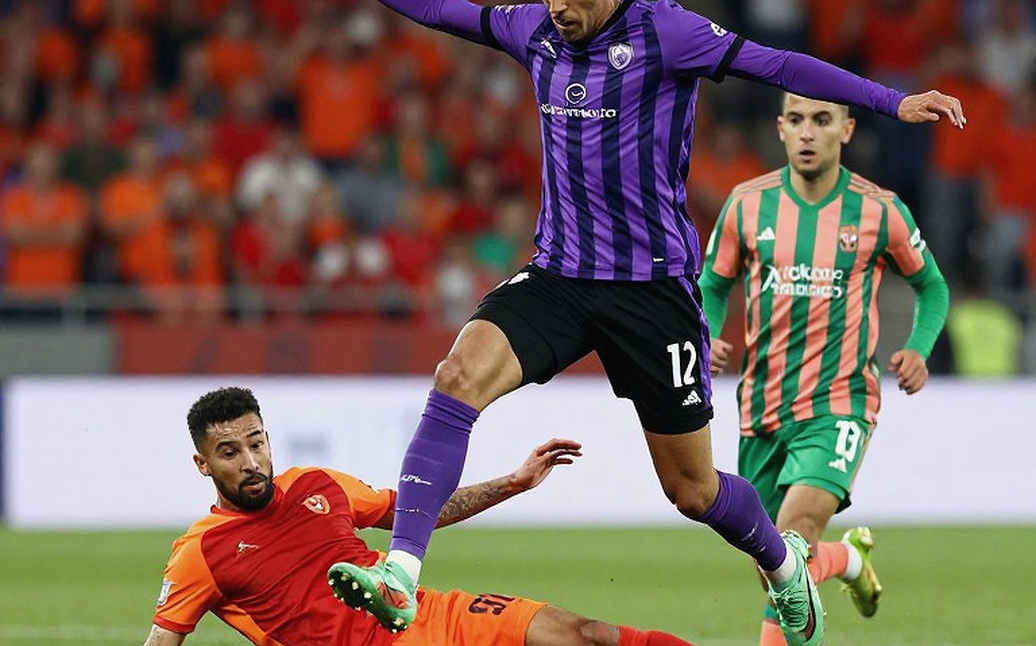
Winning three points is the outcome of a title contender. The manner of the win that night was the manner of a team defending against its own expectations. The second half was not a half in which Vietnam managed the game. It was a half in which Vietnam endured the game and leaned on unrepeatable factors to keep the score unchanged.
There is another misreading, and it is more dangerous, and it belongs to my own profession. When a team wins narrowly, the first reaction is usually to praise character. Character is a real quality, but it is assigned far too quickly to situations whose real nature is a loss of control. The team did not choose to endure. The team was pushed into enduring because its midfield had lost its structure.
This is where professional accuracy matters. In the draft a young colleague sent me that night, the tournament was named with the word FIFA in front of it. That naming is wrong at an institutional level. The Southeast Asian national-team championship is run by the regional federation, not by FIFA. A small error in one headline can travel into thousands of reports, and ten years later it becomes a false data point in an entire generation of players' records. I sat with him for fifteen minutes to fix two lines. He asked why I was being so strict. I told him that readers are under no obligation to fact-check us, but we are.
That same night, another report cited the social-media account of a continental competition to congratulate a regional fixture. Two different scopes, two different competition systems. Details like that do not change the score, but they lower the credibility of everything around them. For someone who has worked the beat for thirty years, that is the kind of error worth half a day to correct.
Signals to track until September 29
Vietnam play Thailand on September 29, only three days after the opener. That match can decide the top of the group and the shape of the knockout path. For a squad missing its captain, carrying a centre-forward with a calf tear, and coming off a rain-soaked match with a high physical workload, three days is a short window.
Three things I will be watching.
The first is how the team builds out from the back. If Kim Sang Sik can install a new progression mechanism — a deeper midfielder, a centre-back stepping up, or a three-man structure in the first line — then the Philippines problem was a problem of one evening. If Thailand can press Vietnam's first line the way the Philippines did in the second half, then it is a problem for the whole tournament.
The second is the minutes played by Nguyen Dinh Bac and Lee Williams Minh Hoang. Both just proved they can make a difference in a competitive match. Loading them too fast is a trap, but refusing to use them while the attack is short-handed is also a trap. This is a workload-management question that the staff must answer with recovery data, not with feeling.
The third, and most important, is the medical bulletin on Nguyen Xuan Son's calf. Calf tears come in grades, and each grade maps to a different return timeline. Until official medical information arrives, any forecast about Vietnam's title chances is being built over a hole.
This team just won a match it needed to win. In the same night it lost both of its biggest reference points: a captain who did not play, and a striker who played and had to leave. The three points are in the bag. The remaining question is not whether those points were deserved, but what this team plays with on September 29 if neither reference point is certain to be there.
Football always answers with the next match. In three days we will know whether the night in Bandung was a beginning or a warning written in Vietnam's own handwriting.